JEFFERSON COUNTY NEW YORK
JEFFERSON COUNTY MIGRATIONS
MICHIGAN
Migrations Part 5 - Lenawee Co. MI:
History of Tecumseh, Lenawee Co MI:
The settlement of the Village of Tecumseh, MI was officially 21 May 1824. The county history notes that fifteen men, four women and eleven children comprised the first group of settlers. All but one man and wife came from Jefferson County, NY.
Musgrove Evans was believed to be the pathfinder of the group as he visited the area in 1823. The following is a list of the first group of settlers:
Musgrove Evans, wife and six children
General Joseph W. Brown, wife and five children
Ezra F. Blood
Peter Benson and wife
Simon Stoate
Nathan Rathburn
Peter Lowe
James Young
George Spofford
Curtis Page
Levi Baxter
John Borland
Captain Peter Ingals
John Fulsom
Turner Stetson and wife from Boston, who joined the party at Detroit.
It was Musgrove Evans who found the Tecumseh location the most desirable and it was he who interested Gen. J. W. Brown in the enterprise, and through him was able to enlist other members of the party. While Musgrove Evans was never regarded as the leader, it was Gen. Brown whom everyone relied upon.
Gen. Joseph W. Brown was born in Falls Township, Buck Co, PA on 26 Nov. 1793. At six years he removed with his parents to Jefferson Co., NY where he worked as a farmer until 1824, when he sold his 300 acre farm and emigrated to Michigan. In company with Austin E. Wing and Musgrove Evans the land for the village of Tecumseh was purchased. In 1824 Brown and Ezra Blood, plowed the first furrows in Lenawee County. In 1817, while a resident of Jefferson County, at the age of 24, Brown was commissioned an adjutant in the regular Cavalry by DeWitt Clinton, Gov. of New York, and then in 1818 was made a captain in a rifle company of the New York Infantry. He became lieutenant-colonel on 27 March 1819.
Upon his removal to Michigan, he received numerous appointments and in 1848 Governor Shannon of Ohio made him associate judge of Lucas Co, OH. On 4 May 1858 he was admitted to the bar in Ohio. His death occurred in Toledo on 9 Dec 1880; however, he is buried in the Tecumseh Cemetery.
Ezra Blood died Tecumseh MI on 15 Feb 1887. He was born in Deering, Hillsboro Co, NH on 28 Oct 1798 and when he reached the age of 21 he moved to Brownville, Jefferson Co NY, where he worked with Asa Whitney in a nail factory for five years. Ezra's Michigan biographers state that he was a soldier in the War of 1812 but do not include his state of service. In the spring of 1824 he joined a party of western fortune hunters, whose destination was Tecumseh, MI. On 12 Jan. 1830 he married Alzina Blackmar. Ezra died at his home in Tecumseh Twp on 18 Feb 1887.
A number of the fifteen men who came to Lenawee Co in 1824, did not at that time become permanent settlers; among them was the Hon. Levi Baxter, Jr., who born at E. Windsor, CT 5 October 1778. He subsequently moved to Delhi, Delaware Co., NY, and then to Michigan. In 1848 Levi Baxter moved from White Pigeon to Jonesville, MI and remained there until his death in 1848.
PIERCE, Capt. Benjamin F., a native of Jefferson County NY, where he was born in 1814, came to Lower Saginaw, MI in 1839, built a warehouse and bought the first tug used for towing vessels. He was involved in several enterprises and in 1858 moved to West Bay City, MI. Married.
INGALLS, B. F. was born in Jefferson Co NY in 1846. He was a businessman at Petoskey, MI.
Veterans of the War of 1812 buried in Lenawee, MI:
CHEEVER, Jacob, born Jefferson Co., NY and died August 1859 at age 84. He is buried in Ridgeway Twp., Lenawee Co. MI.
Marriage notice from Charlevoix Sentinal newspaper:
INGALLS, LIBERTY J. of Bear River, formerly of Clayton Jefferson Co NY, married to Lucinda Cole of Clayton, Jefferson Co NY on 11 Sept 1869 at Jackson MI
Sources: History of Lenawee and Tecumseh, MI; war records, vital records, newspaper records

Showing posts with label Jefferson county. Show all posts
Showing posts with label Jefferson county. Show all posts
Thursday, September 15, 2011

Wednesday, April 22, 2009
History of Le Ray, Jefferson co, New York
History of LeRay, NY
FROM OUR COUNTY AND ITS PEOPLE
A DESCRIPTIVE WORK ON JEFFERSON COUNTY
NEW YORK
EDITED BY: EDGAR C. EMERSON
THE BOSTON HISTORY COMPANY, PUBLISHERS 1898
CHAPTER XXXI.
THE TOWN OF LE RAY.
Aboriginal.- As a proper prelude to the civil history of this interesting town, a brief allusion to and description of the aboriginal occupancy as indicated by traces now quite indistinct, is appropriate. The site of an Indian work or village was found in this town near Sandford's Corners. It was situated on the bank of a small stream which is the source of Cowan's creek, Of this work little can be learned, except that it was nearly a circular inclosure, and consisted of a mound or ridge of earth and exterior ditch with gateways at intervals along its lines. When first seen the bank measured from the bottom of the ditch was six feet high. Some of the largest pines of the forest grew upon and within the banks. The neighboring fields formerly yielded the usual variety of fragments of pottery and pipes, some of which were of good workmanship and fair finish, and also rude implements of bone and flint. Several skeletons buried in a sitting position have been here exhumed.
This work is illustrated in the accompanying diagram which was made in 1849. Only a small portion of the embankment was then visible, and the dotted lines show the original outlines according to the recollection of those acquainted with it before it was disturbed It was located about a quarter of a mile from the railroad station on the Antwerp highway leading to the Union church (which crosses its eastern margin) and was on the southeast bank of Cowan's creek, mainly on land where Byron Dillenback's house and blacksmith shop now stand, and also on land of Mrs. Abigail Jabes.
Another work of interest was found on Black river (Kamehargo) in Le Ray, half a mile below Black River village, where the banks are very high and quite inaccessible. The work was on the land of Aaron Poor and is fully shown in the diagram which was made in 1849 and represents it as it then appeared. The ends of the embankment extended a short distance down the slope of the river bank, and there curved slightly inward, as though designed to prevent the flank being turned by an enemy. The lines, where they cross the road were then very distinct, and the embankment was about three or four feet high. The rest of the work could be traced without much difficulty, although it had been long under cultivation. Upon the wall, at the point indicated by letter "c," stood a pine stump, over three feet in diameter, and was probably more than 100 years old. The usual relics were found within the area of this enclosure, and in the natural bank at "d," a number of decayed skeletons were plowed out, all of which were in the position found elsewhere in Indian burial places. No traces of this fortification now remain, yet its general outline can be determined by a darker earth deposit and a richer and darker hue to vegetation.
About one mile north of the last work, and six northeast of Watertown, stood a fort or fortified encampment on a small sandy elevation, situate in the midst of low grounds. It was described in 1849 as being lozenge shaped, and very regular in outline. The accompanying diagram made at that time fairly represented the work as it then appeared. Where the lines are intercepted on the north the ground was considerably elevated and subsides abruptly, precluding the necessity of an embankment for defensive purposes. The sites of the ancient lodges indicated by heaps of burnt stones, calcined shells, fragments of pottery, etc., could then be traced, notwithstanding the land had for a considerable time been under cultivation near this work. Skeletons have been frequently exhumed at this place. This work was near the source of West creek and was on a plain a little elevated above a flat that was once flowed by a beaver dam, the remains of which may still be traced. Several other fortified places were found, one of which was near Felts' mills, but unfortunately no descriptions have been preserved and all traces have long since been obliterated. Enough remains, however, to show that this town was doubtless in early days the theatre of a sanguinary strife that was waged among the Indians in northern New York in their efforts for the mastery of these grounds, which were then unsurpassed for the purpose of hunting and fishing, and were, therefore, an ideal place for Indian occupancy.
Civil History.- Within its present limits the town of Le Ray contains 40,823 acres of improved land; as originally established in 1806 it included substantially the eastern half of great lot number four of the Macomb purchase, also, in whole or in part, the territory of six present towns of the county. As is fully narrated in a preceding chapter, the Antwerp company became possessed of great lot number four, the consideration paid for which was 300,000 forms, equal to $125,356. On January 2, 1800, Gouverneur Morris as agent for the company received a deed for 220,000 acres of the tract, or one-half its area, as then estimated. On the following day the remaining half was deeded by the company to James Donatianus Le Ray de Chaumont (more commonly mentioned in this work as James Le Ray) the consideration for which was $46,315.12.
Proprietors Morris and Le Ray then established a division line between their possessions, beginning at the northeast corner of Penet's square and running on a line parallel with the county line (Oneida county at that time) to the south line of great lot number four, coin monly called the Chassanis line. Morris took all the territory northeast of this line, and Le Ray all on the southwest side. However, August 15, 1802, the proprietors established a new division line, beginfling at the southeast corner of Penet's square, "and running thence to the south corner of lot 512; thence to the west corner of the town of Antwerp; thence along the southwest line of that town to the south corner of lot 337," and thence to the Chassanis line.
In his representative capacity as agent for the Antwerp company, Gouverneur Morris was succeeded by Moss Kent, and the latter, after a short period of service, was superseded by Mr. Le Ray, who was the owner of about 126 shares of the company's stock. Le Ray took from the company a deed for all their unsold lands, to the extent of about 145,000 acres, while he owned in his own right about 220,000 acres more on lot number four (except such portions as had been sold by him), together with the Chassanis tract, which he had acquired by sundry purchases. It will be seen from this brief mention that the land titles in this town were descended from Mr. Le Ray, but it is not deemed necessary to further pursue the subject in this chapter.
As originally created by act of the legislature passed February 17, 1806, the town of Le Ray included all that part of the county north of Black river and east of the east boundary of Penet's square extended from the Black river to the St. Lawrence; excepting, however, a portion of the town of Wilna which was annexed from Lewis county in 1813. The town now comprises about seven or eight thousand acres of the Chassanis tract and something like thirty-two thousand acres of great lot number four of the Macomb tract. Portions of Alexandria and Wilna and all of Theresa, Antwerp and Philadelphia were originally a part of Le Ray.
Le Ray occupies a central position in the county, and is regarded as one of its most important civil divisions in every point of view. The land surface is level, or gently rolling, and the soil is chiefly a clayey loam. The principal stream is Black river, which forms the southern boundary, while Indian river enters the town from Philadelphia, flows a few miles southwest, then abruptly turns north, crosses the western extremity of Philadelphia and enters Theresa. Pleasant creek is the greatest auxiliary stream, and has its course chiefly within the town. The excellent water privileges of this creek induced pioneer Benjamin Brown to make the first settlement and improvements in this locality. In the southern part, along Black river, is an extensive sand barren containing about 13,000 acres, which has not been occupied and improved for general agricultural purposes. Originally this tract was covered with a splendid growth of timber, but the forests were cut away early in the century, and have since been replaced with a second growth now almost fit for the woodman's axe. Many years ago, after having been stripped of its timber, this vast tract was in part abandoned by its owners, and several enterprising farmers extended their enclosures so as to include about 5,000 acres, which is utilized as grazing and pasture lands. The town authorities have noticed with some degree of interest this unopposed encroachment, and the assessors have taxed this part of the tract to these occupants; the remaining 8,000 acres is taxed to various owners but is not regarded as of any particular value.
Settlement and development in this town was begun and accomplished under the proprietary of James D. Le Ray and his agents. He sold the land in parcels suited to the wants and means of his purchasers, and gave them sufficient time to complete their payments, but reasonably asked that each make a proper beginning by building a log house and clearing a certain amount of land annually; and instances are not wanting in which the worthy proprietor extended to his settlers additional time and even advanced them money and assistance when needed. Indeed, in all the vast Macomb tract there was no proprietor more generous and more respected than Mr. Le Ray, but his liberality and enterprise eventually told against him and contributed to his financial downfall. But his fortune was not entirely swept away by this disaster, and he continued to live in the town until its resources were developed, gaining the admiration and esteem of the county's entire people.
The pioneer of Le Lay was Benjamin Brown, brother to General Jacob Brown1 the latter the first permanent settler in the county north of Black river. Both came to the region and made their respective improvements while the territory formed a part of Oneida county. In the fall of 1801 Benjamin Brown visited this town in quest of a suitable site whereupon to erect a mill, and after casting about for a time selected a location on Pleasant creek, about on the site of the hamlet of Le Raysyule. He made a clearing and prepared timber for a dam across the stream, but the severity of winter compelled his party to return to Brownville. Early in the following spring work was resumed by cutting a road from Brownville to the mill site, General Brown going in advance of the party with his surveying implements, marking the course, while they followed with the work of construction. After many incidents and some misfortunes and hardships, the road was built to Le Raysville and work on the improvement was renewed. In due time the dam and mill were completed, and if local tradition be true the "raising" was a notable event in the annals of the town. A log house was also built for the accommodation of the workmen, and to this humble abode in July following Benjamin Brown brought his bride, the pioneer woman of the town, with whom he had just married at Brownville.
The erection of the mill on Pleasant creek was a fortunate event in the early history of the town, and had the effect to induce settlement by families from the east and elsewhere, who were anxious to come to the region, as it assured them they were to locate in an inhabited country, where the means of living were provided. At this time, too, the proprietary was advertising the land in Albany and elsewhare and otherwise using every endeavor to dispose of and settle them. Settlement during the year 1802 appears to have been limited to Benjamin Brown and members of his household, but the year 1803 witnessed the arrival of several families, among whom were men of prominence and. who afterward had an active share in both county and town history, and made for Le Ray a prominent place among the towns in the region. Prominent among the settlers in 1803 were Joseph Child and his three sons, Daniel, Samuel and Moses, all of whom came from Pennsylvania and were associated with many early events. Their surname has ever since been known and respected in the county. Thomas Ward, Daniel Coffeen, William Cooper, John Petty and Robert Sixbury also caine in this year.
This Child family located between pioneer Brown's mill and the settlement at Watertown, while Thomas Ward bought and settled on land between Le Raysville and Evans' mills, as afterward known. In 1804 Samuel Child and Mr. Ward made the first clearing in the present town of Philadelphia, working for Cadwallader Child. Daniel Coffeen was one of a prominent family bearing that name who were identified with the early history of at least half. a dozen towns. His improvement was southeast of Evans' mills, but in 1804 he settled on land near Sterlingville. Robert Sixbury had become acquainted with this region while with a surveying party, and in 1804, with John Hoover, bought the Coffeen improvement below Byans' mills. Later on he removed to a farm in the north part of the town, and while he was an industrious pioneer he also gained much prominence as a hunter and a man of great physical strength. His life was passed in the town, and he died in 1875 at the advanced age, it is claimed, of 112 years. John Petty lived in the town only one year, then removed to Philadelphia, where he was also a pioneer. William Cooper was a Frenchman, whose correct name was Guillaume Coupart, but to the settlers he was best known as "French Cooper." He was a refugee from his native place (Normandy, France,) and experienced many vicissitudes in life before he found freedom in Connecticut, from whence he came to the Black river country in 1798, locating first in Pamelia. In 1803 he settled between Le Rayville and Ingerson's corners, and ultimately became a large land owner and a man of influence and worth In the town. Some of his descendants are still in the county.
Roswell Woodruff and Benjamin Kirkbride are known to have settied in the town in 1804, and while others undoubtedly came during the year, neither record nor tradition gives us any information as to who they were or where they settled. Indeed, it is hardly possible that a town in which settlement was so auspiciously begun by pioneers of the best type should have but two arrivals during its second year of history. Roswell Woodruff located at the place called Jewett's Corners (now Sanford's Corners) in later years, and so called in allusion to Captain Ezekiel Jewett, who bought the Woodruff improvement. Mr. Woodruff then removed to Oneida county. Mr. Kirkbride settled about a mile southeast of Evans' mills, where afterward lived Ezekiel Steinhilber, an early resident.
Thus have we recalled the names and something of the works of the pioneers of Le Ray within its present boundaries. They came to the region when nothing had been done in the way of improvement other than was necessary to provide for actual needs. They came to face dangers and hardships incident to pioneer life, and were provided with few elements of comfort, and none of luxury. They laid the foundation on which the town was afterward built up, and prepared the way for later corners who suffered less from trials and privations. Several of them came with families, but nearly all such had previously visited the region and arranged for a place of abode.
However, for the purpose of preserving the names of as many as possible of the early settlers in Le Ray, recourse is had to early town records, to old and time-worn papers and documents, and frequently to the memory of old residents of the locality, whose days of toil have passed but whose recollection of early events is clear and distinct. From all these sources we may learn the names of the early families, but their lives and individual works are reserved for another department of this volume. Collating the information, gathered from the sources mentioned, it is found that among the first settlers were
James Anthony, Michael Coffeen, Ruell Kimball, Alfred Commins, Captain Richardson Avery, William Barber, Ethni Evans (founder of Evans' Mills), Sylvanus Evans, Eli Davis, S. Brownell, Amos Broughton, David Burhans (who settled in 1809 purchased a farm from Le Ray, and from whom descended a large family), Joseph Corey, Perley and Oliver Fuller, Peter Hoover, Thomas Huston, John and William Huston, Ezra and Isaac Ingerson, Lee Woodward, Silas Ward, Joseph Taggart, Francis Trevaller, Reuben Treat, Elisha Steele, Elisha and Alvah Scofield, Abiel sheurtliff, Solomon and Amaziah Parker, Barnhart and Elias Minick, Alanson Lyon and Arnold Miller. Several of these names are not now known in the town.
Other settlers of about the same period were Lyman and Ivah Holbrook, Elijah Corey, Thomas and Joel Hulbert, while still others, possibly at a little later date, were Dr. Horatio Orvis (the first physician of the town), Willard Barrett, the Bellingers (Frederick H., Adam P. and Peter) Asa Barnes, Levi Butterfield, Jotham Goodale, Alfred Vebber, David M. Caidwell, Alvin Herrick, Solomon Hawkins, John Ingerson, Fayette Herrick, Ansel Winslow, Jesse Sawyer, Gilbert Taylor. Stephen D. Sloan, Peter Slack, Samuel Stewart, Edwin Hungerford, Patrick S. and John V. Stewart, William and Isaac Palmer, Levi Reed, Josiah J. Petrie. Oliver Pierce, Jenison Clark, Ezekiel and Abraham Jewett, James J. Murphy, Heman Millard, John and Stephen Macomber, Samuel C. Kanady, Sylvester Kelsey, Beni Henry, Olsey and Andrew Roberts, Nathan and Stephen Ingerson, Elon Henry, Christopher Poor, Dr. Ira Smith, and still others whose names have been lost with the lapse of years.
Much of the early settlement was accomplished under the agency of Jacob Brown, acting for the Le Ray proprietary. The worthy proprietor first came to his possessions in the region in 1802, two years after making the purchase, but in 1804 he returned to France. In 1806 he sent a Dr. Baudry, a physician "of considerable experience and ability, whom he had engaged for several years to reside with him on his lands," to select a favorite site for a permanent residence. The spot finally selected was in this town, just outside the hamlet of Le Raysyule, where a large and commodious dwelling was built. In 1825 it was replaced with a mansion still more pretentious, which stands to the present day, although many of the once attractive surroundings are gone to decay, while others have been removed by more recent occupants of the place. The building, however, is well preserved and is still used for residence purposes. The accompanying portrait accurately represents it as it now appears.
J. Le Ray de Chaumont was born at Chaumont, on the Loire, France, Nov. 13, 1760, and first became acquainted with affairs in America during the revolution, his father being an earnest sympathizer with the cause for which the colonists were contending, and in close relationship with La Fayette. He made large advances of money to the cause, and also sent supplies to the American army. In 1785 young Le Ray came to this country to settle the accounts of his father, which he succeeded in doing in 1790, with the aid of Benjamin Franklin. He also made the acquaintance of Count de La Forest and Gouverneur Morris, and was by them persuaded to invest in lands in this state. He first bought a small tract in Otsego county, in company with Judge Cooper, father of the famed novelist, and built one of the first saw mills in that region. During this time he had become a citizen. In 1790 he married the daughter of Charles Coxe, of New Jersey, and soon afterward sailed for France, returning to the United States in 1799. In the next year he made the extensive purchase of lands in what afterward became Jefferson county, and in 1802 visited the region. As has been elsewhere stated, Mr. Le Ray was a generous proprietor and gave with lavish hand to every enterprise which had for its end the welfare and comfort of his settlers. He authorized his agents to do all that was necessary in the way of improvements, but when he was present everything was under his personal direction. He came to live at his villa in 1808, but in 1810 returned to France (leaving his affairs here in the hands of Moss Kent) and was instrumental in inducing settlement in this region by scions of some of the best families in France, and others, as well, who sought to better their condition in the new country as America was even then called. Indeed, some of the most thrifty and progressive settlers in this county were brought to the region through the agency of Mr. Le Ray and the French company.
Mr. Le Ray was not a continuous dweller in the town, but came and went as his business interests demanded. He was regarded as a resident, however, and his influence and presence were always felt in the county. Says Dr. Hough: "He greatly improved the breed of sheep by bringing Merinos from his flock in France. He also gave great attention to improving the breed of horses, and labored to diffuse a taste for the rearing of ornamental plants, to promote the culture of the yine in gardens, and of hemp and the mulberry. The care which he bestowed in the selection and adorning of his villa at Le Raysville, which for many years was the seat of refined hospitality bespeaking the affluent and accomplished French gentleman, prove him to have possessed on these matters a judicious and correct taste. His household, including agents, clerks, surveyors and employees, formed of itself a small community." In 1832 Mr. Le Ray returned to France, leaving his business in the hands of his son, Vincent, who also left in the next year. At this time Patrick Somerville Stewart, who for many years had been in the Le Ray employ, was agent. In 1835 he removed the land office to Carthage, where it was kept until the estate was finally settled. James D. Le Ray. the proprietor, died December 31, 1840.
Organization.- Under the agencies referred to in the preceding paragraphs the early development of this town was accomplished. In 1802 Benjamin Brown and his little party of workmen made the first beginfling; in 1803 six families were added to the number, while in the next year, so far as is now known, only two families came. But, notwithstanding this, in the territory comprising the town in 1807 were 153 legal voters, and three years later the total number of inhabitants was 1,150. It is not surprising therefore, that the inhabitants of this part of Brownville were desirous to have a new town created.
The erecting act was passed February 17, 1806, and by it all that part of the county north of the Black river and east of the east line of Penet's square was created a body politic and corporate and named Le Ray, in honor of James Le Ray, the proprietor, who was then building his villa within the limits of the town. By another act of the legislatufe, passed April 4, 1806, a part of Leyden was annexed to Le Ray. The territory of the town has been reduced by the erection of Antwerp, April 5, 1810; a part of Wilna, April 2, 1813; a portion of Alexandria (including Theresa) and all of Philadelphia, April 3, 1821.
The first town meeting was held at the dwelling of Abiel Shurtliff, March 3, 1807, at which time these officers were elected: James Shurtliff, supervisor; Thomas Ward, town clerk; Rue! Kimball, John B. Bossuot, Richardson Avery, assessors; Daniel Child, Daniel Sterling, Lyman Holbrook, commissioners of highways ; Thomas Thurston, constable and collector.
The first settlers of Le Ray formed a mixed population of Yankees and Frenchmen, the former perhaps prevailing in point of numbers, and while their habits and customs were wholly unlike they worked in perfect unison and no unfriendliness existed; all being imbued with the same spirit of enterprise and progress. Each began his life work here by first building a log cabin, then clearing a piece of land for grain and crops, building up gradually, and everything "from the stump." If a family became distressed Mr. Le Ray relieved them; if impoverished, he helped them. He built roads through the settled portions and extended them as necessity required. Cadwallader Child was an important factor in this work, and surveyed road No. 1 in 1806, extending from Evans' Mills to the highway leading from Benjamin Brown's to the bend in Black river. Road No. 2 was run by him in May of that year, and extended from the bend in the river to Philadelphia. Indeed, the records show that the principal business of the highway commissioners for several years related to road construction for the accommodation of constantly increasing settlement. Occasionally a dangerous animal would create havoc among the cattle, but the common interests, stimnulated by a modest bounty offer, soon exterminated the evil. Fences were unknown, and animals running at large were subject to detention by the "poundmaster" until the penalty was paid. The area of the town was large, the inhabitants much scattered, yet on "town meeting days," and for regular Sabbath worship the settlers were assembled together. As early as 1812 two schools were maintained.
Thus the foundation for subsequent prosperity was laid in this town as in others in the county. The beginnings were humble, but the results were grand, and early in its history Le Ray was one of the first t wns in the region; a reputation worthily maintained to this time.
As further evidences of its prosperity reference may be made to the census reports, from which we learn that in 1810 the inhabitants numbered 1,150. while the industries included seven saw mills, one grist mill, a carding mill and two stores. From the same source we may note the changes in population, beginning with the year 1810 and ending in 1892. In 1810, 1,150; 1820, 2,944; 1830, 3,430; 1840, 3,721; 1850, 3,654; 1860, 3,156; 1870, 2,862; 1880, 2,660; 1890; 2,565; 1892, 2,583.
However, the greatest population was reached in 1845. the number then being 3,853, or nearly 1,300 more than at the present time. This reduction is readily accounted for, being due to the causes which have depreciated the population in nearly all the purely agricultural towns jU tile state, the development of the unlimited farming interests of the west and the tendency of the youth to abandon the farm for the less arduous pursuits found in the city and village life, together with their attendant pleasures. The result is that agricultural pursuits are not highly profitable unless under the most favorable conditions.
In its history few events have disturbed the progress of affairs. The enforcement of the embargo laws caused much distress for the time, but the period soon passed and the attention of the inhabitants was diverted to the second war with Great Britain. The young men and many of the older were enrolled in General Brown's militia, and were frequently on the frontier or at Sackets Harbor ready to meet the attack of the enemy. After the close of the war local affairs resumed their natural channels, settlement rapidly increased, and peace and prosperity prevailed on every hand. The forests gradually gave way to farms of fertility; small but flourishing villages appeared in convenient parts of the town, stores were opened, churches and schools were established, and all interests were fostered and benefited. Then came the patriot war, but it had no effect on the town's people except as the events furnished a subject for amusing discussionat the accustomed resorts and at the fireside. In 1854 a line of railroad was built through the town from the county seat extending northward, affording a ready market for the agricultural and manufacturing products of the locality, adding much to the value of property along its route, and establishing Evans' Mills as a shipping point of importance; and when in 1872 the Carthage, Watertown and Sackets Harbor railroad was completed, although on the south side of the river, the town was much benefited by it in the substantial industries which were erected. on the Le Ray side.
During the period of its history Le Ray has produced and been the abiding place of some of the strongest men of the county; and while contrary to the plan of this work to mention them at length, we may with Propriety recall the names of Cleanthus P. Granger, Lorenzo Sawyer, George B. Hart, Lewis Palmer, William S. Phelps, W. W. and B. B. Taggart, Sidney and William S. Cooper, John W. Tamblin, Moss Kent, judge Joseph Boyer, Samuel C. Kannady, Matthew Poor, Drs. Jones, Orvis and Smith, judge Jonathan Miller, Caleb Slocuni, Alexander Kannady, William M. Comstock and Wesley Rulison and a host of others, all of whom have in the past been identified with the best history of the town and contributed to its prosperity.
Le Raysville.- Among the several trading centers which have been established in the town for the accommodation of the inhabitants, the little hamlet called Le Raysville is the oldest. Here Benjamin Brown made the first improvement in 1802 when he built a mill on Pleasant creek. He kept the mill several years, but it eventually passed into the hands of Curtis Mann, succeeded by Mr. Kannady and W. S. Phelps in the order named. At that time and for several years afterward the hamlet had no name other than Brown's mill, and it was not until Dr. Baudry had completed the Le Ray villa and the proprietor came here to live that the name Le Raysville was applied. Settlement in the vicinity increased rapidly under the energetic action of Le Ray and his agents, and with the arrival of Dr. Horatio Orvis in 1808, and the opening of a public house in 1810, the place began to assume the proportions of a village. About the same time, too, Mr. Le Ray opened a stock of goods and placed it in charge of one of his employees, thus supplying the temporal wants of the inhabitants, for tradition says the stock was extensive and included not only staple articles of trade, but also a quantity of refreshing goods not now sold by the average dealer, though then common merchandise. Later managers of the store were Martin Hubbard and S. C. Kannady.
In 1818 a mail route was established between Wilna and Denmark, by way of Le Raysville, and in that year a post-office was established here, Samuel C. Kannady being postmaster. He held the office until his death in 1836, and was succeeded by Mr. Whipple. Previous to 1818 all mail for this locality came through the office at Champion, and was generally brought to the town by Mr. Le Ray or one of his employees. After Mr. Whipple's term the incumbents of the post-office were William Phelps, Ennis Mosher, Horace Grover, Albert Mosher and Wm. S. Phelps in the order named until the office became unimportant in local annals. About 1820 the village attained its greatest importance and size, and another tavern was opened on the opposite side of the creek.
After the departure of the proprietor for France, in 1832, and particularly after the removal of the land office to Carthage three years later, all interests in this historic hamlet began to decline; and after the construction of a railroad through the western part of the town local interests suffered seriously. Since that time (1854) Le Raysville has been an unimportant hamlet in the town, and while one or two small stores and a custom feed mill have been maintained here for the accommodation of neighboring farmers, other enterprises have been abandoned. At the present time the business interests are represented in the small stores of 0. S. Woolever and Orrin Fowler, and the mill owned by Mrs. Phelps. The local postmaster is M. J. Matty, The old "mill pond" on Pleasant creek, the capacity of which in times past has frequently been taxed in supplying power for the mill, is now used for other purposes.
Not far distant from the village are two church edifices, the older of which is an almost historic structure. It is of stone and was built by the society of Friends in 1816, that sect then being numerous in the town. Their meetings were regularly held for many years, but at length the membership became small, the interest declined and the society almost disappeared; but the old edifice still stands, a monument to its once devoted people and its own honorable record. In 1828 the society became divided on doctrinal questions, the dissentients withdrew and worshiped elsewhere. They became known as the Hicksite branch of the mother church, and in 1876 erected a small but neat frame meeting house on the border of the village. Here services are held regularly.
Evans' Mills.- Ethni Evans, the founder of this pleasant and thrifty village, came from Hinsdale, N. R, in 1802, and was employed by General Brown in making the pioneer beginning at Brownville. In the course of his labors Mr. Evans visited the Brown settlement in what afterward became Le Ray, where it is said he also worked, but at the same time he looked about for a suitable place in which to begin life for himself. He was a millwright by trade, and naturally sought a desirable water-power location. This he found at the junction of Pleasant and West creeks, and in 1804 contracted with Le Ray's agent for the purchase of 192 acres of land at three dollars per acre. He at once made a clearing, built a log house and began the construction of a dam across the stream, but not before 1806 did he commence his mills. The mills led to the hamlet, and the latter to the village, in its palmy days one of the most enterprising municipalities in the county, for, being located in the center of a rich agricultural region, the lands were taken rapidly and fine farms replaced the primal forests. The early settlers here were thrifty and the building up of a trading center was a necessity. About 1808 Jenison Clark opened a store and also a tavern and blacksmith shop, and thus the hamlet was established. The store stood on the corner where was afterward built the "brick hotel." As early as 1812 the inhabitants numbered about one hundred, but beyond this it did not materially increase prior to the construction of the railroad. In 1812 the people became much alarmed through fear of an Indian invasion, and began the erection of a blockhouse for defensive purposes; but their fears were soon quieted and the structure was not completed (the mortar cannon standing conspicuously near the four corners has no relation to the blockhouse.)
However, within a period of twenty years from the time pioneer Evans made the first improvement the village grew into a place of considerable importance, and among the more prominent business interests may be noted the Evans mills, which were in successful operation, running both day and night under the direction of Pierce Macomber and Omrod Evans; the Stearns grist mill, also built before the war of 1812; a fulling and cloth mill, standing near the grist mill, operated by George Oaks; a tannery managed by John Macomber; two pot asheries owned by John Hoover and William Palmer; two distilleries, one of which was run by Ziba Henry, but originally built by Jesse Smith. Another distillery of about this period stood in the south end of the village. It was operated by William H. Granger and Captain Sanderson, and was sold to Millard & Palmer. Sacket Comstock and Sewell Hill were local blacksmiths and also made axes, hoes and other edged tools. Farrington Smith made spinning wheels and looms; Harry Weed was wagon maker, and Joseph Pryor, an earnest Quaker, had a cabinet shop. William Palmer kept store where now stands the brick hotel. Heman Millard also kept store but dealt more extensively in liquors. The village had two taverns, one (built in 1816) across the creek, kept by Adam and Peter Bellinger, and the other, the stone tavern, built about 1821, was run by John Hoover. This was a somewhat famous hostelry in its day, and was built from stone quarried in the north part of the town. Josiah Fuller laid the stone and William Delaware did the carpenter work. Landlords after Hoover were Daniel Thomas, George Oaks, Parker Rulison, Elisha Root, Alexander Lapon, Nelson Clarke, Benjamin Jackson. Then its use for hotel purposes was discontinued. The Bellinger hotel also had several landlords, among them Elias Holbrook, David Kilburn, Oliver Pierce, Edwin Hungerford, Henry Lawton and Jacob Davis. Dr. Ira A. Smith was the first village physician, whose partner in later years was Dr. Wrn. G. Comstock. Drs. Henry and Isaac Munson were students under Dr. Smith. Peter H. Ryther started a blacksmith shop about 1823, but about four years afterward enlarged his works for the manufacture of scythes, axes and hoes, using a trip hammer worked with water power. In 1822-23 Judge Evans rebuilt the saw mill, and it was kept in operation until about twenty years ago. The grist mill was rebuilt by him in 1823-24, though just below the dam, and is still in operation under Tozer& Davenport. The brick hotel, to which reference has been made, was begun in 1827 by Capt. John Hoover. When completed it was one of the most substantial buildings of the village, and has stood the wear of time to the
present day; and it is still called by the old name, "the brick hotel." Benjamin Collins also opened a hotel in 1827. The Railroad hotel was built after the road was finished and business was attracted to the station.
Evans' Mills became a post-office in 1824, William Palmer, postmaster. He held the position many years. In 1846 the name of the village was changed to Evansville, still preserving the name of the founder, but the new designation was thought to be more euphonious. However, in 1851 the old name was restored. In 1854 the railroad was opened for traffic and at once the village assumed a position of importance among the trading centers of the county. As a shipping point for agricultural products it has ranked well, although in more recent years the manufactures of the locality have materially declined. However, in the vicinity are several cheese factories, one at the village, owned by Daniel Walrath; the Crystal springs factory, north of the village, owned by A. E. & L. A. Helmer, and the Jefferson valley factory, operated by Wm. and Isaac Schell. These, with the interests previously mentioned, comprise the chief manufacturing enterprises of the vicinity.
The village was incorporated in 1874, including 720.44 acres of land and about 500 inhabitants. At the first election A. M. Cook was chosen president, and George Ivers, B. M. Strong and Bowen Root, trustees. The proposition to incorporate was carried by a vote of 54 against 49, and while the plan was fully carried out a strong opposition existed, and afterward was continued with final result in dissolving the corporation and a return to the former condition of municipal life. The village also contains two good district schools, comprising parts of town districts Nos. 3 and 7. In the fall of 1895 a number of public spirited citizens sought to consolidate these districts and establish a union free school, but the measure was lost when submitted to a vote of the proposed district.
The present mercantile and business interests of Evans' Mills may be mentioned about as follows: Wesley Rulison, general store; J. P. Steinhilber, general store; E. C. Delevan, dry goods and groceries; F. M. Peck, grocer; A. B. Foote and Frank Waits, harness shops; the "brick hotel," Peter Farmer, prop'r; Central house, L. G. Hawn; Whitney house, W. M. Whitney; postmaster, Burton M. Stratton; Evans' Mills cheese factory, Daniel Walrath; flour and grist mill, Tozer & Davenport; physicians, Drs. L.. E. Jones and Robt. A. Smith.
Pisgah lodge, No. 720, F. & A. M., was chartered June 13, 1872, with twenty-four original members, and Wesley Rulison, master. The present members number fifty-three. The officers are Burton M. Stratton, master; A. B. Foote, S. W.; S. N. Gould, J. W.; Eugene F. Spencer, S. D.; E. H. Cobb, J. D.; Nicholas Cocagne, secretary, and F. E. Croissant, treasurer.
Hermon lodge of free and accepted masons, of Evans' Mills, was instituted in the fall of 1826, but during the masonic excitement which followed soon afterward it suspended, and was not revived.
The Presbyterian church of Le Ray was the outgrowth of a Congregational society formed January 13, 1814, at the house of Elisha Scofield, by Rev Nathaniel Dutton, of Champion. The original members were Elisha Scofield and wife, Ruel Kimball and wife, Gershom Mattoon and wife, Mrs. Cheeseman, Abner Cheeseman and Hannah Parker. The early meetings were informal and the church was without a pastoral head until 1820, when the accidental drowning of the son of Ruel Kimball inspired the father to enter the ministry and he became the first regular pastor. Previous to this time the society met for worship about two miles south of the village, but in 1818 removed to the settlement. The first house of worship was built in 1826, and was a plain stone building standing on the site of the present edifice, and was the contribution of Judge Evans. Elisha Scofleld, David Burhans, Samuel C. Kanady, Sylvester Kelsey, Sylvanus Evans and Mr. Le Ray were liberal contributors to the building fund. The old edifice was replaced with one larger and more commodious, built of frame, and dedicated in June, 1869. This church in 1825 became Presbyterian, and in 1841 united with the Ogdensburgh (old school) presbytery. Twenty years ago the members numbered seventy persons; in 1897 the number was twenty-four, but the congregations indicate a much larger membership, as the church now draws from the former Episcopal, Baptist and Universalist (the latter an informal organization), societies of the vicinity. Present pastor, Rev. 0. C. Barnes.
The Baptist church of Le Ray was organized in 1814 by elder Maitby, and held early meetings about two miles south of the village, but in 1818 removed to Evans' Mills. The society was incorporated in 1823, Ethni Evans, Asa Hall, Levi Read, John Macomber, Stephen D. Sloan and Chauncey Morse comprising the first board of trustees. In the same year a house of worship was begun, but before completion was partially destroyed by fire. The stone walls were unharmed, and with substantial aid from Mr. Le Ray the edifice was soon restored and completed. The earlier pastors of the church were Revs. Matthew Wilkie, John Blodget, Martin Cook, Sardis Lyttle, John F. Bishop and Thomas Warner, who were in course followed by others; but about five years ago the society discontinued meetings and its members went to other churches.
The first society of the Methodist Episcopal church in Le Ray was formed Nov. 20, 1824, with James Ward, Wilson Pennock, Elijah Smith, William Taggart, Patrick S. Stewart, Henry Churchill, Parker Chase, John Y. Stewart and Daniel Smith, trustees. The first church home was a stone building, built about that time, and stood on the highway between Evans' Mills and Le Raysville. In 1833 the building was sold, and another was erected in the village,; on a lot donated by Judge Evans. In point of membership this is the strongest society in the village, although during its history two reorganizations have been effected, and many members have withdrawn to unite with other M. E. churches. The present members number 92, with 26 probationers. Pastor, B. G. Sanforth.
St. Michael's church, Roman Catholic, dates back in its history to about 1840, when a mission was established and masses were said by visiting priests from Watertown. In 1847 a church edifice was built and the parish was established. The building is of stone and is in all respects a substantial structure. The congregations are drawn from the vicinity, and also from Lafargeville, Sterlingville, Theresa, Philadelphia, Black River, Felt's Mills and Great Bend. all being in the parish of St. Michaels's. The present priest in charge is Rev. Father A. L. Dufrasne.
St. Andrew's church, Protestant Episcopal, was organized as a mission in the early part of 1871, and as a parish in April, 1872. Then there were but three communicating members, but soon the church grew in strength until it compared with other denominations of the village. Its services were generally supplied from Antwerp, and occasionally from the county seat. The beautiful church edifice was erected in 1880, and was built with native gray and blue limestone. The church, however, has never been self-sustaining, and while at one time the communicants numbered about fifty they have since decreased to less than twenty; and now services are not regularly held, the members attending the Presbyterian service.
For burial purposes, in the early history of the village, Ethni Evans donated a plot of ground. This was directly in the line of Main street as afterward laid out, hence the bodies were removed to the cemetery opened in 1840, which was in this year deeded by Aaron Root to S. D. Sloan, Lybeus Hastings, William Palmer and Elisha Steele, jr., as trustees of Evans' Mill cemetery. The plot was afterward enlarged, and in 1869 a cemetery association was formed, of which the trustees were Adolphous M. Cook, Samuel S. Potter, Rezot Tozer, Alex. Kanady, Wayne Stewart and Randall Barnes. The old trustees also conveyed their land to the new association and the grounds were united. The Maple Grove cemetery was laid out later, and by these several organizations this part of the town is provided with suitable locations for burial purposes.
Slocumville is the name of a settlement less than two miles east of Evans' Mills. In local history it is of little importance, and it was only through the location there of a powder mill by one Desjardines, at the suggestion of Mr. Le Ray, that the settlement was founded. The mill was built in 1819, and about the same time a grist mill was also put in operation, both utilizing the waters of Pleasant creek for power. The powder works were not a profitable enterprise and were subsequently converted into a potato starch factory, also a short-lived industry. The grist mill still stands but is not operated. Here, too, was the Slocumville woolen mill, which for many years was one of the chief industries of the town. It was operated by Caleb Slocum, son of Samuel G. Slocum. The last proprietors were Slocum & Baldwin. The mill closed about 1884. The name Slocumville was applied in allusion to Samuel G. Slocum one of the early and prominent settlers of the locality.
Sanford's Corners.- In this locality, in the southwest part of the town, Roswell Woodruff was the first settler, having made his improvements in 1804. Later on pioneer Woodruff sold his property to Captain Ezekiel Jewett, and when the intersecting roads were opened the place became known as Jewett's Corners, and also as Jewett's school house, for here is said to have been built the first school house in the town. Mr. Sanford, for whom the place was finally named, erected a large stone building as a store which, however, was not opened as such. A brick tavern was built about the same time for the comfort of travelers along the highways, but the building was afterward used as a cheese factory. A post-office was established here in 1828, that being the only business of the place which has endured to the present time. In 1853 F. X. Baumert began the manufacture of limburger cheese at this point. in a small way but the enterprise soon developed into one of importance. He died in 1882, and the business was continued by his wife, and after her death by her sons. The factory was enlarged in 1887. The business is now carried on by F. X. Baumert & Co., the old firm style being preserved, for the product of the factory finds ready sale in the market, and the fame of the firm is well known to the trade. A railroad station was established here in 1855. The local merchant is H. B. Dunn, who also is postmaster.
The Union church at Sanford's Corners was built in 1853 at the joint expense of the Methodist Episcopal, Christian and Universalist denominations in the vicinity. Each had an organized society of fair membership, though neither at any time a resident pastor. M. E. preaching is supplied from Felt's Mills, and Universalist from Watertown, while the Christian sect is so small that their services are rarely held.
Joachim is the name of a locality on Indian river, in the extreme north part of the town, where Lucien Murat (in 1834) proposed to found a village in memory of his father, Joachim Murat, once king of Naples, and commander of cavalry under Napoleon. At this point Arnold Miller had built a saw mill in 1822, but was succeeded in ownership by Samuel Makepeace. Murat purchased the property, rebuilt the saw mill, built a grist mill, started a store, and began the erection of a large hotel. But his enterprise came to naught; creditors attached the stock and property, all of which was sold to persons not specially interested in the proprietor's memorial undertaking. The mills were continued for a time, but were eventually sold or abandoned.
Ingerson's Corners is the name of a locality ih which Isaac Ingerson settled when he came to Le Ray. Elisha Scofield located near the place. Early in the history of the town a village was contemplated for the cross roads, and Aaron Rose made the beginning by starting a blacksmith shop. In 1822 Job Anthony and Alvin Clark built a saw mill on the tributary of West creek, but further than this no hamlet improvements were established. The creek did not furnish sufficient water power, hence the mill was stopped, and with the removal of its interests the place became known by the undignified name of "Bedlam."
Great Bend is a small village in Champion, but on the Le Ray side of the river. King Potter built a hotel about 1833, and Henry G. Potter, who kept the hotel, also had a distillery. Daniel Potter started a store here in 1824. All these interests have passed away, except the hotel.
Felt's Mills is a hamlet on Black river, and was named in allusion to John Felt, its founder. Previous to 1844 the island was a part of Le Ray, but was then set off to Rutland. No substantial village improvements have been made on the north side of the river. The Taggart paper company operate the large mills on the island, without which the village on the Rutland side would now be of small account.
Black River Village.- On September 24, 1891, the inhabitants of the village of Black River held a special election and by a majority vote determined to incorporate under the provisions of the law of 1870. According to a survey previously made by W. A. Lyttle, the area of the village was 1,115½ acres, of which 635½ acres were taken from Rutland, 440 acres from Le Ray, while 40 acres were covered by waters of the river. The certificate of election was recorded in the county clerk's office Sept. 25, and on the 23d of October following the incorporation was made complete by the election of village officers.
In 1806 Isaac and Harvey Cleveland built a saw mill on the south side of the river, which was carried away by high water the next year. About 1815 Christopher Poor and Andrew Middleton built a mill below the village, but there were few evidences of a hamlet at that time. In 1826 the families in the vicinity were Thomas Scott, Beriah and Eli Penniman, Francis Butterfield and perhaps one or two others. In that year Butterfield built the first framed house, and about 1831 the first hotel. The first bridge across the river was built in 1828, chiefly at the expense of Mr. Butterfield and Mr. Poor, both of whom were largely interested in lands in the vicinity, and who were among the most enterprising men of their towns. The Butterfield brothers, Levi, Francis, William and Philander, opened their first store store and gave the place the appearance of a settlement. These were the beginnings which led to the village on the south side.
On the Le Ray side of the river Christopher Poor was one of the first settlers in the locality, and bought from the Chassanis proprietary a tract of 150 acres of land, including water privileges, for the pioneer was attracted to the place by the superior mill sites. Mr. Poor had previously lived in Rutland, and in 1829 removed to his new purchase on the Le Ray side, and was one of the chief factors in building up the hamlet, just as in more recent years his descendants have been instrumental in bringing about a prosperous condition of affairs in village life.
In 1831 a dam was built across the river and a saw mill was erected by Coburn & Hubbard, who run it about ten years and then sold to W. K. Butterfield. In 1836 the first grist mill was built by A. Horton, but this and the saw mill were burned about 1843. In 1845 they were replaced with more substantial buildings for the same use. The well known Lockport grist mill was begun in 1845 by Oliver A. Ferguson, but was soon afterward taken by Matthew Poor, R. G. Vaughn and Henry Chapman, who finished the building in 1849. The property afterward passed through various hands, and in 1890 was replaced by the plant of the Black river wood pulp company. This company was incorporated Nov. 17, 1891, with $15,000 capital, by Wooster 0. Ball, Henry M. Ball, Kate L. Ball, Eunice D. Ball and Joseph Atwell, jr. This property afterward passed into the hands of the H. Remington & Son pulp and paper company, and is now one of the substantial industries of the village. The company furnishes electric lights for the village.
In 1832 Robert Van Schoick opened a store and began trade. Mr. Thu rston succeeded to the business in 1848. The second store was started in 1852 by S. L. Mott, succeeded by Matthew Poor in 1866. In 1848 Peter Poor built a planing mill, being the same afterward owned by Andrew Poor. In 1860 Hinman & Middleton built a box factory and wood-working shop which they occupied. for a time. The building was used about a year some time during the 'sixties by D. Dexter & Son, after their plant on the Rutland side of the river had been burned. At a still later period the building was used as a place of meeting for the Free Methodist society, but eventually passed into the hands of 0. H. Scott & Son. It is now occupied by the H. C. Dexter chair company. This company was established about 1882 by Poor, Dexter & Co. The firm afterward became Dexter & Scott, and eventually H. C. Dexter chair company, as now known. The works, when running at f till, employ about 50 men.
The Black river bending company was established in 1860 for the manufacture of bent chair stock, and from the beginning has been a successful enterprise. In 1889 the company, was incorporated, with a capital of $20,000, and Matthew Poor, Clarence M. Woodward, Charles M. Wolfe, Myron W. Scofield, Byron N. Scott and Peron V. Poor as principal stockholders. The company employs, when running full time, about 50 men. On the site of the bending company's works a machine shop was built by Isaac Howe about 1840. It was run by him several years, but after he went out the buildings were idle for a long time. They were then sold to the bending company, and were so radically enlarged and remodeled as to entirely change in appearance.
Where Thomas Cliilds & Sons sash and door factory stands formerly stood a similar industry started many years ago by Wolcott Brothers.
The Empire wood pulp company, whose large plant stands on the lower island, was incorporated April 11, 1888, with a capital of $15,000. The active factors in the enterprise were Chandler C. Clark, Christopher Poor, Romaine D. Gibbs and Frank D. Gibbs. This, too, is a leading industry in the village. On this site many years ago stood a saw mill, which was carried away by high water, and was then replaced with Tamlin's sash and door factory. This was about 1875, but about two years later it became Poor & Dexter's plant, and still later the pulp mill.
The Jefferson paper company, whose large plant occupies a site on Poor's island, was incorporated July 26, 1887, with $20,000 capital, by Wm. P. Herring, Frank H. Munson, and James M. Hamlin, The purpose of the company was to manufacture lumber, wood pulp and paper.
David Dexter was the pioneer of the chair industry at Black river. He established the business in 1839 on the Rutland side of the river, and continued it until 1865, when he took his son Everett A. Dexter as partner, under the firm name of D. Dexter & Son. The plant of the company was enlarged and the business extended so that from forty to fifty men were employed. It was thus continued to the death of David Dexter, in 1880. Everett A. Dexter then took as partner his brother David E. Dexter, and under the firm style of D. Dexter's Sons the business was continued to 1893, when Everett A. Dexter died. Since that time the plant has been operated by David E. Dexter as surviving partner.
Both fire and flood have been destroying elements in the village, and several of the best industries and substantial bridges have thereby been swept away. But as often have they been replaced, and generally by better structures. The fire of February 20, 1890, was perhaps the most disastrous in the history of the village. About $50,000 worth of prop. erty, including some of the best business buildings of the village, were then destroyed. One good iron bridge was taken out by high water, and was replaced in 1875 by another of the same material. In 1891 the present bridge was built by the Springfield (Mass.) iron company.
From this it may be seen that the chief industries of the village have been established within the last fifteen years. Indeed, the construction of the railroad on the south side was a prominent factor in leading to these interests, while the splendid water power has been an important auxiliary. However, almost every plant has both steam and water power. The proposition to incorporate came from both sides of the river, chiefly from Le Ray, but while the subject was impending an element on the south side secured incorporation for that district to the exclusion of the north side; but it appears that there was some irreg ularity in the proceedings, hence the action was nullified by the county court. Then the people of both sides considered the matter together, and the result was a successful incorporation, as is noted on a preceding page.
The first village election was held Oct. 23, 1891, when George C. Hazelton was chosen president and George C. Gillespie, Josiah Burlington and M. A. Parkinson, trustees; Christopher Poor, treasurer, and Warren Croan, collector. The subsequent presidents have been A. W. Hadsall and J. Austin Hubbard, the latter being now in office. The trustees are M. M. McGruer, M. A. Parkinson and W. W. Goldthrite; clerk, Fred. E. Whipple; treasurer, C. J. Sweet. The village population is about 1,000.
Black River is one of the most pleasantly situated villages of the county, and from a business point of view is among the progressive places of the region. There is no distinct system of water supply, but the manufacturers have sought protection in establishing a system by laying pipes from some of the large factories, extending through the principal or business streets, power being furnished, in case of fire, from the pumps in the factory buildings. The system was established throtigh the public expenditures of village business men.
The village also comprised parts of school districts No. 14 of Rutland and No. 8 of Le Ray, each of which maintained a good school. However, in the interests of still better educational facilities, in May, 1893, the districts consolidated and formed the Black river union free school district; and while a school is maintained on each side of the river, both are under one control, and are admirably managed. The board of education comprises J. Austin Hubbard, H. T. McAfee, J. Poor, H. C. Dexter and G. E. Sylvester; principal, P. S. Slate.
Black River fire company No. 1 was incorporated Dec. 12, 1890, to be of service in connection with the pumping apparatus in case of fire. The equipment consists of a cart and 3,000 feet of good hose, all paid for by general subscription.
The Black River M. E. church was organized in 1833, and a church home was built in 1848; first pastor Rev. Lewis Whitcomb. The present edifice was erected in 1884, and is a substantial frame structure, with seating capacity for 500 persons. The members number 168, with 10 probationers; pastor, Rev. C. M. Smith. This church draws congregations from both Rutland and Le Ray.
The Free Methodist church of Black River was organized Dec. 11, 1871, with five members, and a house of worship was built soon afterward, on a lot donated by Matthew Poor. The first trustees were Josiah Johnson, David Dexter and J. C. Kennedy; pastor, Rev. Charles Southworth. The church has a large membership and the services are well attended. The present pastor is Rev. Mr. Labron.
Bethany lodge No. 821, F. & A. M., was chartered in December, 1896. The membership is fifty-five. F. D. Gibbs, master; E. E. Graves, S. W.; M. M. McGruer, J. W.; W. E. Brown, S. D.; B. H. Rouse, J. D.; A. W. Hadsall, secretary; G. B. Sylvester, treasurer.
Riverside lodge No. 334, I. O. O. F., was organized October 11, 1872. It is one of the strongest societies of the kind in the county, numbering 100 members. The officers are Fred. Matthews, N. G.; J. A. Hubbard, V. G.; C. J. Sweet, secretary; P. V. Poor, treasurer. The lodge owns a substantial block in the village.
Tradition says the first school in the town was located at Sanford's Corners, but when established or by whom taught is now unknown. The town records are very imperfect so far as relates to early schools, but at the annual meetings a sum of money was voted equal to the amount allowed by the state for educational purposes. Soon after 1813 the commissioners divided the town into districts, but made no permanent record of their action. At that time there were two schools in the town, and as the population increased other districts were organized, keeping step with growth in every direction. Indeed, the authorities have ever been mindful of the educational welfare of the town youth, and have made generous provision for the erection and maintenance of the schools. In 1850 the town contained 26 districts (entire and joint), and 1,186 children were under instruction. Then, however, the town was at its best, its population at its maximum, and all elements of in. dustry in full development. As now disposed the districts number 18, and the number of children in school is 571. During the last current year 22 teachers were employed, and public moneys were received to the amount of $2,528.97. The town raised by tax for school support $4,899.81. The value of school property was estimated at $11,220.
Supervisors.- James Shurtliff, 1807-15; Ruel Kimball, 1816; Ethni Evans, 1817; Alvin Herrick, 1818; Horatio Orvis, 1819-25; Wm. Palmer, 1826; John Macomber, 1827-29; Stephen D. Sloan, 1830; John Macomber, 1831; Stephen D. Sloan, 1832; Lybeus Hastings, 1833-35; Ira A. Smith, 1836; S. D. Sloan, 1837; Daniel D. Sloan, 1838; Joel Hawarth. 1839-40; Elisha Potter, 1841-42; Lybeus Hastings, 1843; Hezekiah L. Granger, 1844-45; Alfred Vebber, 1846-47; Joseph Boyer, 1848-49; William G. Comstock, 1850; Joseph Boyer, 1851; Alonzo M. Van Ostrand, 1852-53; Joseph Wager, 1854-55; William S. Phelps, 1856-58; Octave Blanc, 1859; Lewis Palmer, 1860; Octave Blanc, 1861; Samuel G. Slocum, 1862; Cleanthus P. Granger, 1863-64; Emor K. Gardner, 1865-68; Frederic Wacldingham, 1869-76: F. E. Croissant, 1877-95; J. Philip Steinhilber, 1896-97; John F. Emmons, 1898-99.
FROM OUR COUNTY AND ITS PEOPLE
A DESCRIPTIVE WORK ON JEFFERSON COUNTY
NEW YORK
EDITED BY: EDGAR C. EMERSON
THE BOSTON HISTORY COMPANY, PUBLISHERS 1898
CHAPTER XXXI.
THE TOWN OF LE RAY.
Aboriginal.- As a proper prelude to the civil history of this interesting town, a brief allusion to and description of the aboriginal occupancy as indicated by traces now quite indistinct, is appropriate. The site of an Indian work or village was found in this town near Sandford's Corners. It was situated on the bank of a small stream which is the source of Cowan's creek, Of this work little can be learned, except that it was nearly a circular inclosure, and consisted of a mound or ridge of earth and exterior ditch with gateways at intervals along its lines. When first seen the bank measured from the bottom of the ditch was six feet high. Some of the largest pines of the forest grew upon and within the banks. The neighboring fields formerly yielded the usual variety of fragments of pottery and pipes, some of which were of good workmanship and fair finish, and also rude implements of bone and flint. Several skeletons buried in a sitting position have been here exhumed.
This work is illustrated in the accompanying diagram which was made in 1849. Only a small portion of the embankment was then visible, and the dotted lines show the original outlines according to the recollection of those acquainted with it before it was disturbed It was located about a quarter of a mile from the railroad station on the Antwerp highway leading to the Union church (which crosses its eastern margin) and was on the southeast bank of Cowan's creek, mainly on land where Byron Dillenback's house and blacksmith shop now stand, and also on land of Mrs. Abigail Jabes.
Another work of interest was found on Black river (Kamehargo) in Le Ray, half a mile below Black River village, where the banks are very high and quite inaccessible. The work was on the land of Aaron Poor and is fully shown in the diagram which was made in 1849 and represents it as it then appeared. The ends of the embankment extended a short distance down the slope of the river bank, and there curved slightly inward, as though designed to prevent the flank being turned by an enemy. The lines, where they cross the road were then very distinct, and the embankment was about three or four feet high. The rest of the work could be traced without much difficulty, although it had been long under cultivation. Upon the wall, at the point indicated by letter "c," stood a pine stump, over three feet in diameter, and was probably more than 100 years old. The usual relics were found within the area of this enclosure, and in the natural bank at "d," a number of decayed skeletons were plowed out, all of which were in the position found elsewhere in Indian burial places. No traces of this fortification now remain, yet its general outline can be determined by a darker earth deposit and a richer and darker hue to vegetation.
About one mile north of the last work, and six northeast of Watertown, stood a fort or fortified encampment on a small sandy elevation, situate in the midst of low grounds. It was described in 1849 as being lozenge shaped, and very regular in outline. The accompanying diagram made at that time fairly represented the work as it then appeared. Where the lines are intercepted on the north the ground was considerably elevated and subsides abruptly, precluding the necessity of an embankment for defensive purposes. The sites of the ancient lodges indicated by heaps of burnt stones, calcined shells, fragments of pottery, etc., could then be traced, notwithstanding the land had for a considerable time been under cultivation near this work. Skeletons have been frequently exhumed at this place. This work was near the source of West creek and was on a plain a little elevated above a flat that was once flowed by a beaver dam, the remains of which may still be traced. Several other fortified places were found, one of which was near Felts' mills, but unfortunately no descriptions have been preserved and all traces have long since been obliterated. Enough remains, however, to show that this town was doubtless in early days the theatre of a sanguinary strife that was waged among the Indians in northern New York in their efforts for the mastery of these grounds, which were then unsurpassed for the purpose of hunting and fishing, and were, therefore, an ideal place for Indian occupancy.
Civil History.- Within its present limits the town of Le Ray contains 40,823 acres of improved land; as originally established in 1806 it included substantially the eastern half of great lot number four of the Macomb purchase, also, in whole or in part, the territory of six present towns of the county. As is fully narrated in a preceding chapter, the Antwerp company became possessed of great lot number four, the consideration paid for which was 300,000 forms, equal to $125,356. On January 2, 1800, Gouverneur Morris as agent for the company received a deed for 220,000 acres of the tract, or one-half its area, as then estimated. On the following day the remaining half was deeded by the company to James Donatianus Le Ray de Chaumont (more commonly mentioned in this work as James Le Ray) the consideration for which was $46,315.12.
Proprietors Morris and Le Ray then established a division line between their possessions, beginning at the northeast corner of Penet's square and running on a line parallel with the county line (Oneida county at that time) to the south line of great lot number four, coin monly called the Chassanis line. Morris took all the territory northeast of this line, and Le Ray all on the southwest side. However, August 15, 1802, the proprietors established a new division line, beginfling at the southeast corner of Penet's square, "and running thence to the south corner of lot 512; thence to the west corner of the town of Antwerp; thence along the southwest line of that town to the south corner of lot 337," and thence to the Chassanis line.
In his representative capacity as agent for the Antwerp company, Gouverneur Morris was succeeded by Moss Kent, and the latter, after a short period of service, was superseded by Mr. Le Ray, who was the owner of about 126 shares of the company's stock. Le Ray took from the company a deed for all their unsold lands, to the extent of about 145,000 acres, while he owned in his own right about 220,000 acres more on lot number four (except such portions as had been sold by him), together with the Chassanis tract, which he had acquired by sundry purchases. It will be seen from this brief mention that the land titles in this town were descended from Mr. Le Ray, but it is not deemed necessary to further pursue the subject in this chapter.
As originally created by act of the legislature passed February 17, 1806, the town of Le Ray included all that part of the county north of Black river and east of the east boundary of Penet's square extended from the Black river to the St. Lawrence; excepting, however, a portion of the town of Wilna which was annexed from Lewis county in 1813. The town now comprises about seven or eight thousand acres of the Chassanis tract and something like thirty-two thousand acres of great lot number four of the Macomb tract. Portions of Alexandria and Wilna and all of Theresa, Antwerp and Philadelphia were originally a part of Le Ray.
Le Ray occupies a central position in the county, and is regarded as one of its most important civil divisions in every point of view. The land surface is level, or gently rolling, and the soil is chiefly a clayey loam. The principal stream is Black river, which forms the southern boundary, while Indian river enters the town from Philadelphia, flows a few miles southwest, then abruptly turns north, crosses the western extremity of Philadelphia and enters Theresa. Pleasant creek is the greatest auxiliary stream, and has its course chiefly within the town. The excellent water privileges of this creek induced pioneer Benjamin Brown to make the first settlement and improvements in this locality. In the southern part, along Black river, is an extensive sand barren containing about 13,000 acres, which has not been occupied and improved for general agricultural purposes. Originally this tract was covered with a splendid growth of timber, but the forests were cut away early in the century, and have since been replaced with a second growth now almost fit for the woodman's axe. Many years ago, after having been stripped of its timber, this vast tract was in part abandoned by its owners, and several enterprising farmers extended their enclosures so as to include about 5,000 acres, which is utilized as grazing and pasture lands. The town authorities have noticed with some degree of interest this unopposed encroachment, and the assessors have taxed this part of the tract to these occupants; the remaining 8,000 acres is taxed to various owners but is not regarded as of any particular value.
Settlement and development in this town was begun and accomplished under the proprietary of James D. Le Ray and his agents. He sold the land in parcels suited to the wants and means of his purchasers, and gave them sufficient time to complete their payments, but reasonably asked that each make a proper beginning by building a log house and clearing a certain amount of land annually; and instances are not wanting in which the worthy proprietor extended to his settlers additional time and even advanced them money and assistance when needed. Indeed, in all the vast Macomb tract there was no proprietor more generous and more respected than Mr. Le Ray, but his liberality and enterprise eventually told against him and contributed to his financial downfall. But his fortune was not entirely swept away by this disaster, and he continued to live in the town until its resources were developed, gaining the admiration and esteem of the county's entire people.
The pioneer of Le Lay was Benjamin Brown, brother to General Jacob Brown1 the latter the first permanent settler in the county north of Black river. Both came to the region and made their respective improvements while the territory formed a part of Oneida county. In the fall of 1801 Benjamin Brown visited this town in quest of a suitable site whereupon to erect a mill, and after casting about for a time selected a location on Pleasant creek, about on the site of the hamlet of Le Raysyule. He made a clearing and prepared timber for a dam across the stream, but the severity of winter compelled his party to return to Brownville. Early in the following spring work was resumed by cutting a road from Brownville to the mill site, General Brown going in advance of the party with his surveying implements, marking the course, while they followed with the work of construction. After many incidents and some misfortunes and hardships, the road was built to Le Raysville and work on the improvement was renewed. In due time the dam and mill were completed, and if local tradition be true the "raising" was a notable event in the annals of the town. A log house was also built for the accommodation of the workmen, and to this humble abode in July following Benjamin Brown brought his bride, the pioneer woman of the town, with whom he had just married at Brownville.
The erection of the mill on Pleasant creek was a fortunate event in the early history of the town, and had the effect to induce settlement by families from the east and elsewhere, who were anxious to come to the region, as it assured them they were to locate in an inhabited country, where the means of living were provided. At this time, too, the proprietary was advertising the land in Albany and elsewhare and otherwise using every endeavor to dispose of and settle them. Settlement during the year 1802 appears to have been limited to Benjamin Brown and members of his household, but the year 1803 witnessed the arrival of several families, among whom were men of prominence and. who afterward had an active share in both county and town history, and made for Le Ray a prominent place among the towns in the region. Prominent among the settlers in 1803 were Joseph Child and his three sons, Daniel, Samuel and Moses, all of whom came from Pennsylvania and were associated with many early events. Their surname has ever since been known and respected in the county. Thomas Ward, Daniel Coffeen, William Cooper, John Petty and Robert Sixbury also caine in this year.
This Child family located between pioneer Brown's mill and the settlement at Watertown, while Thomas Ward bought and settled on land between Le Raysville and Evans' mills, as afterward known. In 1804 Samuel Child and Mr. Ward made the first clearing in the present town of Philadelphia, working for Cadwallader Child. Daniel Coffeen was one of a prominent family bearing that name who were identified with the early history of at least half. a dozen towns. His improvement was southeast of Evans' mills, but in 1804 he settled on land near Sterlingville. Robert Sixbury had become acquainted with this region while with a surveying party, and in 1804, with John Hoover, bought the Coffeen improvement below Byans' mills. Later on he removed to a farm in the north part of the town, and while he was an industrious pioneer he also gained much prominence as a hunter and a man of great physical strength. His life was passed in the town, and he died in 1875 at the advanced age, it is claimed, of 112 years. John Petty lived in the town only one year, then removed to Philadelphia, where he was also a pioneer. William Cooper was a Frenchman, whose correct name was Guillaume Coupart, but to the settlers he was best known as "French Cooper." He was a refugee from his native place (Normandy, France,) and experienced many vicissitudes in life before he found freedom in Connecticut, from whence he came to the Black river country in 1798, locating first in Pamelia. In 1803 he settled between Le Rayville and Ingerson's corners, and ultimately became a large land owner and a man of influence and worth In the town. Some of his descendants are still in the county.
Roswell Woodruff and Benjamin Kirkbride are known to have settied in the town in 1804, and while others undoubtedly came during the year, neither record nor tradition gives us any information as to who they were or where they settled. Indeed, it is hardly possible that a town in which settlement was so auspiciously begun by pioneers of the best type should have but two arrivals during its second year of history. Roswell Woodruff located at the place called Jewett's Corners (now Sanford's Corners) in later years, and so called in allusion to Captain Ezekiel Jewett, who bought the Woodruff improvement. Mr. Woodruff then removed to Oneida county. Mr. Kirkbride settled about a mile southeast of Evans' mills, where afterward lived Ezekiel Steinhilber, an early resident.
Thus have we recalled the names and something of the works of the pioneers of Le Ray within its present boundaries. They came to the region when nothing had been done in the way of improvement other than was necessary to provide for actual needs. They came to face dangers and hardships incident to pioneer life, and were provided with few elements of comfort, and none of luxury. They laid the foundation on which the town was afterward built up, and prepared the way for later corners who suffered less from trials and privations. Several of them came with families, but nearly all such had previously visited the region and arranged for a place of abode.
However, for the purpose of preserving the names of as many as possible of the early settlers in Le Ray, recourse is had to early town records, to old and time-worn papers and documents, and frequently to the memory of old residents of the locality, whose days of toil have passed but whose recollection of early events is clear and distinct. From all these sources we may learn the names of the early families, but their lives and individual works are reserved for another department of this volume. Collating the information, gathered from the sources mentioned, it is found that among the first settlers were
James Anthony, Michael Coffeen, Ruell Kimball, Alfred Commins, Captain Richardson Avery, William Barber, Ethni Evans (founder of Evans' Mills), Sylvanus Evans, Eli Davis, S. Brownell, Amos Broughton, David Burhans (who settled in 1809 purchased a farm from Le Ray, and from whom descended a large family), Joseph Corey, Perley and Oliver Fuller, Peter Hoover, Thomas Huston, John and William Huston, Ezra and Isaac Ingerson, Lee Woodward, Silas Ward, Joseph Taggart, Francis Trevaller, Reuben Treat, Elisha Steele, Elisha and Alvah Scofield, Abiel sheurtliff, Solomon and Amaziah Parker, Barnhart and Elias Minick, Alanson Lyon and Arnold Miller. Several of these names are not now known in the town.
Other settlers of about the same period were Lyman and Ivah Holbrook, Elijah Corey, Thomas and Joel Hulbert, while still others, possibly at a little later date, were Dr. Horatio Orvis (the first physician of the town), Willard Barrett, the Bellingers (Frederick H., Adam P. and Peter) Asa Barnes, Levi Butterfield, Jotham Goodale, Alfred Vebber, David M. Caidwell, Alvin Herrick, Solomon Hawkins, John Ingerson, Fayette Herrick, Ansel Winslow, Jesse Sawyer, Gilbert Taylor. Stephen D. Sloan, Peter Slack, Samuel Stewart, Edwin Hungerford, Patrick S. and John V. Stewart, William and Isaac Palmer, Levi Reed, Josiah J. Petrie. Oliver Pierce, Jenison Clark, Ezekiel and Abraham Jewett, James J. Murphy, Heman Millard, John and Stephen Macomber, Samuel C. Kanady, Sylvester Kelsey, Beni Henry, Olsey and Andrew Roberts, Nathan and Stephen Ingerson, Elon Henry, Christopher Poor, Dr. Ira Smith, and still others whose names have been lost with the lapse of years.
Much of the early settlement was accomplished under the agency of Jacob Brown, acting for the Le Ray proprietary. The worthy proprietor first came to his possessions in the region in 1802, two years after making the purchase, but in 1804 he returned to France. In 1806 he sent a Dr. Baudry, a physician "of considerable experience and ability, whom he had engaged for several years to reside with him on his lands," to select a favorite site for a permanent residence. The spot finally selected was in this town, just outside the hamlet of Le Raysyule, where a large and commodious dwelling was built. In 1825 it was replaced with a mansion still more pretentious, which stands to the present day, although many of the once attractive surroundings are gone to decay, while others have been removed by more recent occupants of the place. The building, however, is well preserved and is still used for residence purposes. The accompanying portrait accurately represents it as it now appears.
J. Le Ray de Chaumont was born at Chaumont, on the Loire, France, Nov. 13, 1760, and first became acquainted with affairs in America during the revolution, his father being an earnest sympathizer with the cause for which the colonists were contending, and in close relationship with La Fayette. He made large advances of money to the cause, and also sent supplies to the American army. In 1785 young Le Ray came to this country to settle the accounts of his father, which he succeeded in doing in 1790, with the aid of Benjamin Franklin. He also made the acquaintance of Count de La Forest and Gouverneur Morris, and was by them persuaded to invest in lands in this state. He first bought a small tract in Otsego county, in company with Judge Cooper, father of the famed novelist, and built one of the first saw mills in that region. During this time he had become a citizen. In 1790 he married the daughter of Charles Coxe, of New Jersey, and soon afterward sailed for France, returning to the United States in 1799. In the next year he made the extensive purchase of lands in what afterward became Jefferson county, and in 1802 visited the region. As has been elsewhere stated, Mr. Le Ray was a generous proprietor and gave with lavish hand to every enterprise which had for its end the welfare and comfort of his settlers. He authorized his agents to do all that was necessary in the way of improvements, but when he was present everything was under his personal direction. He came to live at his villa in 1808, but in 1810 returned to France (leaving his affairs here in the hands of Moss Kent) and was instrumental in inducing settlement in this region by scions of some of the best families in France, and others, as well, who sought to better their condition in the new country as America was even then called. Indeed, some of the most thrifty and progressive settlers in this county were brought to the region through the agency of Mr. Le Ray and the French company.
Mr. Le Ray was not a continuous dweller in the town, but came and went as his business interests demanded. He was regarded as a resident, however, and his influence and presence were always felt in the county. Says Dr. Hough: "He greatly improved the breed of sheep by bringing Merinos from his flock in France. He also gave great attention to improving the breed of horses, and labored to diffuse a taste for the rearing of ornamental plants, to promote the culture of the yine in gardens, and of hemp and the mulberry. The care which he bestowed in the selection and adorning of his villa at Le Raysville, which for many years was the seat of refined hospitality bespeaking the affluent and accomplished French gentleman, prove him to have possessed on these matters a judicious and correct taste. His household, including agents, clerks, surveyors and employees, formed of itself a small community." In 1832 Mr. Le Ray returned to France, leaving his business in the hands of his son, Vincent, who also left in the next year. At this time Patrick Somerville Stewart, who for many years had been in the Le Ray employ, was agent. In 1835 he removed the land office to Carthage, where it was kept until the estate was finally settled. James D. Le Ray. the proprietor, died December 31, 1840.
Organization.- Under the agencies referred to in the preceding paragraphs the early development of this town was accomplished. In 1802 Benjamin Brown and his little party of workmen made the first beginfling; in 1803 six families were added to the number, while in the next year, so far as is now known, only two families came. But, notwithstanding this, in the territory comprising the town in 1807 were 153 legal voters, and three years later the total number of inhabitants was 1,150. It is not surprising therefore, that the inhabitants of this part of Brownville were desirous to have a new town created.
The erecting act was passed February 17, 1806, and by it all that part of the county north of the Black river and east of the east line of Penet's square was created a body politic and corporate and named Le Ray, in honor of James Le Ray, the proprietor, who was then building his villa within the limits of the town. By another act of the legislatufe, passed April 4, 1806, a part of Leyden was annexed to Le Ray. The territory of the town has been reduced by the erection of Antwerp, April 5, 1810; a part of Wilna, April 2, 1813; a portion of Alexandria (including Theresa) and all of Philadelphia, April 3, 1821.
The first town meeting was held at the dwelling of Abiel Shurtliff, March 3, 1807, at which time these officers were elected: James Shurtliff, supervisor; Thomas Ward, town clerk; Rue! Kimball, John B. Bossuot, Richardson Avery, assessors; Daniel Child, Daniel Sterling, Lyman Holbrook, commissioners of highways ; Thomas Thurston, constable and collector.
The first settlers of Le Ray formed a mixed population of Yankees and Frenchmen, the former perhaps prevailing in point of numbers, and while their habits and customs were wholly unlike they worked in perfect unison and no unfriendliness existed; all being imbued with the same spirit of enterprise and progress. Each began his life work here by first building a log cabin, then clearing a piece of land for grain and crops, building up gradually, and everything "from the stump." If a family became distressed Mr. Le Ray relieved them; if impoverished, he helped them. He built roads through the settled portions and extended them as necessity required. Cadwallader Child was an important factor in this work, and surveyed road No. 1 in 1806, extending from Evans' Mills to the highway leading from Benjamin Brown's to the bend in Black river. Road No. 2 was run by him in May of that year, and extended from the bend in the river to Philadelphia. Indeed, the records show that the principal business of the highway commissioners for several years related to road construction for the accommodation of constantly increasing settlement. Occasionally a dangerous animal would create havoc among the cattle, but the common interests, stimnulated by a modest bounty offer, soon exterminated the evil. Fences were unknown, and animals running at large were subject to detention by the "poundmaster" until the penalty was paid. The area of the town was large, the inhabitants much scattered, yet on "town meeting days," and for regular Sabbath worship the settlers were assembled together. As early as 1812 two schools were maintained.
Thus the foundation for subsequent prosperity was laid in this town as in others in the county. The beginnings were humble, but the results were grand, and early in its history Le Ray was one of the first t wns in the region; a reputation worthily maintained to this time.
As further evidences of its prosperity reference may be made to the census reports, from which we learn that in 1810 the inhabitants numbered 1,150. while the industries included seven saw mills, one grist mill, a carding mill and two stores. From the same source we may note the changes in population, beginning with the year 1810 and ending in 1892. In 1810, 1,150; 1820, 2,944; 1830, 3,430; 1840, 3,721; 1850, 3,654; 1860, 3,156; 1870, 2,862; 1880, 2,660; 1890; 2,565; 1892, 2,583.
However, the greatest population was reached in 1845. the number then being 3,853, or nearly 1,300 more than at the present time. This reduction is readily accounted for, being due to the causes which have depreciated the population in nearly all the purely agricultural towns jU tile state, the development of the unlimited farming interests of the west and the tendency of the youth to abandon the farm for the less arduous pursuits found in the city and village life, together with their attendant pleasures. The result is that agricultural pursuits are not highly profitable unless under the most favorable conditions.
In its history few events have disturbed the progress of affairs. The enforcement of the embargo laws caused much distress for the time, but the period soon passed and the attention of the inhabitants was diverted to the second war with Great Britain. The young men and many of the older were enrolled in General Brown's militia, and were frequently on the frontier or at Sackets Harbor ready to meet the attack of the enemy. After the close of the war local affairs resumed their natural channels, settlement rapidly increased, and peace and prosperity prevailed on every hand. The forests gradually gave way to farms of fertility; small but flourishing villages appeared in convenient parts of the town, stores were opened, churches and schools were established, and all interests were fostered and benefited. Then came the patriot war, but it had no effect on the town's people except as the events furnished a subject for amusing discussionat the accustomed resorts and at the fireside. In 1854 a line of railroad was built through the town from the county seat extending northward, affording a ready market for the agricultural and manufacturing products of the locality, adding much to the value of property along its route, and establishing Evans' Mills as a shipping point of importance; and when in 1872 the Carthage, Watertown and Sackets Harbor railroad was completed, although on the south side of the river, the town was much benefited by it in the substantial industries which were erected. on the Le Ray side.
During the period of its history Le Ray has produced and been the abiding place of some of the strongest men of the county; and while contrary to the plan of this work to mention them at length, we may with Propriety recall the names of Cleanthus P. Granger, Lorenzo Sawyer, George B. Hart, Lewis Palmer, William S. Phelps, W. W. and B. B. Taggart, Sidney and William S. Cooper, John W. Tamblin, Moss Kent, judge Joseph Boyer, Samuel C. Kannady, Matthew Poor, Drs. Jones, Orvis and Smith, judge Jonathan Miller, Caleb Slocuni, Alexander Kannady, William M. Comstock and Wesley Rulison and a host of others, all of whom have in the past been identified with the best history of the town and contributed to its prosperity.
Le Raysville.- Among the several trading centers which have been established in the town for the accommodation of the inhabitants, the little hamlet called Le Raysville is the oldest. Here Benjamin Brown made the first improvement in 1802 when he built a mill on Pleasant creek. He kept the mill several years, but it eventually passed into the hands of Curtis Mann, succeeded by Mr. Kannady and W. S. Phelps in the order named. At that time and for several years afterward the hamlet had no name other than Brown's mill, and it was not until Dr. Baudry had completed the Le Ray villa and the proprietor came here to live that the name Le Raysville was applied. Settlement in the vicinity increased rapidly under the energetic action of Le Ray and his agents, and with the arrival of Dr. Horatio Orvis in 1808, and the opening of a public house in 1810, the place began to assume the proportions of a village. About the same time, too, Mr. Le Ray opened a stock of goods and placed it in charge of one of his employees, thus supplying the temporal wants of the inhabitants, for tradition says the stock was extensive and included not only staple articles of trade, but also a quantity of refreshing goods not now sold by the average dealer, though then common merchandise. Later managers of the store were Martin Hubbard and S. C. Kannady.
In 1818 a mail route was established between Wilna and Denmark, by way of Le Raysville, and in that year a post-office was established here, Samuel C. Kannady being postmaster. He held the office until his death in 1836, and was succeeded by Mr. Whipple. Previous to 1818 all mail for this locality came through the office at Champion, and was generally brought to the town by Mr. Le Ray or one of his employees. After Mr. Whipple's term the incumbents of the post-office were William Phelps, Ennis Mosher, Horace Grover, Albert Mosher and Wm. S. Phelps in the order named until the office became unimportant in local annals. About 1820 the village attained its greatest importance and size, and another tavern was opened on the opposite side of the creek.
After the departure of the proprietor for France, in 1832, and particularly after the removal of the land office to Carthage three years later, all interests in this historic hamlet began to decline; and after the construction of a railroad through the western part of the town local interests suffered seriously. Since that time (1854) Le Raysville has been an unimportant hamlet in the town, and while one or two small stores and a custom feed mill have been maintained here for the accommodation of neighboring farmers, other enterprises have been abandoned. At the present time the business interests are represented in the small stores of 0. S. Woolever and Orrin Fowler, and the mill owned by Mrs. Phelps. The local postmaster is M. J. Matty, The old "mill pond" on Pleasant creek, the capacity of which in times past has frequently been taxed in supplying power for the mill, is now used for other purposes.
Not far distant from the village are two church edifices, the older of which is an almost historic structure. It is of stone and was built by the society of Friends in 1816, that sect then being numerous in the town. Their meetings were regularly held for many years, but at length the membership became small, the interest declined and the society almost disappeared; but the old edifice still stands, a monument to its once devoted people and its own honorable record. In 1828 the society became divided on doctrinal questions, the dissentients withdrew and worshiped elsewhere. They became known as the Hicksite branch of the mother church, and in 1876 erected a small but neat frame meeting house on the border of the village. Here services are held regularly.
Evans' Mills.- Ethni Evans, the founder of this pleasant and thrifty village, came from Hinsdale, N. R, in 1802, and was employed by General Brown in making the pioneer beginning at Brownville. In the course of his labors Mr. Evans visited the Brown settlement in what afterward became Le Ray, where it is said he also worked, but at the same time he looked about for a suitable place in which to begin life for himself. He was a millwright by trade, and naturally sought a desirable water-power location. This he found at the junction of Pleasant and West creeks, and in 1804 contracted with Le Ray's agent for the purchase of 192 acres of land at three dollars per acre. He at once made a clearing, built a log house and began the construction of a dam across the stream, but not before 1806 did he commence his mills. The mills led to the hamlet, and the latter to the village, in its palmy days one of the most enterprising municipalities in the county, for, being located in the center of a rich agricultural region, the lands were taken rapidly and fine farms replaced the primal forests. The early settlers here were thrifty and the building up of a trading center was a necessity. About 1808 Jenison Clark opened a store and also a tavern and blacksmith shop, and thus the hamlet was established. The store stood on the corner where was afterward built the "brick hotel." As early as 1812 the inhabitants numbered about one hundred, but beyond this it did not materially increase prior to the construction of the railroad. In 1812 the people became much alarmed through fear of an Indian invasion, and began the erection of a blockhouse for defensive purposes; but their fears were soon quieted and the structure was not completed (the mortar cannon standing conspicuously near the four corners has no relation to the blockhouse.)
However, within a period of twenty years from the time pioneer Evans made the first improvement the village grew into a place of considerable importance, and among the more prominent business interests may be noted the Evans mills, which were in successful operation, running both day and night under the direction of Pierce Macomber and Omrod Evans; the Stearns grist mill, also built before the war of 1812; a fulling and cloth mill, standing near the grist mill, operated by George Oaks; a tannery managed by John Macomber; two pot asheries owned by John Hoover and William Palmer; two distilleries, one of which was run by Ziba Henry, but originally built by Jesse Smith. Another distillery of about this period stood in the south end of the village. It was operated by William H. Granger and Captain Sanderson, and was sold to Millard & Palmer. Sacket Comstock and Sewell Hill were local blacksmiths and also made axes, hoes and other edged tools. Farrington Smith made spinning wheels and looms; Harry Weed was wagon maker, and Joseph Pryor, an earnest Quaker, had a cabinet shop. William Palmer kept store where now stands the brick hotel. Heman Millard also kept store but dealt more extensively in liquors. The village had two taverns, one (built in 1816) across the creek, kept by Adam and Peter Bellinger, and the other, the stone tavern, built about 1821, was run by John Hoover. This was a somewhat famous hostelry in its day, and was built from stone quarried in the north part of the town. Josiah Fuller laid the stone and William Delaware did the carpenter work. Landlords after Hoover were Daniel Thomas, George Oaks, Parker Rulison, Elisha Root, Alexander Lapon, Nelson Clarke, Benjamin Jackson. Then its use for hotel purposes was discontinued. The Bellinger hotel also had several landlords, among them Elias Holbrook, David Kilburn, Oliver Pierce, Edwin Hungerford, Henry Lawton and Jacob Davis. Dr. Ira A. Smith was the first village physician, whose partner in later years was Dr. Wrn. G. Comstock. Drs. Henry and Isaac Munson were students under Dr. Smith. Peter H. Ryther started a blacksmith shop about 1823, but about four years afterward enlarged his works for the manufacture of scythes, axes and hoes, using a trip hammer worked with water power. In 1822-23 Judge Evans rebuilt the saw mill, and it was kept in operation until about twenty years ago. The grist mill was rebuilt by him in 1823-24, though just below the dam, and is still in operation under Tozer& Davenport. The brick hotel, to which reference has been made, was begun in 1827 by Capt. John Hoover. When completed it was one of the most substantial buildings of the village, and has stood the wear of time to the
present day; and it is still called by the old name, "the brick hotel." Benjamin Collins also opened a hotel in 1827. The Railroad hotel was built after the road was finished and business was attracted to the station.
Evans' Mills became a post-office in 1824, William Palmer, postmaster. He held the position many years. In 1846 the name of the village was changed to Evansville, still preserving the name of the founder, but the new designation was thought to be more euphonious. However, in 1851 the old name was restored. In 1854 the railroad was opened for traffic and at once the village assumed a position of importance among the trading centers of the county. As a shipping point for agricultural products it has ranked well, although in more recent years the manufactures of the locality have materially declined. However, in the vicinity are several cheese factories, one at the village, owned by Daniel Walrath; the Crystal springs factory, north of the village, owned by A. E. & L. A. Helmer, and the Jefferson valley factory, operated by Wm. and Isaac Schell. These, with the interests previously mentioned, comprise the chief manufacturing enterprises of the vicinity.
The village was incorporated in 1874, including 720.44 acres of land and about 500 inhabitants. At the first election A. M. Cook was chosen president, and George Ivers, B. M. Strong and Bowen Root, trustees. The proposition to incorporate was carried by a vote of 54 against 49, and while the plan was fully carried out a strong opposition existed, and afterward was continued with final result in dissolving the corporation and a return to the former condition of municipal life. The village also contains two good district schools, comprising parts of town districts Nos. 3 and 7. In the fall of 1895 a number of public spirited citizens sought to consolidate these districts and establish a union free school, but the measure was lost when submitted to a vote of the proposed district.
The present mercantile and business interests of Evans' Mills may be mentioned about as follows: Wesley Rulison, general store; J. P. Steinhilber, general store; E. C. Delevan, dry goods and groceries; F. M. Peck, grocer; A. B. Foote and Frank Waits, harness shops; the "brick hotel," Peter Farmer, prop'r; Central house, L. G. Hawn; Whitney house, W. M. Whitney; postmaster, Burton M. Stratton; Evans' Mills cheese factory, Daniel Walrath; flour and grist mill, Tozer & Davenport; physicians, Drs. L.. E. Jones and Robt. A. Smith.
Pisgah lodge, No. 720, F. & A. M., was chartered June 13, 1872, with twenty-four original members, and Wesley Rulison, master. The present members number fifty-three. The officers are Burton M. Stratton, master; A. B. Foote, S. W.; S. N. Gould, J. W.; Eugene F. Spencer, S. D.; E. H. Cobb, J. D.; Nicholas Cocagne, secretary, and F. E. Croissant, treasurer.
Hermon lodge of free and accepted masons, of Evans' Mills, was instituted in the fall of 1826, but during the masonic excitement which followed soon afterward it suspended, and was not revived.
The Presbyterian church of Le Ray was the outgrowth of a Congregational society formed January 13, 1814, at the house of Elisha Scofield, by Rev Nathaniel Dutton, of Champion. The original members were Elisha Scofield and wife, Ruel Kimball and wife, Gershom Mattoon and wife, Mrs. Cheeseman, Abner Cheeseman and Hannah Parker. The early meetings were informal and the church was without a pastoral head until 1820, when the accidental drowning of the son of Ruel Kimball inspired the father to enter the ministry and he became the first regular pastor. Previous to this time the society met for worship about two miles south of the village, but in 1818 removed to the settlement. The first house of worship was built in 1826, and was a plain stone building standing on the site of the present edifice, and was the contribution of Judge Evans. Elisha Scofleld, David Burhans, Samuel C. Kanady, Sylvester Kelsey, Sylvanus Evans and Mr. Le Ray were liberal contributors to the building fund. The old edifice was replaced with one larger and more commodious, built of frame, and dedicated in June, 1869. This church in 1825 became Presbyterian, and in 1841 united with the Ogdensburgh (old school) presbytery. Twenty years ago the members numbered seventy persons; in 1897 the number was twenty-four, but the congregations indicate a much larger membership, as the church now draws from the former Episcopal, Baptist and Universalist (the latter an informal organization), societies of the vicinity. Present pastor, Rev. 0. C. Barnes.
The Baptist church of Le Ray was organized in 1814 by elder Maitby, and held early meetings about two miles south of the village, but in 1818 removed to Evans' Mills. The society was incorporated in 1823, Ethni Evans, Asa Hall, Levi Read, John Macomber, Stephen D. Sloan and Chauncey Morse comprising the first board of trustees. In the same year a house of worship was begun, but before completion was partially destroyed by fire. The stone walls were unharmed, and with substantial aid from Mr. Le Ray the edifice was soon restored and completed. The earlier pastors of the church were Revs. Matthew Wilkie, John Blodget, Martin Cook, Sardis Lyttle, John F. Bishop and Thomas Warner, who were in course followed by others; but about five years ago the society discontinued meetings and its members went to other churches.
The first society of the Methodist Episcopal church in Le Ray was formed Nov. 20, 1824, with James Ward, Wilson Pennock, Elijah Smith, William Taggart, Patrick S. Stewart, Henry Churchill, Parker Chase, John Y. Stewart and Daniel Smith, trustees. The first church home was a stone building, built about that time, and stood on the highway between Evans' Mills and Le Raysville. In 1833 the building was sold, and another was erected in the village,; on a lot donated by Judge Evans. In point of membership this is the strongest society in the village, although during its history two reorganizations have been effected, and many members have withdrawn to unite with other M. E. churches. The present members number 92, with 26 probationers. Pastor, B. G. Sanforth.
St. Michael's church, Roman Catholic, dates back in its history to about 1840, when a mission was established and masses were said by visiting priests from Watertown. In 1847 a church edifice was built and the parish was established. The building is of stone and is in all respects a substantial structure. The congregations are drawn from the vicinity, and also from Lafargeville, Sterlingville, Theresa, Philadelphia, Black River, Felt's Mills and Great Bend. all being in the parish of St. Michaels's. The present priest in charge is Rev. Father A. L. Dufrasne.
St. Andrew's church, Protestant Episcopal, was organized as a mission in the early part of 1871, and as a parish in April, 1872. Then there were but three communicating members, but soon the church grew in strength until it compared with other denominations of the village. Its services were generally supplied from Antwerp, and occasionally from the county seat. The beautiful church edifice was erected in 1880, and was built with native gray and blue limestone. The church, however, has never been self-sustaining, and while at one time the communicants numbered about fifty they have since decreased to less than twenty; and now services are not regularly held, the members attending the Presbyterian service.
For burial purposes, in the early history of the village, Ethni Evans donated a plot of ground. This was directly in the line of Main street as afterward laid out, hence the bodies were removed to the cemetery opened in 1840, which was in this year deeded by Aaron Root to S. D. Sloan, Lybeus Hastings, William Palmer and Elisha Steele, jr., as trustees of Evans' Mill cemetery. The plot was afterward enlarged, and in 1869 a cemetery association was formed, of which the trustees were Adolphous M. Cook, Samuel S. Potter, Rezot Tozer, Alex. Kanady, Wayne Stewart and Randall Barnes. The old trustees also conveyed their land to the new association and the grounds were united. The Maple Grove cemetery was laid out later, and by these several organizations this part of the town is provided with suitable locations for burial purposes.
Slocumville is the name of a settlement less than two miles east of Evans' Mills. In local history it is of little importance, and it was only through the location there of a powder mill by one Desjardines, at the suggestion of Mr. Le Ray, that the settlement was founded. The mill was built in 1819, and about the same time a grist mill was also put in operation, both utilizing the waters of Pleasant creek for power. The powder works were not a profitable enterprise and were subsequently converted into a potato starch factory, also a short-lived industry. The grist mill still stands but is not operated. Here, too, was the Slocumville woolen mill, which for many years was one of the chief industries of the town. It was operated by Caleb Slocum, son of Samuel G. Slocum. The last proprietors were Slocum & Baldwin. The mill closed about 1884. The name Slocumville was applied in allusion to Samuel G. Slocum one of the early and prominent settlers of the locality.
Sanford's Corners.- In this locality, in the southwest part of the town, Roswell Woodruff was the first settler, having made his improvements in 1804. Later on pioneer Woodruff sold his property to Captain Ezekiel Jewett, and when the intersecting roads were opened the place became known as Jewett's Corners, and also as Jewett's school house, for here is said to have been built the first school house in the town. Mr. Sanford, for whom the place was finally named, erected a large stone building as a store which, however, was not opened as such. A brick tavern was built about the same time for the comfort of travelers along the highways, but the building was afterward used as a cheese factory. A post-office was established here in 1828, that being the only business of the place which has endured to the present time. In 1853 F. X. Baumert began the manufacture of limburger cheese at this point. in a small way but the enterprise soon developed into one of importance. He died in 1882, and the business was continued by his wife, and after her death by her sons. The factory was enlarged in 1887. The business is now carried on by F. X. Baumert & Co., the old firm style being preserved, for the product of the factory finds ready sale in the market, and the fame of the firm is well known to the trade. A railroad station was established here in 1855. The local merchant is H. B. Dunn, who also is postmaster.
The Union church at Sanford's Corners was built in 1853 at the joint expense of the Methodist Episcopal, Christian and Universalist denominations in the vicinity. Each had an organized society of fair membership, though neither at any time a resident pastor. M. E. preaching is supplied from Felt's Mills, and Universalist from Watertown, while the Christian sect is so small that their services are rarely held.
Joachim is the name of a locality on Indian river, in the extreme north part of the town, where Lucien Murat (in 1834) proposed to found a village in memory of his father, Joachim Murat, once king of Naples, and commander of cavalry under Napoleon. At this point Arnold Miller had built a saw mill in 1822, but was succeeded in ownership by Samuel Makepeace. Murat purchased the property, rebuilt the saw mill, built a grist mill, started a store, and began the erection of a large hotel. But his enterprise came to naught; creditors attached the stock and property, all of which was sold to persons not specially interested in the proprietor's memorial undertaking. The mills were continued for a time, but were eventually sold or abandoned.
Ingerson's Corners is the name of a locality ih which Isaac Ingerson settled when he came to Le Ray. Elisha Scofield located near the place. Early in the history of the town a village was contemplated for the cross roads, and Aaron Rose made the beginning by starting a blacksmith shop. In 1822 Job Anthony and Alvin Clark built a saw mill on the tributary of West creek, but further than this no hamlet improvements were established. The creek did not furnish sufficient water power, hence the mill was stopped, and with the removal of its interests the place became known by the undignified name of "Bedlam."
Great Bend is a small village in Champion, but on the Le Ray side of the river. King Potter built a hotel about 1833, and Henry G. Potter, who kept the hotel, also had a distillery. Daniel Potter started a store here in 1824. All these interests have passed away, except the hotel.
Felt's Mills is a hamlet on Black river, and was named in allusion to John Felt, its founder. Previous to 1844 the island was a part of Le Ray, but was then set off to Rutland. No substantial village improvements have been made on the north side of the river. The Taggart paper company operate the large mills on the island, without which the village on the Rutland side would now be of small account.
Black River Village.- On September 24, 1891, the inhabitants of the village of Black River held a special election and by a majority vote determined to incorporate under the provisions of the law of 1870. According to a survey previously made by W. A. Lyttle, the area of the village was 1,115½ acres, of which 635½ acres were taken from Rutland, 440 acres from Le Ray, while 40 acres were covered by waters of the river. The certificate of election was recorded in the county clerk's office Sept. 25, and on the 23d of October following the incorporation was made complete by the election of village officers.
In 1806 Isaac and Harvey Cleveland built a saw mill on the south side of the river, which was carried away by high water the next year. About 1815 Christopher Poor and Andrew Middleton built a mill below the village, but there were few evidences of a hamlet at that time. In 1826 the families in the vicinity were Thomas Scott, Beriah and Eli Penniman, Francis Butterfield and perhaps one or two others. In that year Butterfield built the first framed house, and about 1831 the first hotel. The first bridge across the river was built in 1828, chiefly at the expense of Mr. Butterfield and Mr. Poor, both of whom were largely interested in lands in the vicinity, and who were among the most enterprising men of their towns. The Butterfield brothers, Levi, Francis, William and Philander, opened their first store store and gave the place the appearance of a settlement. These were the beginnings which led to the village on the south side.
On the Le Ray side of the river Christopher Poor was one of the first settlers in the locality, and bought from the Chassanis proprietary a tract of 150 acres of land, including water privileges, for the pioneer was attracted to the place by the superior mill sites. Mr. Poor had previously lived in Rutland, and in 1829 removed to his new purchase on the Le Ray side, and was one of the chief factors in building up the hamlet, just as in more recent years his descendants have been instrumental in bringing about a prosperous condition of affairs in village life.
In 1831 a dam was built across the river and a saw mill was erected by Coburn & Hubbard, who run it about ten years and then sold to W. K. Butterfield. In 1836 the first grist mill was built by A. Horton, but this and the saw mill were burned about 1843. In 1845 they were replaced with more substantial buildings for the same use. The well known Lockport grist mill was begun in 1845 by Oliver A. Ferguson, but was soon afterward taken by Matthew Poor, R. G. Vaughn and Henry Chapman, who finished the building in 1849. The property afterward passed through various hands, and in 1890 was replaced by the plant of the Black river wood pulp company. This company was incorporated Nov. 17, 1891, with $15,000 capital, by Wooster 0. Ball, Henry M. Ball, Kate L. Ball, Eunice D. Ball and Joseph Atwell, jr. This property afterward passed into the hands of the H. Remington & Son pulp and paper company, and is now one of the substantial industries of the village. The company furnishes electric lights for the village.
In 1832 Robert Van Schoick opened a store and began trade. Mr. Thu rston succeeded to the business in 1848. The second store was started in 1852 by S. L. Mott, succeeded by Matthew Poor in 1866. In 1848 Peter Poor built a planing mill, being the same afterward owned by Andrew Poor. In 1860 Hinman & Middleton built a box factory and wood-working shop which they occupied. for a time. The building was used about a year some time during the 'sixties by D. Dexter & Son, after their plant on the Rutland side of the river had been burned. At a still later period the building was used as a place of meeting for the Free Methodist society, but eventually passed into the hands of 0. H. Scott & Son. It is now occupied by the H. C. Dexter chair company. This company was established about 1882 by Poor, Dexter & Co. The firm afterward became Dexter & Scott, and eventually H. C. Dexter chair company, as now known. The works, when running at f till, employ about 50 men.
The Black river bending company was established in 1860 for the manufacture of bent chair stock, and from the beginning has been a successful enterprise. In 1889 the company, was incorporated, with a capital of $20,000, and Matthew Poor, Clarence M. Woodward, Charles M. Wolfe, Myron W. Scofield, Byron N. Scott and Peron V. Poor as principal stockholders. The company employs, when running full time, about 50 men. On the site of the bending company's works a machine shop was built by Isaac Howe about 1840. It was run by him several years, but after he went out the buildings were idle for a long time. They were then sold to the bending company, and were so radically enlarged and remodeled as to entirely change in appearance.
Where Thomas Cliilds & Sons sash and door factory stands formerly stood a similar industry started many years ago by Wolcott Brothers.
The Empire wood pulp company, whose large plant stands on the lower island, was incorporated April 11, 1888, with a capital of $15,000. The active factors in the enterprise were Chandler C. Clark, Christopher Poor, Romaine D. Gibbs and Frank D. Gibbs. This, too, is a leading industry in the village. On this site many years ago stood a saw mill, which was carried away by high water, and was then replaced with Tamlin's sash and door factory. This was about 1875, but about two years later it became Poor & Dexter's plant, and still later the pulp mill.
The Jefferson paper company, whose large plant occupies a site on Poor's island, was incorporated July 26, 1887, with $20,000 capital, by Wm. P. Herring, Frank H. Munson, and James M. Hamlin, The purpose of the company was to manufacture lumber, wood pulp and paper.
David Dexter was the pioneer of the chair industry at Black river. He established the business in 1839 on the Rutland side of the river, and continued it until 1865, when he took his son Everett A. Dexter as partner, under the firm name of D. Dexter & Son. The plant of the company was enlarged and the business extended so that from forty to fifty men were employed. It was thus continued to the death of David Dexter, in 1880. Everett A. Dexter then took as partner his brother David E. Dexter, and under the firm style of D. Dexter's Sons the business was continued to 1893, when Everett A. Dexter died. Since that time the plant has been operated by David E. Dexter as surviving partner.
Both fire and flood have been destroying elements in the village, and several of the best industries and substantial bridges have thereby been swept away. But as often have they been replaced, and generally by better structures. The fire of February 20, 1890, was perhaps the most disastrous in the history of the village. About $50,000 worth of prop. erty, including some of the best business buildings of the village, were then destroyed. One good iron bridge was taken out by high water, and was replaced in 1875 by another of the same material. In 1891 the present bridge was built by the Springfield (Mass.) iron company.
From this it may be seen that the chief industries of the village have been established within the last fifteen years. Indeed, the construction of the railroad on the south side was a prominent factor in leading to these interests, while the splendid water power has been an important auxiliary. However, almost every plant has both steam and water power. The proposition to incorporate came from both sides of the river, chiefly from Le Ray, but while the subject was impending an element on the south side secured incorporation for that district to the exclusion of the north side; but it appears that there was some irreg ularity in the proceedings, hence the action was nullified by the county court. Then the people of both sides considered the matter together, and the result was a successful incorporation, as is noted on a preceding page.
The first village election was held Oct. 23, 1891, when George C. Hazelton was chosen president and George C. Gillespie, Josiah Burlington and M. A. Parkinson, trustees; Christopher Poor, treasurer, and Warren Croan, collector. The subsequent presidents have been A. W. Hadsall and J. Austin Hubbard, the latter being now in office. The trustees are M. M. McGruer, M. A. Parkinson and W. W. Goldthrite; clerk, Fred. E. Whipple; treasurer, C. J. Sweet. The village population is about 1,000.
Black River is one of the most pleasantly situated villages of the county, and from a business point of view is among the progressive places of the region. There is no distinct system of water supply, but the manufacturers have sought protection in establishing a system by laying pipes from some of the large factories, extending through the principal or business streets, power being furnished, in case of fire, from the pumps in the factory buildings. The system was established throtigh the public expenditures of village business men.
The village also comprised parts of school districts No. 14 of Rutland and No. 8 of Le Ray, each of which maintained a good school. However, in the interests of still better educational facilities, in May, 1893, the districts consolidated and formed the Black river union free school district; and while a school is maintained on each side of the river, both are under one control, and are admirably managed. The board of education comprises J. Austin Hubbard, H. T. McAfee, J. Poor, H. C. Dexter and G. E. Sylvester; principal, P. S. Slate.
Black River fire company No. 1 was incorporated Dec. 12, 1890, to be of service in connection with the pumping apparatus in case of fire. The equipment consists of a cart and 3,000 feet of good hose, all paid for by general subscription.
The Black River M. E. church was organized in 1833, and a church home was built in 1848; first pastor Rev. Lewis Whitcomb. The present edifice was erected in 1884, and is a substantial frame structure, with seating capacity for 500 persons. The members number 168, with 10 probationers; pastor, Rev. C. M. Smith. This church draws congregations from both Rutland and Le Ray.
The Free Methodist church of Black River was organized Dec. 11, 1871, with five members, and a house of worship was built soon afterward, on a lot donated by Matthew Poor. The first trustees were Josiah Johnson, David Dexter and J. C. Kennedy; pastor, Rev. Charles Southworth. The church has a large membership and the services are well attended. The present pastor is Rev. Mr. Labron.
Bethany lodge No. 821, F. & A. M., was chartered in December, 1896. The membership is fifty-five. F. D. Gibbs, master; E. E. Graves, S. W.; M. M. McGruer, J. W.; W. E. Brown, S. D.; B. H. Rouse, J. D.; A. W. Hadsall, secretary; G. B. Sylvester, treasurer.
Riverside lodge No. 334, I. O. O. F., was organized October 11, 1872. It is one of the strongest societies of the kind in the county, numbering 100 members. The officers are Fred. Matthews, N. G.; J. A. Hubbard, V. G.; C. J. Sweet, secretary; P. V. Poor, treasurer. The lodge owns a substantial block in the village.
Tradition says the first school in the town was located at Sanford's Corners, but when established or by whom taught is now unknown. The town records are very imperfect so far as relates to early schools, but at the annual meetings a sum of money was voted equal to the amount allowed by the state for educational purposes. Soon after 1813 the commissioners divided the town into districts, but made no permanent record of their action. At that time there were two schools in the town, and as the population increased other districts were organized, keeping step with growth in every direction. Indeed, the authorities have ever been mindful of the educational welfare of the town youth, and have made generous provision for the erection and maintenance of the schools. In 1850 the town contained 26 districts (entire and joint), and 1,186 children were under instruction. Then, however, the town was at its best, its population at its maximum, and all elements of in. dustry in full development. As now disposed the districts number 18, and the number of children in school is 571. During the last current year 22 teachers were employed, and public moneys were received to the amount of $2,528.97. The town raised by tax for school support $4,899.81. The value of school property was estimated at $11,220.
Supervisors.- James Shurtliff, 1807-15; Ruel Kimball, 1816; Ethni Evans, 1817; Alvin Herrick, 1818; Horatio Orvis, 1819-25; Wm. Palmer, 1826; John Macomber, 1827-29; Stephen D. Sloan, 1830; John Macomber, 1831; Stephen D. Sloan, 1832; Lybeus Hastings, 1833-35; Ira A. Smith, 1836; S. D. Sloan, 1837; Daniel D. Sloan, 1838; Joel Hawarth. 1839-40; Elisha Potter, 1841-42; Lybeus Hastings, 1843; Hezekiah L. Granger, 1844-45; Alfred Vebber, 1846-47; Joseph Boyer, 1848-49; William G. Comstock, 1850; Joseph Boyer, 1851; Alonzo M. Van Ostrand, 1852-53; Joseph Wager, 1854-55; William S. Phelps, 1856-58; Octave Blanc, 1859; Lewis Palmer, 1860; Octave Blanc, 1861; Samuel G. Slocum, 1862; Cleanthus P. Granger, 1863-64; Emor K. Gardner, 1865-68; Frederic Wacldingham, 1869-76: F. E. Croissant, 1877-95; J. Philip Steinhilber, 1896-97; John F. Emmons, 1898-99.
History of Brownsville, Jefferson co, New York
New York State Atlas & Gazetteer
History of Brownville, NY
FROM OUR COUNTY AND ITS PEOPLE
A DESCRIPTIVE WORK ON JEFFERSON COUNTY
NEW YORK
EDITED BY: EDGAR C. EMERSON
THE BOSTON HISTORY COMPANY, PUBLISHERS 1898
CHAPTER XXIV.
THE TOWN OF BROWNVILLE.
In 1797, when the town of Leyden was created from Steuben, there was not, so far as known now, a single white inhabitant in what afterward became Jefferson county north of Black river; nor was there a single inhabitant of the same region previous to the settlement made at the mouth of Philomel creek In the year 1799 by Jacob Brown and the companions of his voyage down the river that spring. This worthy pioneer and developer must have been made of the “sterner stuff” of man’s composition to attempt settlement in a country almost unknown and unheard of, or to leave the pleasures and opportunities of life in New York city for the dangers and uncertainties to be met on the frontier of civilization. But adversity was always a hard master. Jacob Brown’s early life was spent among scenes of wealth and pastimes, for his father was a man of position, means and influence, and educated his sons for high places in professional and business life; but disaster befell him, and Jacob was obliged to leave his studies and seek a means of livelihood. He cast about for a time, went to Ohio while the region was a territory, with a view to settlement, then returned east and began teaching school in New York. Here he met Rodolph Tiller, agent for the Chassanis lands, and was induced by his representations to explore them and make a settlement in the locality that best pleased him. It was this errand that brought Jacob Brown to the high falls in the late winter of 1798—99, from whence in March following he started down the river with several companions and helpers, with supplies and provisions for the journey. At the long falls, where was a little French settlement, the party left the boats and followed the old French road leading to the bend and thence to Clayton. Having traveled a considerable distance along the road, they struck off toward the river and reached the north bank less than two miles below Brownville, where the sound of a waterfall attracted attention. He followed up the river a short distance to the mouth of a small creek, where the pioneer saw a considerable volume of spring water discharging into the river, just below the falls. This place the party believed to be the head of navigation on the river, and the creek promised an abundant water power, therefore they stopped and made a camp.
After making a survey of the locality, Mr. Brown decided to make this his future home, and to that end built a log house and cleared a small tract of land, which was planted. Thus was made the pioneer settlement in what afterward became Jefferson county north of Black river. To the stream flowing from the north the pioneer gave the name Philomel creek, from the fact of his hearing a nightingale singing among the trees along its banks. (The nightingale was otherwise known as “Philomela.”) However, the course of the creek near its mouth was afterward changed by the settlers, who dug for it a channel more direct to the river.
Having completed the cabin and cleared some land, the pioneer sent to his parents and family in Bucks county, Pennsylvania, the news that all was ready for their coming; and on May 27, 1799, they came, by way of the Mohawk, Oneida lake and Lake Ontario, all much fatigued by their long and tedious journey by land and water, but rejoiced at last to reach "home,” though but few of their former comforts of life surrounded them in this vast, unbroken wilderness. The good old Quaker mother is said not to have smiled until more than six months after her arrival, but she never otherwise showed any feeling of discouragement, and did not complain regarding the family misfortune. The companions of the pioneer on his first journey to the settlement were two men named Chambers and Ward, and he was also accompanied by several employees as boatmen or guides, who were not recalled as settlers. In the Brown family who came in May were Samuel Brown and his wife, parents of the pioneer, also Christopher, John (afterward judge), Joseph, Mary (Mrs. Newland), Benjamin (the pioneer of Le Ray), Samuel (Major Brown), Hannah (Mrs. Skinner), William (who was drowned in Lake Erie during the war of 1812) and Abi (Mrs. Evans). Also one of the party was George Brown, a kinsman, and his sons Henry and Thomas Brown. In addition were the boatmen and servants, in all numbering about twenty persons.
This settlement was made on the site of the present village of Brownville, on the Chassanis tract, for the sale of lands of which, and as well of the great lot number four of the Macomb purchase, Jacob Brown became the agent, this being a part of his agreement with Tillier. Mr. Le Ray found the pioneer to be an earnest developer and made him his agent to a certain extent. He was also a land surveyor and was frequently employed by the proprietors and settlers in locating lot lines.
Jacob Brown was one of the most prominent characters in early Jefferson county history. His efforts in settling the Chassanis and Le Ray lands proved him to be one of the most successful colonizers in northern New York, and his earnest and unselfish share in every important measure looking to the ultimate welfare of the county at large showed him to possess public spiritedness equal to if not beyond any of his cotemporaries. He earnestly advocated the claims of Brownville to the county buildings, but failing to secure for the hamlet the coveted designation, he was nevertheless a prominent factor in establishing the new county on a secure and permanent basis. In Brownville he was the controlling spirit of affairs until his death in 1828. During the war of 1812—15 he was the most patriotic and courageous officer in the army in New York, and it was his power and influence which organized and held together the militia forces of Jefferson, St. Lawrence and Lewis counties, constituting them a formidable body of soldiers and a terror to the British along the Canadian border. His title of “General” was honestly earned during the war, and no act of his ever brought discredit to him or his descendants. In a brief biography Lossing, the historian, said of him: ‘Jacoh Brown was born in Pennsylvania in May, 1775, of Quaker parentage. He died in the city of Washington, in February, 1828. He was first a school teacher, then a land surveyor, and finally became a lawyer. While General Hamilton was acting chief commander of the army intended to fight the French in 1798, Brown was his secretary. He settled upon lands he had purchased upon the Black river, and was the founder of Brownville. He became a county judge, a militia general, and was placed in command of the northern frontier in 1812. He performed eminent service during the war and received the thanks of congress and a gold medal. He was made general-in-chief of the army in 1821. At. his death his remains were buried in the Congressional burying ground.”
General Brown’s wife was Pamelia Williams, daughter of Captain Williams, of Williamstown, and sister to Judge Nathan Williams of Utica. In 1800 General Brown brought his young wife to the settlement at Brownville. She died April 14, 1878.
A log house about twenty feet square served as a home for the Brown family during the first year of their residence in the town, and also served the purpose of a tavern, for the settlers who came into the region in that year were furnished food and shelter within that humble abode. During the year a new and larger log house was begun, but was not finished until 1801. This was a two-story building and was used as a store by the pioneer and his father.’ Richardson Avery, John W. Collins, Nathan Parish and Horace Mathers also caine to the town in 1799 and made settlements. The lands along Perch river were regarded as the most desirable then offered to settlers, all of whom in their “articles” of purchase agreed to clear a certain amount of land annually, and also erect a log house. This was not a condition single to the town, but was the custom of the period, especially among settlers who had not sufficient means to pay for their lands at the the of purchase. Although this year witnessed the arrival of many prosperous settlers, the number who remained and purchased lands was quite few, confined to hardly more than half a dozen, so far as exists any present means of determining.
In 1800 Jacob Brown held out unusual inducements to settlers by erecting a saw mill at the mouth of Philomel creek, thus furnishing the means of building houses; and in the fall he also built a grist mill on the same stream, that wheat, corn and grain might be resolved into condition for family use without the tedious and uncertain process of grinding or pounding in the traditional hollow stump. General Brown’s mill obviated the necessity of this element of pioneership in the town. In this year many settlers came to the locality, and such as did come must have located in the town as now constituted, as it was not until the next year that Benjamin Brown left the family home and made an improvement in what is now Le Ray. The desirable points of settlement appear to have been the valley of Perclm river and the point of land between Black river bay and Guffen’s bay, commonly known as Pillar Point. Perch river valley extended from Perch lake to Black river, a distance of about fifteen miles, while Pillar Point was bounded on three sides by estuaries of the lake. Charles Welch and Otis Britton in 1800 began cutting a road from Brownville to the ferry at Chaumont, but winter compelled them to abandon the work. They also assisted Samuel Britton to build a house on the afterward known Crouch farm. In the fall of 1801 Charles Welch returned to the town with his young bride, and was accompanied by Nathan Welch and Calvin (afterward general) Britton. Charles made a settlement near where the Parish family lived. His wife was Eunice Cole, and their son, also named Charles, was the first white child born north of Black river. Other settlers of this year were William Dillon, Capt. William Cole, Jonathan Webb and Stephen Gould.
However, from records extant and the uncertain memory of man, the greatest difficulty has attended every effort to ascertain the names and date of settlement of the first families in this town. Brownville when created in 1802 was an immense territory, and the town records, so far as they throw any light on the subject, mention names of settlers only as they were connected with town history, and without regard to year or the portion of the jurisdiction in which the settlement was made. The mnemory of old residents is equally unreliable, and few indeed of the descendants of pioneers now in the town can recall the year of settlement by their ancestor. Yet, having recourse to various records and papers, we may recall in a general way the names of nearly all who were in the town previous to the closing years of the war of 1812—15. Subsequent to that the early settlement was at an end and last in the general development of the region.
Deacon Oliver Bartholmew came to the Brown settlement in 1801, and was employed in building the bridge over the river which was completed in the next year. But the worthy deacon was a pioneer of Watertown, to which town he came in 1800. In 1802, or about that year, the settlers were Wm. Webb, father of Jonathan, William, Silas and Lewis Webb; also Leonard Wilson, John Cole, John Baxter (who took up 600 acres of land on both sides of Perch river), Isaac and Melvin Moffatt, Abner Wilson, Frederick Avery and Stephen Stanley, all in the river valley and near the Brown settlement.
In the Pillar Point locality, to which reference has been made, the first settlers were Peter and Solomon Ingalls, Horatio Sprague, Eleazer Ball, Eliphalet Peck, Mr. Sherwin, Isaac Luther, Mr. Burlingarne, Daniel Ackerman, Jeremiah Carpenter, Jesse Stone, George Rounds, James Douglass, Samuel Reed, Henry Adams, Luther Reed, Mr. Folsom, Henry Ward, and others whose names are now lost.
In 1813 and ‘14, several years after Le Ray had been set off, the officers of the town divided the territory of Brownville into school districts, and in several cases mentioned the families residing in and constituting the district. By the record thus made we are able to furnish the names of many early settlers which otherwise might be omitted. However, the reader will understand that at that the the town included all now Brownville, and as well Pamelia, on the east, and Lyme, Cape Vincent, Clayton, Orleans and a part of Alexandria, on the west and north. In district No. 4, then created, the settlers were Luther Stevens, Barnabas Eaton. Josiah Bonney, Eber Palmer, Gage Meacham, Caleb J. Bates, John Parish, Samuel Hopper, Elijah Ainsworth, John Gould, David Augsbury, Soloman Makepeace, Eliot Makepeace, Abner Wood, William Moss, David Youngs, Stephen Gould and Joel Meacham. In district No. 12, which lay well to the north, were Levi Wheelock, John Folts, Eliot Alton, David Dillaback, Lewis Gould, Jeremiah Phelps, Joshua, Elisha and John Gustin, Elisha Gustin, jr., Erastus Cornwall, Peter Paddock, Nathaniel Whitney, W. A. Silsby, Thomas Pudney, Orvin Davis. In district No. 3, in the northeast corner of the town, the settlers were Henry Thomas, George and Cornelius Salisbury, Isaac Cornwall, Nathan Cole, John Stewart, John Shelimer, Daniel Cornwall, Curtis Golden, Samuel Ray, Henry Baker, Stephen Farr, Obadiali Rhodes, Benjamin Cole, Daniel Doming, Arnold Miller, Warren Steward, Samuel Cronkhite, William Stewart, Ephraim Strong, Jeremiah Cheeseman, Noah Lyman, Aaron Dresser, John Dighton, Barnabas Dighton and M. L. Booth. In 1814 the families in district No. 2 were those of Anthony Graves, Josiah Dean, Ottis Britton, Moses Cole, Samuel Knapp, Thomas Nelson, Thomas Nelson, jr., Charles Welch, William Cole, George Hoffman, Titus Gould, Ebenezer N. Britton and John Allen. In district No. 5 in 1814 there lived Auhelus Doxey, Abner Brown, John Paddock, B. Dillaback, William Dillen, Edward Hawkins, Henry Brown, Thomas Brown, Henry Hentze, Joseph, Daniel and Isaac Pettit, Mr. Cleveland, William Maffle, Peter Acker, l)aniel and Jacob Woodward and James Wright.
Other early settlers, but at a date which cannot now be determined, were Captain William Knox, Robert Smith, Eliphalet Peck, Samuel Peck, Nathaniel Peck, Jacob Kilborn, Joseph Rhodes, James Pride, Henry Ward, Alexander Moffatt (who settled on the site of Limerick about 1805, and whose sons were Aquilla, Jonathan, Hosea, Alexander and Hinman), and the Emerson brothers, Jonathan, Elijah and Dustin, who with their father settled in the town as early as 1805, and possibly in 1804. In the same neighborhood and about the same the settled Samuel Shelly, also Mr. Smith, the father of Hugh, Ely and Elias Smith. Isaac Day also lived here, and one Nelson, who built a mill at Limerick. On the site of Dexter, the early settlers were David Lyttle, Jeremiah Phelps and Solon Stone; and after them came Jeremiah Winegar, Kendall Hursley, Joshua Eaton, Jesse Babcock, Sylvanus Pool, John T. Wood, James A. Bell, Solomon Moyer, John P. Shelley and others until all the lands in the vicinity were taken and the hamlet established,
From what has been stated in an informal way (for the absence of trustworthy records makes it impossible to assert definitely) it will be seen that the settlement in Brownville was rapid even from the time Jacob Brown and his party came here in the spring of 1799. Indeed, it could not well be otherwise, for the proprietors extended to the settlers every accommodation to enable themn to make a good beginning, and under the assurances of agent Brown and Mr. Le Ray, together with the mills and stores started by each of them, it was then plain to be seen that this region was destined to become one of the most desirable parts of the entire northern country. The most fertile lands were naturally settled first, but the pioneers bought according to their means, and developed according to their energy. The valley of Perch river offered the best advantages, so far as the proximity of a water course was concerned, but those who settled on Pillar Point found there the most productive lands both in the early and more recent history of the town.
Jacob Brown’s party, with those who came later in the same year, gave the town a population of about 40 persons in 1799, while the succeeding three years increased the number to probably 200 inhabitants. Even then the subject of a new county was under discussion in the region, and with an eye to the future of his hamlet the pioneer determined upon a new town in this part of Oneida county, to place his settlement on an equal footing with the recently created town of Watertown, and the little hamlet five miles up the river, which eventually became the county seat. To accomplish this, the settlers had recourse to the legislature, and on April 1, 1802, an act was passed creating the town of Brownville, and including within its boundaries all that part of Leyden which lay north of Black river “from a line running from the northwest corner of Champion, north 45 degrees east to the southwesterly bounds of St. Lawrence county.” The town thus created included all that part of the Chassanis tract within this county, except a portion of Wilna, and all of great lot No. 4 in the county except a part of Wilna and Antwerp.
Of the two land companies owning the territory of the town, the agents of the Chassanis tract, or lands, made time more generous provision for the comfort and convenience of settlers, and proposed among other things to establish two cities, one of which, the “city of Basle,” was to be located between Brownville and Dexter, as afterward laid out, Although this plan failed in realization the effect was accomplisimed, and the settlers founded villages to suit their own convenience. The proprietary also made reasonable provision for highways and otherwise promptly carried out their promises so far as possible. The result was in the rapid settlement of the land and the consequent development of time resources of the region.
Organization.— The creating act provided that the first town meeting be held at the house of Samuel and Jacob Brown, which was accordingly assembled but adjourned to the Brownville hotel, March 1, 1803, when these officers were elected:
Jacob Brown, supervisor; Isaac Collins, town clerk; John W. Collins, Richard Smith and Peter Pratt, assessors; John W. Collins, Ozias Preston, Samuel Starr, com'rs of highways; Ozias Preston, Richardson Avery, Henry A. Delemater, Samuel Brown, Benj. Brown, Wm. Rogers, Abijah Putnam, fence viewers; Samuel Brown, Samuel Starr, overseers of the poor; Samuel Brown, Sanford Langworthy, Caleb J. Bates, Sylvanus Fish, Henry A. Delemater, Frederick Sprague, George Waffle, Ethni Evans, pathmasters; John W. Collins, Henry A. Delemater. Samuel Brown, poundmasters.
The first reduction in the territory of Brownville was made in 1806, when Le Ray was created and took from the mother town all that part there of which lay east of the east line of Penet’s square, the line being extended from St. Lawrence to Black river. March 6, 1818, Lyme was formed and included the town now so called, a part of Clayton and all of Cape Vincent. In 1819 Pamelia was set off, and in 1821 Orleans and Alexandria were erected, the former wholly and the latter in part from this town. Thus Brownville was reduced to its present limits, and contains 34,378 acres of land.
In connection with this branch of history were some interesting events. It was the custom of the settlers to hold town meetings at Brownville, but occasionally the voters met at other places for the accommodation of residents in the remote localities. In 1820 the meeting was held at Perch river, and after electing a portion of the officers an adjournment was had to the house of Edward Arnold, on Penet’s square, to reassemble the next day. This was done with design to elect a town clerk and some other town officers from that region, but the action was so unusual that at the adjourned meeting the residents of the south part of the town came out in force, reconsidered the vote for clerk, and voted another adjournment to the dwelling of Elias Bennett, at Brownville, and elected the remaining officers from the south part of the town. This action, however, was the occasion of much feeling, and the creation of Orleans in the next year was the result. At the same time it was proposed to create three new towns from the territory of Brownville, and to reannex Pamelia, but with the exception of the formation of the towns noted the measure was defeated.
As now constituted Brownville is one of the most important divisions of the county, and is also one of the most historic in the region. The foundation of its institutions was firmly laid by the best element of pioneership and from that time it has held a position of commanding influence in the affairs of the county. Within the town are the headwaters of the Black river navigation, and while Jacob Brown naturally mistook his hamlet for the highest navigable point on the river, his calculations were not far amiss, and the town benefited by his early endeavors to establish river traffic at the village.
The natural physical features of Brownville are not unlike those of other towns in the region, the soil being a sandy and clayey loam. The sulphate of barytes has been found in considerable quantities in the Pillar Point vicinity, and was formerly worked to some extent for lithic paint. On the west bank of Perch river, a short distance below Limerick, the settlers found a cave, extending 150 yards into the bank, and several feet below the surface. The falls at Brownville and Dexter furnish a water power unsurpassed for manufacturing purposes, and the auxiliary waters of Perch river have also been important factors in the same direction. The town also has a water front on Black river, Guffin's and Sherwin's bays, all navigable waters, though but little used from a commercial point of view. These, with the natural bridge over Perch river below Limerick, comprise the distinguishing physical characteristics of the town.
In the early history of the county the Black river had the same relative importance from a commercial standpoint as now, yet in a different channel; then the waters were used for both manufacturing and navigation purposes, but now almost wholly for its power privileges. Previous to the war of 1812-15, the chief export product of the region was potashes, and the river was the principal thoroughfare of travel to market. Nearly the whole local population was engaged in this manufacture, while Brownville was the shipping point for the product. However, during the period of agitation preceding the war, growing out of the attempted enforcement of the embargo laws, the officers of the government were especially vigilant in watching river traffic, hence an "embargo road" was laid out from Brownville to French creek, and from the latter point potashes, whiskey and other marketable products of the region were secretly shipped to Kingston. Gen. Brown, of course, knew of this violation of law, but was too closely in sympathy with the settlers to make an outcry against it. However, river traffic was an important factor in early town life, and as early as 1810 the legislature passed an act to improve navigation at the mouth of the river, and authorized the construction of a system of locks and canals around the rapids and falls, as far as Brownville. On June 5 following the Black river navigation company was organized, including among its stockholders some of the prominent men of the time, viz:
Jacob Brown, Samuel Brown, jr., Micah Sterling, John Brown, William M. Lord, J udah Williams, Samuel Starr, Joseph Sterling, Wm. Flunter, Richard M. Esselstyn, James Shields, Gershom Tuttle, Thomas S. Converse and Amasa Trowbridge. The commissioners appointed to carry out the objects of the company were Ethel Bronson, John Brown, William M. Lord and Thomas S. Converse.
A collector of tolls was authorized by an act passed March 8, 1811, and by it from five to fifty cents toll per ton was collected from masters of vessels passing the locks. The locks were built in 1815, but were large enough only for the passage of Durham boats. In 1817 the company advertised that only fifty cents toll would be collected from any boat passing the locks. About 1828 the locks becamed decayed and were replaced with others, built of stone, and larger than the wooden ones. In 1827 the company built the steamer "Brownville," to ply between the village and Kingston. Turner & Dodd were interested in the boat, as also were Wm. Lord, Wm. S. Ely, Hoel Lawrence and Edmund Kirby, of Brownville, and still others of Oswego and Ogdensburgh. However, on the first trp to Ogdensburgh the steamer was burned to the water's edge, but Capt. Dodd towed the hull back to Brownville, rebuilt her and changed the name to "Wm. Avery." River navigation as far as Brownville was continued for a time but the difficulties attending it were so great that it was discontinued and Dexter, formerly called Fish island, became the established head of traffic, and continued as such until the Brownville steamboat company was organized.
The Brownville steamboat company was incorporated Aug. 1, 1891, with 5,000 capital for the purpose of conducting and managing a ferry consisting of one or more boats propelled by steam on Black river between the village of Brownville and the village of Dexter. The persons most interested in this commendable enterprise, and who were also directors and incorporators, were Wm. N. Cornell, Chas. E. Outterson, Marcus J. Wilcox, Chas. O. Haight and John C. Sharlan. The purpose of the company was to build and operate one or more boats on the river between the villages, both for freight and passenger traffic. One boat was put in service, and was run about three years, but without substantial success from a business point of view, for the people of Dexter did not take kindly to the enterprise. The articles of incorporation authorized the company to do business for fifty years, but the concern ceased operations some time during the year 1804.
During the period of the war of 1812-15 the town and village of Brownville were places of constant military operations. Jacob Brown had previously been commissioned colonel of the 108th regiment of militia, but was now promoted brigadier-general and had command of operations on the frontier. With the outbreak of the war the settlers became much alarmed for the safety of their families and property, and in the Perch river valley they built two block houses, one at the village and the other where stands the Baptist church. Neither was used for defensive purposes, but the former was occupied as a storehouse for grain and the other for religious worship. Many events of minor importance occurred in the town during this period, and occasionally a strong federalist or British sympathizer was made to feel the effects of his sentiments, but beyond this there were events of a somewhat ludicrous character. Among others it is related that when the block houses were built, some, ridiculing the idea of danger, humorously proposed to post themselves on the brow of some of the lime stone ledges towards Catfish creek in the direction of Canada, which would give them the double advantage of a commanding position and an abundance of material for missiles in case of attack. At the village General Brown's militia were frequently assembled, ready for service, for Sackets Harbor was within two hours' march from the place. However, the period passed without more serious effect than the temporary disturbance of local interests, and with peace restored the settlers returned to their neglected farms and an era of prosperity followed. During the next quarter of a century the development of the town's resources was accomplished, and its population and worth increased rapidly; in proof of which we may have recourse to the census tables and note the growth as there indicated.
In 1807, one year after the county was created, the number of taxable voters in Brownville, as then constituted, was 181, indicating a population of about 800. In 1810 the inhabitants numbered 1,601; 1820, 3,990; 1830, 2,938 (the town was then reduced to its present area); 1840, 3,968; 1850, 4,325; 1860, 3,966; 1870, 3,218; 1880, 2,624; 1890, 3,110; and in 1892, according to unofficial count, 3,151. However, the maximum population of the town within its present limits was attained in 1845, the number then being 4,380, and the decrease of later years has been due to the same causes which have reduced the population in nearly all interior towns in the state, where agriculture is the chief pursuit of the people. While Brownville seems to have suffered in this respect, the town has in a great measure been compensated in an increase of manufacturing industries, in which regard it ranks high in the county. Hay, grain, butter and cheese are the staple products of the farm, while limestone for building and commercial purposes abounds in certain localities. The town comprises about 350 farms, averaging in size less perhaps than one hundred acres each. In equalized value of real estate, including village and corporation property, it ranks second to Ellisburgh in the county.
Among the early internal improvements may be noted the first post route, established April 10, 1810, between Utica and Sackets Harbor, passing through Brownville; and another during the same year between Harrisburg and Port Putnam (four miles below Cape Vincent), also passing through the town. The post route from Brownville to Cape Vincent was established April 30, 1816, and that from Watertown to Cornelia (now Clayton), near the mouth of French creek, April 15, 1832. The state road from Rome to Brownville, was built under authority of an act of the legislature, passed March 20, 1803. By an act passed April 12, 1816, Mr. Le Ray was authorized to extend the Cape Vincent turnpike to Brownville. A military road was projected in 1817, to confleet Plattsburg and Sackets Harbor, passing through this town, but was only partially completed. The line of the road was from the harbor direct to Brownville village, thence to Pamelia four corners. The government opened the road but it soon afterward passed into the control of the towns through which it run and has since been known as the military road. The Dexter, Brownville and Pamelia plank road was authorized in 1849 and was completed in October of the next year. It was afterward abandoned by the company, and was followed by the Brownville and Watertown road (macadamized), which was for many years managed by Alanson Skinner. He died, the lease expired, and the road was given up to the town. The Cape Vincent branch of the Rome, Watertown and Ogdensburgh railroad was completed in 1852, and passed directly through the villages of Brownville and Limerick; thus replacing in a great measure the old stage routes of former years, but it is doubtful if this more rapid means of travel and traffic has added to local interests. Then Limerick was a village of much note and two or more hotels did a thriving business in the "good old days long gone by." In 1891 Brownville was connected with the county seat by an electric railroad, affording more convenient means of travel but drawing much trade to Watertown which was formerly retained in the town.
During the period of its history there have been built up within the town six villages and hamlets, three of which have become incorporated while others have not passed the hamlet character. Mentioned in the order of historic importance they are Browuville, Dexter, Glen Park, Limerick, Perch River and Pillar Point. However, from a business point of view Dexter may be regarded as the rival of Brownville, having greater population and variety of interests.
The Village of Brownville.- This village was founded in 1709, when Jacob Brown and his companions came to the mouth of Philomel creek and built a log cabin for the subsequent use of his father and family; and when in 1800 Noah Durrin and Ebenezer Hills built for the pioneer the saw mill, the settlement became the common rendezvous of the region, and even at that early day had an importance equal to the hamlet at Watertown five miles up the river. In 1801 Jacob Brown and his father opened a stock of goods for trade, and also caused a grist mill to be built, one of the first in the region, which was patronized by settlers from all the western part of the county. To accommodate the settlers on the south side Oliver Bartholmew was employed to build a bridge across the river, which was done in 1802. The bridge was carried away on high water in the spring of 1806 but was replaced the next year. Deacon Bartholmew was a prominent figure in early village life here, although his place of settlement was in the neighboring town of Watertown, where he was a pioneer. In the settlement at Brownville he conducted Sabbath worship previous to the formation of any religious society.
In 1802 the hamlet contained four log and six framed houses, but in 1805 the number of dwellings had increased to twenty-five. In the latter year Jeremiah Phelps built a tavern on the site of the hotel built by Mr. Emerson and Henry Caswell in 1820, the latter still standing, in fairly good repair and is still occupied for hotel purposes. This famous hostelry was for a time under the management of a company comprising William Lord, Henry Lawrence, William S. Ely, Colonel Edmund Kirby, I. Shields and John E. Brown. In 1804 John Brown, better known as Judge Brown, bought lands on the south side of the river and built mills. The first dam was built in 1806, retaining a considerable volume of water and giving the local industries a power privilege equal to any in the county. On February 10, 1807, the Brownville library was formed, with John Brown, John Baxter, Henry Cowley, Isaac Bearse, John Simonds, Stephen Stanley and Thomas V. How as incorporators and trustees. The purpose of the association was to promote the educational advantages of the community, and while it was the source of much good it was nevertheless of brief duration as a society and soon passed out of existence; and the same fate overtook a similar organization afterward founded for the same purpose.
Another of the early and useful institutions of the village was the commonly called cotton mill, which had its origin in a coin pany formed February 9, 1814, with a capital of $100,000, and of which the trustees were John Paddock, John Brown, Thomas Loomis, jr., Hoel Lawrence and Thomas J. Whiteside. The factory buildings were erected in the same year, comprising a substantial four-story stone structure, and in 1815 the company began business; but from the outset it proved an unprofitable enterprise and was therefore discontinued. In 1826 John A. Cathcart, Elizur Furman and Charles Smith purchased the property, and in 1831 incorporated the Brownville cotton factory, with a capital of $100,000. The business was thereafter conducted with indifferent success until about 1842, when a new firm comprising William H. Averill, Charles Smith and F. W. Andrews took the plant, enlarged its capacity and furnished employment to nearly 100 hands in manufacturing cotton sheeting. In 1850 the property again changed owners, and was afterward operated in succession by Carlton & Andrews, L. S. Pratt & Son, Fitzsimmons & Co. and Mumford & Co., but no substantial success rewarded the enterprise of any of them. The buildings stood unoccupied for several years, but later on were utilized by the Brownville Box and Paper company. The buildings were thereafter burned, and the Box and Paper company rebuilt on the old foundation. The plant afterwards became the property of the Siouski Paper company. In September, 1892, C. H. Remington and J. M. Gamble took the property formerly operated by the Globe Paper and Fibre company, also the old tenement buildings on the opposite side of the street, and as well the plant of the Siouski Paper company at the north end- of the bridge, and began the manufacture of a general line of fine paper and specialties. This is in brief a history of one of the most notable factory buildings in the village, and one which always attracts the attention of an observer. Many residents of the village at the present time believe that the row of stone buildings on the street leading to the bridge were erected by the government for barracks, and so used during the war of 1812-15. This of course is a mistaken belief, as the government had no buildings in the village, but the old hospital, built during the war, stood in the lower part of the village. The row of buildings referred to were tenement houses built by the cotton company about or soon after 1815.
Among the other early industries of the village, all of which were factors in its history, was the foundry and machine shop established by William Lord and Henry Caswell in 1820; the woolen factory built soon afterward by Bradley & Brown, also the machine shop, flax mill, and other buildings which were burned in 1846; the stone furnace building erected by William Lord and Alanson Skinner in 1830, and operated by Lord & Skinner, William Lord & Son (Gilderoy Lord), N. B. Lord & Bros., until it was finally discontinued. There was also the foundry and machine shop, furnace and stove factory established by Alanson skinner in 1837, and which was in later years run by A. Skinner & Son, H. Skinner & Bros., and Skinner & Rice. This building is now in part used by D. B. Gotham, and in part by the Outterson paper company. In the same connection mention may be made of the Brownyule carriage works, established in 1828 by Henry Lord, in the building erected for the woOlen factory. Then there was the Jefferson lead company, formed June 30, 1838, with Thomas L. Knap, manager, which did business here for several years in the manufacture of lithic paints, but about 1850 it was discontinued. About the same time Thomas L. Knap, who was one of the most enterprising and worthy men of the county for many years, built a large flour mill, also a tannery, and a linseed oil mill. After Mr. Knap removed to Pittsburgh (where he died from cholera) several of the industries with which he was connected were abandoned, but the old flour mill survived many years, and passed through the hands of Chas. H. Bartlett, Bartlett & Patrick, Bartlett & Smith, P. T. Welch and Chas. C. Steele, but is now the pulp mill of the Outterson paper company. On the south side of the river a grist mill was erected many years ago which was carried on among others by L. M. Warren, Byron Cole, Cole, Peck & Spicer and George Frasier. A little below the grist mill on the same side of the river was a carding mill conducted by a Mr. Willis. Both properties were eventually converted into a paper mill and later on became the plant of the Globe Paper and Fiber company.
Of the merchants mention may be made of Major Brown, whose brick building stood (and still stands) at the corner of Basin and Main streets. Hoel Lawrence occupied it after Major Brown dropped out of business, but in later years it has passed through many changes in ownership. William S. Ely built a stone store and was in trade many years where Frazier & Schemerhorn are now in business. In 1850 A. E. Lord began erchandising, and is still so engaged; and today stands among the oldest merchants of the county. When he opened his stock of goods the local merchants were John A. Cathcart, George P. Bell, Oliver Stevens, Brown & Tillinghast (Tillinghast afterward became superintendent of the N. Y. C. R. R. Co.). Win. Lord & Son, James I. Hunt. About this time the cotton mills were in operation; Thos. L. Knap had a tannery, white lead works, grist mill, oil mill, and was otherwise interested in village enterprises; Edwin Munson had a flour and grist mill, and Skinner Bros. and Wm. Lord & Son each had a foundry; but of all these several interests one only survives, and that the store conducted by A. E. Lord.
It will be seen from this that Brownville half and three quarters of a century ago was a place of much importance, far more so perhaps than now. It was not surprising, therefore, that the citizens of the village at an early day sought to become incorporated and in a measure set off from the town at large. The corporating act was passed April 5, 1828, and the first village election was held at the house of Sylvester Reed on the 5th of May following, when these officers were chosen:
Thomas Loomis, Jr., Hoel Lawrence, George Brown, Peleg Burchard and Tracy S. Knap, trustees; Wm. S. Ely, Asa Whitney and Wm. Lord, assessors; John A. Cathcart, treasurer; James Shields, collector; Levi Torry, constable. On the same day the trustees met and elected Thbmas Loomis, Jr., president; Peleg Burchard, secretary (clerk); and Ezra B. Dodd, Andrew Strong and Derrick Gibbons, overseers of highways.
In this connection may also be noted the succession of village presidents, viz.:
Thomas Loomis, jr., 1828; William S. Ely, 1829; Derrick Gibbons, 1830; Hoel Lawrence, 1831; Edmund Kirby, 1832; William Lord, 1833; George Brown, 1834; Arba Strong, 1835; Alanson Skinner, 1836; J. Hemingway, 1837; Joel Blood, 1888; James Shields, 1839; Thomas Loomis, 1840; William Lord, 1841; Charles K. Loomis, 1842; no record, 1843; John Bradley, 1844; Arba Strong, 1845; M. C. Loomis, 1846; John B. Brown, 1847; Edmund Kirby, 1848; Thomas L. Knap, 1849; C. K. Loomis, 1850; J. B. Kirby, 1851; James J. Hunt. 1852; Jesse Ayers, 1853; James Skinner, 1854; N. B. Lord, 1855-56; Jesse Ayers, 1857; William H. Brown, 1859-61; Charles C. Steele, 1862; Aaron Brown, 1863; George C. Plumb, 1864-66; Franklin Keenan, 1807; Charles C. Steele, 1868; Alfred Kilborn, 1869; Alvin A. Gibbs, 1870-77; J. W, Wilder, 1878; E. B. Pratt, 1879-82; Charles B. Codmau, 1883-85; R. F. Gates, 1880-88; A. A. Ostrander, 1889-90; William N. Cornell, 1801; C. B. Outterson, 1892-93; John T. Brennan, 1894; John McCulloch, 1895-97.
The inhabitants of the village have ever been mindful of the educational welfare of their youth, and from the period of its earliest history have made ample provision for schools. However, the records give no light on this subject previous to 1815, when in pursuance of the laws of 1813 the territory was divided into districts. From that time to 1896 a good district school has been maintained in the village, but during the period the public-spirited citizens have established institutions designed for superior educational advantages, though perhaps literary in character. The old Brownville library was, in a measure, an educational enterprise; was established in 1807, and was a worthy undertaking for its day.
Next in the succession was the Brownville female seminary, established in 1849, and incorporated by the regents January 10, 1850. This was a boarding and day school for young women, and occupied the old residence built in 1816 by Major Brown. The school was placed in charge of Mary F. Bloomfield, who was succeeded by Miss H. M. Fos. ter, and the latter, in turn, by Rev. G. B. Eastman. The institution, however, was not a success, hence was closed, and the building passed into the hands of Alfred Kilborn.
On August. 31, 1860, the Brownville literary and educational association was incorporated by William Lord, Albert S. Carlton, Ira T. Curtis, Alfred Kilborn and Russel Weaver, but it was short lived through some irregularity, and was succeeded by the Brownville literary association, incorporated December 30, 1860, by William Lord, Albert S. Canton, Alfred Kilborn, Russel Weaver, Charles Allen, Thomas Keenan, A. A. Gibbs and William H. Brown. During the years 1861-62, this association, with the aid of a generous subscription from interested residents of the village, erected the large academy building in which the school was maintained during its existence, and which was afterward sold to the trustees of the district to be occupied for school and public purposes. This transfer was made in 1875, a few years after the incorporated institution was closed.
From that time to 1896 no other than the common district school was maintained in the village, but on Nov. 2 of that year union free school district No. 1 of the town of Brownville was incorporated. The territory of this district includes both this village and the adjoining hamlet of Glen Park on the east. Two schools are maintained, one at each place, three teachers being employed at Brownville and one at the Park. The board of education comprises Dr. R. F. Gates, Frank E. Ingalls, S. S. B. Peck, H. G. Steele, A. J. Frazier and A. W. Bailey. Frank E. Ingalls, president, and M. J. Wilcox, clerk. For school maintenance the district raises annually, by tax, about $2,000. The present large and attractive school house was built in 1891.
The First Presbyterian church of Brownville was organized March 18, 1818, with eight constituent members. In 1819 it was admitted to the presbytery, and on Feb. 10, Rev. Noah M. Wells was installed Pastor. A union edifice was erected about this time by this society and the Episcopal churchmen of the vicinity, but the latter became owners of the building by purchase in 1826, upon which the Presbyterians built for themselves on the site of their present edifice. The structure was burned in 1842, and was replaced in 1844 with a more substantial building. The members number about fifty; pastor, Rev. Ward C. Peabody.
St. Paul's church, Protestant Episcopal, was organized Oct. 13, 1826, Thomas Y. How and Thomas Loomis, wardens, and Asa Whitney, Tracey S. Knap, Samuel Brown, Sylvester Reed, Peleg Buchard, Wm. S. Ely, Edmund Kirby and Hoel Lawrence, vestrymen; rector, Rev. Wm. Lynn Keese. The officiary of the church purchased the interest of the Presbyterians in the stone edifice used in common by both societies in former years, and afterward owned and occupied it for their services. The church has maintained a continued existence to the present time, though the membership now is smaller than half a century ago. Forty families Comprise the parish, and the communicants number 31. The church is under charge of Rev. Horace B. Goodyear, missionary. Wardens, R. S. Bosworth, E. N. Giles.
The Methodist Episcopal church of Brownville village was organized August 3, 1829, with 20 members, and Rev. B. Phillips as pastor. The frame church edifice was erected in 1831, and was a substantial structure with capacity to seat 300 persons. The church forms a joint charge with Dexter, under the pastoral care of Rev. F. G. Severance. In both churches the members number 186 persons, with 30 probationers.
The first Universalist church at Brownville was organized as a society Dec. 16, 1851. A house of worship was built in 1854, and was dedicated Jan. 16, 1856, by Rev. Luther Rice. However, the history of the society has not been one of continued success, as much of the time the flock has been without a pastor, hence no regular services have been held.
The Immaculate Conception (Roman Catholic) church of Brownville is located on the Hounsfield side of the river, but may properly be regarded as a local institution. The parish was organized in 1870, and in the same year the church edifice was built. The present priest in charge is Rev. Father John Corbett.
Brownville lodge, No. 378, F. & A M., was installed March 31, 1819, by acting grand master Isaac Lee. It was one of the pioneer organizations of its kind in the region, but in 1827, on account of the strong anti-masonic sentiment which pervaded certain portions of the country, the lodge suspended meetings, and was not revived until 1839, when a virtual reorganization was effected, and No. 53 was given it. During the period of its operations, the masters of the old lodge were Sylvester Reed, Peleg Burchard, Joseph McKenzie, Hoel Lawrence, Warren Skinner and S. Reed. The reorganized lodge was chartered April 2, 1839, with Alanson Skinner, master, and has since been recognized as one of the strongest masonic bodies in the county. The present members number 130.
The past masters have been Alanson Skinner, 1839; Richard Buckminster, 1840; A. Strong, 1841-42; John N. Cole, 1843; Alanson Skinner, 1844-48; Horace Skinner, 1849-50; C. K. Loomis, 1851; Horace Skinner, 1852; M. C. Loomis, 1853; De Witt C. Priest, 1854; Horace Kimball, 1855; Alanson Skinner, 1856-50; John T. Wood, 1860; Henry S. Barbour, 1861-62; Walter Zimmerman, 1863-65; Wm. T. Skinner, 1866-67; Walter Zimmerman, 1868-69; William T. Skinner, 1870-71; Walter Zimmerman, 1872; Rufus Zimmerman. 1873-74: Henry S. Barbour, 1875; Edison A. Steele. 1876; John B. Atwater, 1877; Rufus Zimmerman, 1878-80; E. H. Carpenter, 1881; Rufus Zimmerman, 1882-85; Milo L. Cleveland, 1886-88; Jared T. Knapp, 1889; George W. Barbour, 1890-95; Fred E. Hemings, 1896-97.
As at Present constituted Brownvillé village contains about 700 inhabitants, and is as well supplied with manufacturing and mercantile interests as any similarly situated municipality in the county. Indeed, from the earliest period of its history the village has held a prominent position as a manufacturing center, and while the present industries may not have the apparent importance of those of half a century ago, they are none the less substantial and valuable. Noting them briefly, mention may be made of the Brownville iron works, established in 1886 by Gotharn & Baker on the site of the old Skinner foundry. D. B. Gotham is now the owner, and gives employment to about 40 men. The Outterson paper company was incorporated in 1889, and operates an extensive paper and pulp mill, occupying in part the old Knap grist mill and the Skinner foundry buildings. The officers are J. T. Outterson, president and treasurer, and C. E. Outterson, secretary. The Brownville paper company was started in September, 1892, by C. H. Remington and J. M. Gamble, as partners, and was incorporated March 6, 1893. The company operates two large mills, one on the north side of the river formerly occupied by the Siouski paper company, and the other on the Hounsfielil side, formerly the plant of the Globe paper and fibre company. Neither of these former industries was specially profi table for its owners, but under the present management is one of the leading manufactures of the Black river valley. The officers are J. Munson Gamble, president; S. A. Upham, treasurer, and C. W. Gamble, secretary.
The C. E. Codman hay-press factory and general wood worker was started by Mr. Codman in 1893. The feed mill was added in 1895. The mercantile interests of the village are represented about as follows: A. E. Lord (established 1850), dry goods, boots and shoes; Wilcox & Sullivan, general store; H. I. Harris, Frazier & Schemerhorn, Eigabroadt & Jones, grocers; J. P. Knowlton, hardware and stove store; William Hart & Sons, meat market; Alonzo Church, proprietor of Brownville hotel; Lettie Reeves, postmistress.
Dexter.-- This interesting and enterprising little village of about 800 inhabitants is located at the head of Black river bay, and also at the head of river navigation. The locality was originally known as Fish island, the island itself being a considerable body of land and a great rendezvous for fishermen and lumbermen in the early history of the town. The name was afterward changed to Dexter, and so called in allusion to S. Newton Dexter, who was at one time largely interested in developing the locality. The first improvements here were begun in 1811 by Jacob and John Brown, who built a dam across the river; but before any further work was accomplished it was carried away by high water. It was soon replaced, arid in 1813 a saw mill was put in operation. In 1826 John E. Brown erected a grist mill, and by 1837 the hamlet had grown to contain about a dozen dwellings besides its industries.
While the splendid water power of the river at this place offered superior advantages for general manufactures, the chief industry for many years was lumbering; and among the many persons who were engaged in this pursuit mention may be made of James Wood and his sons, Gilman, Charles and Ira. They had come to the town from New Hampshire about 1830, and began the erection of a darn and woolen factory about one and one-half miles above Brownville, on the river, but before their mill was put in operation a disastrous flood carried away the structures, whereupon they removed to Dexter and began lumbering. They also built the large two-story stone dwelling house for many years called "the Jim Wood place," hut now occupied as a post-office and dwelling at Glen Park. In the same connection may be recalled the names of Keyes & Hungerford, Thurman, Gunn & Co., Kirby & Loomis, John Bradley, Joseph Huntington, and Potter & Hammond, all of whom were engaged in business and were important factors in the early history of the village.
During the five years which followed 1836, many enterprises and improvements were set on foot for the welfare of the village. In that year the post-office was established (Joshua Eaton, postmaster) and the government authorized the expenditure of a considerable sum of money for the construction of piers and docks, and otherwise placing the harbor in navigable condition. About the same time the old Jefferson woolen company was formed, with $100,000 capital, for the construction and operation of an extensive woolen mill and factory. Prominently associated with the enterprise were S. Newton Dexter, John Williams, Edmund Kirby, Rodney Burt, John Bradley and O. V. Brainerd, who built the mills in 1837 and put them in operation, but notwithstanding their business energy and capacity the investment proved a disastrous failure. The property afterward passed into the hands of the Jefferson manufacturing company, and still later was run by the once prominent firms of T. H. Mageee & Co., and F. J. Hall &, Co., the later operating it extensively in making blankets during the war of 1801-5, with great profit to the management. The building was of stone, four stories high, and 50 by 170 feet on the ground.
In 1836 James A. Bell came to Dexter, and from that time to the end of his career in the village was one of the most prominent and enterprising men of the region, and one who did as much to build up and place the business interests on a secure commercial basis as any man in all its history. In many of his undertakings Mr. Bell was associated with Edmund Kirby, one of which was the construction of the government works at the south of the river, and added to which may be mentioned the lumbering and commercial enterprises in which they were engaged. They were also general partners in mercantile trade, for Mr. Bell began merchandising in 1836. They dealt largely in produce and had a large storehouse on the dock, where vessels plying on the lake were loaded for transportation to market.
Other men prominently connected with local business interests were John T. Wood, Jesse Babcock, Myron H. Peck, Henry Binninger, Edgar Leonard, Edwin S. Clark, Solomon Moyer, John P. Shelley, F. W. Winn and perhaps still others worthy of note but whose names are not now recalled. Indeed, even at an early day enterprising citizens conceived the idea of founding a village, and in 1837 formed a stock company for the purpose of laying out a village tract 249 acres on the south, and 800 acres on the north side of the river. In this measure the leading spirits were S. Newton Dexter, Edmund Kirby, John Brown, John Bradley and John Williams. The company carried out some of its original proposals, but dissolved January 6, 1846. However, it was not until 1855 that the village was in fact incorporated, and not until abdut a quarter of a century more that the present condition of the village began to assume definite form. The year 1888 substantially marked a new era in local history, for then the old woolen mills were removed and an industry of greater importance took its place; the old dams were rebuilt, and a branch of the railroad between the county seat and Cape Vincent was built into Dexter; and as in former years the construction of this road had drawn business away from the village, and worked serious disaster to its interests, so the branch extended to the village had the effect to revive and establish those interests on a foundation firmer than ever before. However, before discussing the more recent interests of the village, let us briefly trace something of its municipal history.
On May 8, 1855, Dexter village was incorporated tinder the laws of the state, but special acts relating to local affairs were passed April 15, 1857, and January 28, 1865.
The first trustees were Sylvester Reed, Franklin J. Hall, John T. Wood. William V. Morgan and James A. Bell. Major Reed was chosen the first president of the board. The succession of incumbents of this office has been as follows:
Sylvester Reed, 1855; James A. Bell, 1856-57; M. N. Potter, 1858; Francis W. Winn, 1859; Myron H. Peck, 1860; Solomon Moyer, 1861; Edgar Leonard, 1862; George H. Rounds, 1863-64; John T. Wood, 1865-66; Edward Snider, 1867; Henry Binninger, 1868-69; Farlin Ball, 1870; Thomas J. Strainge, 1871; Henry Binninger, 1872-73; Myron H. Peck, 1874; Henry Binninger, 1875; Samuel Moyer, 1876-77; Jos. Underwood, 1878; Edgar Leonard, 1879; 'l'hos. J. Strainge, 1880; Geo. W. Wood, 1881; Isaac A. Shaver, 1882-83; Wm. H. Underwood, 1884-87; Fremont W. Spicer, 1888; Nelson Calkins, 1889; Wm. H. Everett, 1890; Nelson Calkins, 1891; Geo. W. Wood, 1892; John H. Stokes, 1893; Willis P. Reed, 1894; James A. Gilmore, 1895; Charles Foster, 1896; George A. Savage, 1897.
Soon after the incorporation was effected a petition was presented to the trustees asking for a special election to vote on a proposition to raise $800 for the purchase of a fire engine and the construction of a lockup, or "black hole," as expressed in the records. The measure was defeated, and not until 1887 was the fire department building authorized. The department was incorporated June 13, 1889. In 1890 the corporation voted $1,200 for a steam fire engine, and soon afterward the department was organized on its present basis. It is known as one of the most efficient village departments in the county, and comprises Dexter steamer, manned by Protection engine company No. 1; Albert hose company No. 2, and Rescue hook and ladder company No. 1; Winfield Bayley, chief engineer.
A good district school has been maintained in the village since the incorporation, but since the practical reorganization of interests old district No. 7 of Brownville, as previously known, merged in the Dexter union free school, as now known. The local institution draws a considerable attendance from outside the district, and is one of the best and most liberally supported in this part of the county. The present board of education comprises Wm. Leonard, president, and George A. Savage, D. Wellington Rounds, John Jackson, Lewis F. Lehr, Fred E. Wood, Charles Foster, Mrs. Lucy Leonard and Miss Laura Snyder; clerk, Wm. H. Winn.
The Presbyterian church of Dexter was organized July 2, 1839, by Revs. Marcus Smith, Isaac Brayton and Dexter Clary, with eighteen constituent members. Mr. Chary was the first pastor. For many years this church with that at Brownville village formed a single pastoral charge, but now has sufficient strength to support a separate leader. The society was incorporated in September, 1842, and in the next year a church edifice was begun, and was completed in 1846. The building was substantially repaired in 1893. A parsonage property was presented to the society in 1877 by James A. Bell. The members number about ninety persons., The congregations are large, and under the pastoral care of Rev. Mr. Rulison the society is increasing in strength and good work.
All Saints' church, Protestant Episcopal, of Dexter, was organized July 14, 1839, with John Bradley and Gilman Wood, wardens, and Jesse Babcock, Edmund Kirby, Ora Haskell, James A. Bell, Israel J. Griffin, Andrew Wood and Robert Anderson, vestrymen. The church edifice, a frame structure, was built in 1839, at a cost of about $2,000. The congregations of the church have always been large, but the membership comparatively small, the Cormmunicants now numbering only 18 persons. The church wardens are H. K. Sherer and Clinton Reeves. Rector, Rev. Burr M. Wheeden.
The First Universalist church and society of Dexter was organized September 5, 1841, and in the next year a house of worship was built and dedicated. The original membership was 25, the number gradually increasing to nearly a hundred, but at length falling off to less than fifty. The society is now without a pastoral head, the pulpit being supplied from Canton.
The Methodist Episcopal church of Dexter was formed in 1875, although a class had been maintained in this part of the town for many years previous to that time, The church edifice was also built in 1875. The congregations attending this service are among the largest in the village. The charge is joint with Brownville, under the pastorate of Rev. F. G. Severance.
Dexter is perhaps the most active village in the town, a condition in part due to the fact that it is more remote from the city of Watertown than the adjoining village of Brownville, therefore trade is kept at home to a much greater extent. It is a manufacturing locality of importance, and also the natural and convenient center of trade for a rich agricultural region. The interests are diversified and not in any direction is there an appearance of over competition.
The Dexter sulphite pulp and paper company operate one of the most extensive manufacturing plants in the region. The company was incorporated Oct. 8, 1887, with $100,000 capital, by Charles E. Campbell, E. Frederick Bennington and James A. Outterson, for the manufacture of sulphite wood pulp paper. The management purchased the buildings and property formerly occupied by the old woolen company, and which had stood idle since about 1868, and remodeled and added to to them as was required; and in more recent years as the business of the company was enlarged other buildings have been erected until the plant has become one of the most extensive in this part of the state.
The Frontenac paper company was incorporated Sept. 12, 1889, with a capital of $60,000, by Fremont W, Spicer, Charles E. Campbell, Herbert S. Rice and James A. Outterson, for the manufacture of wood pulp paper. Soon after the company was organized business was begun on Fish island, in Dexter. The company is one of the leading factors in business circles in either the town or county. Richard Marcey is its president.
On the site where the Frontenac Company's buildings are now, once stood the old Kirby saw mill, built many years ago. After work in the mill was stopped the building stood idle for about 25 years, during which time the elements substantially destroyed the structure. Finally Fremont W. Spicer bought out the interests of the Kirby heirs, organized a stock company and erected the first buildings of the present paper company's plant.
The St. Lawrence paper company was incorporated Oct. 9, 1889, with a capital of $50,000, by Henry Binninger, Charles M. Otis, Joseph S. Greene, Charles L. Parmelee and J. Atwell, jr. The object of the company was to manufacture wood pulp and paper, which business was carried on extensively for several years; but disaster followed, the concern went into the hands of a receiver, and the property was sold to D. B. Gotham. The receiver, however, leased the plant to the Dexter sulphite pulp and paper company, by whom it is now operated.
On the site now occupied by the St. Lawrence paper company's building was formerly a grist mill, built many years ago by a stock company. It passed into the hands of L. D. & H. H. Hurd, during whose ownership, and sometime in the 'sixties the buildings were burned. Binninger & Strainge then took the land and built a shingle mill, but later on Mr. Binninger, with several Watertown men, made additions to the buildings and the St. Lawrence paper company was the result.
After the old locks around the falls and the dam had been abandoned Jesse Babcock utilized the new power thus available by erecting a plaster mill, near which soon afterward a grist mill was also built, The plaster mill eventually decayed, but the grist mill was continued, and was run by Babcock & Peck. It passed through various hands before being purchased by Osborn & Cook. It is now owned by Mr. Cook.
Where now stands the Binninger & Strange sash and blind factory in the village, there formerly stood a shop owned and occupied by Potter & Hammond for the manufacture of hubs, spokes and other wagon material. They did an extensive business, and in its day this was one of the leading industries of the place. The old building still stands, but through subsequent additions has lost all of its former appearance. What is now John Nutting's carding mill was still another older industry of the same kind, which was built about or before 1830 by Solon Stone. This was the first utilized water power of the village. Where the Leonard & Gilmore company now do business was the old saw mill of Kirby & Loomis, one of the original industries of Dexter, and one which was maintained many years. It was followed by Deacon Huntington's sash and blind factory on the same site. He also made cheese boxes and did an extensive business. Edgar Leonard bought the property, and later on took as partners his son and son-in law, a partnership which led to the present Leonard & Gilmore company. The company was incorporated May 22, 1895, with $20,000 capital, by Edgar Leonard, James A. Gilmore, William E. Leonard and Lucy A. Leonard.
One of the first hotels in Dexter was that kept by Peleg Mattison, standing on the site now occupied by the B. S. Clark store and the building recently erected by the Leonard & Gilmore company. In 1850 the famous hostelry was burned to the ground, and in the same fire was also destroyed the factory company's store where Mr. Clark's dwelling now is. One Delano built a house on the old store wall. Another old hotel stood on the site of William H. Underwood's dwelling. It was managed by several landlords, among whom were J. E. Baker, John P. Sheily, Henry Crawford and A. Vinica. This hotel was also burned many years ago. Still another hotel was that built and run by Doiph Alexander, and also one by Charles B. Bowers, both of which were upon this site, and were successively burned. Mr. Underwood's residence stands about on this site. A part of the old cellar wall is still to be seen.
The mercantile and ordinary business houses are 0. M. & G. W. Wood, Clark Bros., and Luther Bros., dealers in general merchandise; G. S. Casler & Son, C. A. Bloom, B. A. Randall and L. E. Foster, grocers; W. Trusdale, baker; G. S. Casler and Mr. Lucas, stoves and tinware; J. L, Bass, furniture; Binninger & Strainge (established by Henry Binninger in 1863), sash, doors, blinds and lumber; William Ross, carriage maker; G. W. Hubbs, jeweler and printer; Reed & Foster, masons' supplies and coal; David Baker, meat market; W. H. Winn, photographer; W. H. Underwood, proprietor of Underwood house, together with the customary small shops and interests found in a well appointed country village.
Dexter lodge, No. 767, I. O. O. F., was instituted December 15, 1896, with 86 members, and is one of the substantial fraternal bodies of the county. The present membership is about 100.
On the Hounsfield side of the river, where now stands the Youngs' mill, Patrick & Fields began milling about 1860. After several years the property was sold to Hill H. Wilson, who run an ashery in connection with his mill. He sold out and went west. Just above this plant is a pulp mill now owned by Hunter & Jones. It was built by them and run in connection with a saw mill on the same water privilege. In fact a saw mill has stood here for many years. Potter & Hammond at one time operated the mill.
Dexter furnished to the embargo army designed and organized for the subjugation of Canada at least six recruits. Among them were Col. John B. Kimball, a shoemaker, and for many years justice of the peace in the town, also David Dafoe and one Gilman. The soldier last mentioned was among the captured patriots of Windmill Point. He was tried, convicted and sentenced to Van Dieman's land. He escaped to Australia, and after wandering about the globe for twenty-six years returned to Dexter in 1862. During his absence he made two fortunes, one of which was lost, but the second was saved; and when he returned home he was in comfortable circumstances. He was reunited with his family, and soon afterward removed to Henderson, where he bought a farm. Here he lived the remaining years of his life, and died highly respected in the community.
Limerick.- Various traditions are extant regarding the naming of this hamlet, one of which was to the effect that itwas so called from the abundance of lime rock found in the vicinity, and that the present name of Limerick was an abbreviation of it; the other, and the most probable story, was that when the settlement was founded the honor of naming it was accorded to the oldest resident, and he being an Irishman from Limerick, Ireland (whose name is recalled as Crawford), called it for his native place. However this may have been we cannot determine at this time, but in the early history of the town this was an important region, especially before the construction of the railroad in 1851-2. The hamlet was built upon the line of the highway leading from Watertown to Chaumont bay and Cape Vincent, from which points great quantities of local products were shipped to market at Kingston. Potash and whiskey were the chief productions, and if local tradition be true the settlers had little respect or fear for the restrictions of the embargo laws. On the turnpike which Mr. Le Ray caused to be built Limerick was the first stopping place after leaving Brownville, and so great was traffic that at least three taverns carried on a successful business for many years, while the principal product of the region (whiskey) made this an exceedingly lively place. For manufacturing purposes a dam was built across Perch river, and a number of mills were in operation at an early day, but on account of the sluggish current of the stream a considerable area was flooded, causing much sickness in the vicinity. So great indeed was the annoyance occasioned by this condition that an act of the legislature, passed March 30, 1827, directed John Baxter, Abner Smith and Isaac Moffatt to remove the nuisance; and in March, 1828, the court declared the dam to be a nuisance. Within the last ten years, however, the objectionable character of the river bottom has been removed by the liberal use of blasting powder. The work was begun soon after 1800, and was continued at intervals for about three or four years. The expense, amounting to about $3,200, was paid by interested property owners along the river whose lands were benefited by the work. One of the first industries was a carding mill, built at a now unknown date. Samuel Shelley settled at this place about 1804 and took up a farm of 160 acres where the store and residence of W. H. Everett now stands. He built a grist mill on the east side of the river where a bridge then stood and about thirty rods below the present bridge. This industry was afterward known as "Gillingham's old mill." However, when the darn was declared a nuisance the mill ceased operation and was afterwards moved across the road and utilized as a barn. Pioneer Shelly was a very worthy man and raised a large family. He is said to have been the first man to carry the news to Kingston that peace had been declared after the war of 1812. He was grandfather of the present county clerk, Frank D. Pierce.
About 1836 Jenks and Jonathan Gillingham erected a saw and grist mills below the site of the old carding mill. These mills were afterwards carried on by Jonathan Moffatt and Henry C. Dorchester respectively. They were in operation until 1885, when the power became insufficient, after which the buildings remained until the spring of 1897 when they were torn down. After the railroad was put in operation Limerick began to lose prestige as a business hamlet, and gradually subsided into a convenient trading center for an agricultural region. A store and hotel have ever since been maintained here. Frank D. Pierce, the present county clerk, was for several years a merchant of the village, and was succeeded by W. H. Everett & Son. Earlier merchants at this place were Levi Smith, Ely Smith, C. P. & N. Gould, S. S. B. Peck, Aaron Hubbell, Reuben and Rufus Day and J. E. Reeves. The hotel is kept by C. 0. F. Booth. It was conducted many years by J ames Smith and was a very popular hostelry in its day. The town clerk's office is also in the village.
Perch River.- When the settlement in this part of the town was founded the locality was called Moffattville, in allusion to Isaac and Melvin Moffatt. How long the name was maintained is uncertain, but the post-office was designated as Perch River. In a preceding paragraph the names of the pioneers of this part of the town are given, but in addition to them may also be recalled:
Abner Smith, General Britton, Samuel Starr, Chauncey Starr, Enos Scott, Wm. Knox, John Baxter, Roswell and Levi Baxter, Wm. Vandebogart, Benj. Prior, Major Avery, Charles and Sterling Avery, Daniel and David Phelps, David Crouch, Levi Hale (the cooper), Silas F. Spicer, Nicholas Lawyer, John and Walter Cole, Nathaniel Peck, Archibald Sternberg, Seth Calkins, Jonathan Webb, and also Silas, Lewis and William Webb.
These may not have been pioneers or even early settlers, but, they were prominent factors in the history of the locality more than half a century ago. The desirable lands here attracted settlers and were rapidly taken and improved, hence the settlement of Moffatville was a necessity. It was here also that during the war of 1812-15 the settlers built the fort, the same afterward used as a storehouse for grain, but which was torn down about 1837. Isaac Moffatt opened a tavern, and his son Isaac started a store. Daniel Allen was a later landlord, while Hugh Smith succeeded to the mercantile business. rrhe hotel was burned about 1843, and was not rebuilt, but a store has since been kept open. The later merchants have been Smith & Spicer, Smith & Allen, Smith & Gillett, Michael Quincer, Clark Scott and Lyons Hagan, the latter being now in business, and also the local postmaster. In connection with their store Smith & Spicer for many years ran an extensive potashery. They employed in this business several men who traveled about the country with teams gathering up ashes for which they traded articles of merchandise. The ashes were converted into potash which was in turn shipped to market and thus produced a nice revenue to the proprietors. In an early day Silas F. Spicer had a tannery and shoe store here. The cheese factory was started by Henry Spicer about 20 years ago, and for the last eighteen years has been operated by George Northrup. The public buildings are the district school and the union church.
The Union church at Perch River was built in 1851 by members of the Methodist, Universalist and Lutheran denominations residing in the vicinity and while still owned in common is chiefly used by the Methodists, the other societies being almost extinct. The pulpit is supplied from Depauville.
In the northeast part of the town, about two miles from Perch river, is what is commonly called the Baptist church neighborhood. In this locality the early settlers also built a fort during the war of 1812, fearing an Indian invasion of the town. After the period had passed the settlers met for religious worship in the old building, and here the first Baptist services were held. Indeed the society antedated the building of the fort by four years, having been formed in 1806 (Sept. 7), and was the first church society of the town. The original members were Richardson Avery, Truman Kilborn, Arad Farr, Oliver Bartholomew, Isaac Cornwell, Persis Towns, Peter Towns, David Little, and Joseph and Rhoda Rhodes. The first pastor was Elder Timothy Pool, succeeded in its early history, by Elders Wilkie, Joshua Morgan, Sardis Little and others. The society was incorporated in 1825 and reorganized in 1833. The stone edifice was erected in 1827. Meetings are not regularly held, and the society does not report to the association.
Pillar Point is a hamlet on the north shore of Black river bay, in the extreme western part of the town, and although in a measure isolated from the other settled localities of Brownville, the inhabitants are by no means backward in any element of domestic life, for the lands here are among the best in the county, and rich and productive to a remarkable degree.
In 1818 the executors of Nicholas Olive conveyed to Bartholmew Houndsfield, Thomas Ludlow Ogden and Samuel F. Hooker the socalled Olive tract, including 4,050 acres of land on Pillar Point, the consideration paid for which was $9,112.50. In 1823 the land was partitioned between the owners, Hooker taking 1,459 acres in the eastern portion of the tract, running from Black river bay north to the Chassanis line. The land had a very deep soil and was heavily timbered. Hooker built a saw mill near the mouth of Gill creek, where the shore road leaves the present middle road on Pillar Point. This was the only saw mill, so far as is known, ever on the point. All traces of it have long ago disappeared, but for many years the locality was known as Hooker's saw mill.
In fact the Pillar Point neighborhood was settled almost as early as the localities farther east, and by a class of pioneers as thrifty and progressive as the county could boast. This, too, is distinctively an agricultural region, although during the early years of the century lumbering, potash making and fishing were staple industries. At one time this locality promised to possess some importance as a boat yard, but other points soon drew away the industry. However, in 1836 Asa Wilcox built the Congress (140 tons) on the point. The hamlet settlement is directly north from Sackets Harbor, and distant therefrom one and one-half miles by boat ride across the bay. The village was established for the convenience of the farmers and fishermen, and when it became so established a post-office was located here. A store and a hotel were kept here fifty years ago. For many years a ferry has been in operaton between Pillar Point and Sackets Harbor, the ferryman being licensed by the county court. However, as a village of the county Pillar Point is now of little moment, nor do its people aspire to a position of importance in the region. The local institutions comprise the Methodist church, and the district school.
A Baptist society was formed Sept. 22, 1838, with about thirty members, but the number increased in later years, and afteward decreased until the society was not self-sustaining. It has now ceased to exist. The M. E. church at Pillar Point has been one of the enduring institutions of the town. It was organized January 9, 1836, with pioneers John D. Ingerson, Isaac Luther, Lyman Ackerman, Smith Luther and Stephen P. Bracket as the first trustees. A house of worship was built soon afterward, and the society has ever been in active existence though the number of members has been fluctuating. The present number is 74, with six probationers. In the Sunday school are 110 pupils. The church is supplied by Rev. J. W. Barrett.
Glen Park.- This recently incorporated village is situated in the southeast corner of the town of Brownville, on the north bank of the river, about half way between the county seat and Brownville village. It owes its existence chiefly to the extensive pulp and paper mills owned by the C. R. Remington & Sons company, although the con struction of the electric railroad was an important factor in its development.
The special election at which the proposition to incorporate was submitted was held at the paper company's office, Dec. 29, 1893, at which time 44 votes were cast for and two against the measure. The survey of the proposed tract was made by Henry E. Baker, and included .758 of a square mile of land.
The C. R. Remington & Sons paper company was incorporated Aug 15, 1893, with a capital of $225,000, by Charles R. Remington, Charles H. Remington and Helen M. Remington, for the purpose of operating a pulp and paper mill in the town of Brownville.
The Ontario paper company, whose large and attractive buildings are situated between Glen Park and Brownville, was incorporated originally as the Tilden paper company (July 9, 1887) with a capital stock of $100,000, by J. M. Tilden, D. H. Anderson, Frank A. Hinds, G. W. Knowlton, E. B. Sterling, N. P. Wardwell and S. F. Bagg. In 1888 the company passed into new ownership, and on Oct. 13 of that year, by an order of the Supreme court, the name was changed to the Ontario paper company. The capital stock was also increased to $150,000.
These interests, with two small hotel buildings and one store corn prise the business part of the hamlet, but in 1896 the territory was included in union free school district No. 1 of Brownville, to which reference is made on a preceding page. The village also has a mission church, established by the brotherhood of St. Andrew, of Trinity parish at Watertown. On the south side of the river the street railroad company has laid out and opened an extensive and beautiful park, to which access is had by a substantial bridge across the stream.
Slaughter Hill is the name of a locality between Brownville and Perch river villages, but no industry or public building marks the place. The name was derived from a tragedy enacted there on April 16, 1828, when Henry Evans, in resisting the attempt of Joshua Rogers and Henry Diamond to dispossess him from the house he occupied, seized an axe and mortally wounded both of them, and seriously injured a third man who was with them. Evans was arrested, in. dicted and tried for the offense; was found guilty of murder in the first degree, and was sentenced to be hanged on August 22d of that year. The sentence was carried into effect on the gallows erected on the Pameiia side of the river, opposite the court house as then located on Court street. This event was the first of its kind in the county, and the locality in which the tragedy occurred gained and has ever since been called by the name of Slaughter hill.
Thus have we endeavored to trace in a general way the leading events of Brownville history from the time when Jacob Brown first came into the region in 1799. Whoever pursues the narrative will discover that no attempt has been made to refer at length to the lives and deeds of the pioneers, except as they were associated with the civil history of the town. In another department will be found sketches of personal and family life in the town, but before closing this chapter it is proper to recall and mention by name some of the prominent men which the town has produced; men who have been so identified with local interests as to bring them prominently before the public, and who have in fact been a part of the history of the town and its villages. The foremost man among the pioneers was General Jacob Brown, of whom frequent mention has been made in this chapter. Isaac Luther who was a pioneer on Pillar Point, was the progenitor of a large and thrifty family of descendants, and while in no sense a figure in public affairs, his life and example were worthy of emulation. Some of his descendants have attained to positions of responsibility and trust. Col. Edmund Kirby was an early and prominent resident of Brownville village. His wife was Eliza, daughter of General Brown, and the old mansion in which he lived in the village is still one of the attractive landmarks of the place. This was the old house of General Brown, and was occupied by Colonel Kirby after the first occupant had removed to Washington. Colonel Kirby early became prominent in the war of 1812, in which he served as an officer, but he afterward gained distinction in military circles in other fields, notably in the Black Hawk, Seminole and Mexican wars, He returned to his home in Brownville in 1848, and in the next year died. George Brown was also a conspicuous figure in early history, he having held the office of justice of the peace for more than 50 years; was postmaster 28 years, and was in the assembly in 1819. The late Lysander H. Brown, of Watertown, was the nephew of "Squire" Brown. The latter died July 8, 1870. The pioneer of the Emerson family came to the town in 1804, and was always known to the settlers as "Grandfather" Emerson. In his family were three sons, Jonathan, Elijah and Dustin, all of whom raised large families, and whose descendants are still known in the town and county Col William Lord came here previous to the war of 1812, from Vermont, and is best remembered as bookkeeper for his uncle, William M. Lord, who kept the old hotel in the village. He served during the war, but his greatest prominence came from his connection with the old foundry firm of Lord & Skinner, and later Lord & Sons. Two of his sons, Col. N. B. Lord and N. N. Lord, served with honor in the war of 1861-65.
Alan son Skinner came to the village in 1814, returned to his home in New Hampshire, but afterward came again and was identified with local history in many ways; was one of the firm of Lord & Skinner; was state senator in 1850-51, and was one of the directors of the Na. tional Union bank. He died June 7, 1876. Gen. Thomas Loomis came here from Otsego county, and operated a tannery, a distillery, and also made saleratus for the townsfolk. He died April 24, 1869. Charles K. and M. C. Loomis, both of whom were prominent citizens, were sons of General Loomis. Thomas Y. How was one of the few early settlers who was rich when he came to the town, for he then possessed $10,000 in cash; but he was hardly a prominent citizen otherwise than enjoying the respect of the entire community. Thomas S. Knap came in 1829 to take charge of the business of his brother, Tracy S. Knap, who also was closely identified with local history, but who was an invalid. Mr. Knap's connection with Brownviile interests has been noted on a preceding page.
Thus might the list be continued indefinitely, but space and policy forbid. However, before leaving this retrospective, mention must be made of such names as:
Judge John Brown, Maj. Samuel Brown, Wm. S. Ely, Hoel Lawrence, Asa Whitney, Elizur Fairman, Major Reed, John A. Cathcart, Colonel Bradley, Dr. Bates, Joel Blood, G. Tillinghast and his son James, James Wood, S. Newton Dexter, F. J. Hall, James A. Bell, John Baxter, Wm. P. Massey, Frederick Avery, Hazael S. White, Silas, James and Henry Spicer, Alvin A. Gibbs, Arba Strong. Walter Zimmerman and a host of others whose names must be passed for the time, but all of whom were in some manner identified with the best interests and history of the town and the county.
Supervisors.- Jacob Brown, 1803; John W. Collins, 1804-5; Jacob Brown, 1806-7; J. W. Collins, 1808; John Brown, 1809-10; Josiah Farrar, 1811-12; John Brown, 1813; Joseph Clark, 1814; John Brown, 1815; Walter Cole, 1816-17; Geo. Brown, jr., 1818; Hoel Lawrence, 1819-20; Walter Cole, 1821-28; George Brown, 1829-33; Aaron Shew, 1834-35; Walter Cole, 1836-37; Mahlon P. Jackson, 1838; Alanson Skinner, 1839-40; Wm. Lord, 1841; A. Skinner, 1842-43; Chas. B. Avery, 1844-45; A. Skinner, 1846; Chas. B. Avery, 1847; Arba Strong, 1848; Cyrus Allen, 1849; Thos. L. Knap, 1850; Cyrus Allen, 1851; Samuel Middleton, 1852; C. K. Loomis, 1853; Beriah Allen, 1854-55; James A. Bell, 1856-57; Jesse Ayers, 1858; Henry Spicer, 1859-61; Henry Dorchester, 1862-64: Ezra S. Tailman, 1865-68; Henry Spicer, 1889; Alvin A. Gibbs, 1870; Myron H. Peck, 1871-72; A. A. Gibbs, 1873-74; Walter Zimmerman, 1875; O. M. Wood, 1876-77; Henry Binninger, 1878-80; Walter Zimmerman, 1881; F. D. Pierce, 1882-84; Edward Spicer, 1885-88; Walter Zimmerman, 1889-95; F. W. Spicer, 1896-97; Edward Leonard, 1898-99.
Return to [ New York History ] [ History at Rays Place ] [ Rays Place ]
.Blind Counter
History of Brownville, NY
FROM OUR COUNTY AND ITS PEOPLE
A DESCRIPTIVE WORK ON JEFFERSON COUNTY
NEW YORK
EDITED BY: EDGAR C. EMERSON
THE BOSTON HISTORY COMPANY, PUBLISHERS 1898
CHAPTER XXIV.
THE TOWN OF BROWNVILLE.
In 1797, when the town of Leyden was created from Steuben, there was not, so far as known now, a single white inhabitant in what afterward became Jefferson county north of Black river; nor was there a single inhabitant of the same region previous to the settlement made at the mouth of Philomel creek In the year 1799 by Jacob Brown and the companions of his voyage down the river that spring. This worthy pioneer and developer must have been made of the “sterner stuff” of man’s composition to attempt settlement in a country almost unknown and unheard of, or to leave the pleasures and opportunities of life in New York city for the dangers and uncertainties to be met on the frontier of civilization. But adversity was always a hard master. Jacob Brown’s early life was spent among scenes of wealth and pastimes, for his father was a man of position, means and influence, and educated his sons for high places in professional and business life; but disaster befell him, and Jacob was obliged to leave his studies and seek a means of livelihood. He cast about for a time, went to Ohio while the region was a territory, with a view to settlement, then returned east and began teaching school in New York. Here he met Rodolph Tiller, agent for the Chassanis lands, and was induced by his representations to explore them and make a settlement in the locality that best pleased him. It was this errand that brought Jacob Brown to the high falls in the late winter of 1798—99, from whence in March following he started down the river with several companions and helpers, with supplies and provisions for the journey. At the long falls, where was a little French settlement, the party left the boats and followed the old French road leading to the bend and thence to Clayton. Having traveled a considerable distance along the road, they struck off toward the river and reached the north bank less than two miles below Brownville, where the sound of a waterfall attracted attention. He followed up the river a short distance to the mouth of a small creek, where the pioneer saw a considerable volume of spring water discharging into the river, just below the falls. This place the party believed to be the head of navigation on the river, and the creek promised an abundant water power, therefore they stopped and made a camp.
After making a survey of the locality, Mr. Brown decided to make this his future home, and to that end built a log house and cleared a small tract of land, which was planted. Thus was made the pioneer settlement in what afterward became Jefferson county north of Black river. To the stream flowing from the north the pioneer gave the name Philomel creek, from the fact of his hearing a nightingale singing among the trees along its banks. (The nightingale was otherwise known as “Philomela.”) However, the course of the creek near its mouth was afterward changed by the settlers, who dug for it a channel more direct to the river.
Having completed the cabin and cleared some land, the pioneer sent to his parents and family in Bucks county, Pennsylvania, the news that all was ready for their coming; and on May 27, 1799, they came, by way of the Mohawk, Oneida lake and Lake Ontario, all much fatigued by their long and tedious journey by land and water, but rejoiced at last to reach "home,” though but few of their former comforts of life surrounded them in this vast, unbroken wilderness. The good old Quaker mother is said not to have smiled until more than six months after her arrival, but she never otherwise showed any feeling of discouragement, and did not complain regarding the family misfortune. The companions of the pioneer on his first journey to the settlement were two men named Chambers and Ward, and he was also accompanied by several employees as boatmen or guides, who were not recalled as settlers. In the Brown family who came in May were Samuel Brown and his wife, parents of the pioneer, also Christopher, John (afterward judge), Joseph, Mary (Mrs. Newland), Benjamin (the pioneer of Le Ray), Samuel (Major Brown), Hannah (Mrs. Skinner), William (who was drowned in Lake Erie during the war of 1812) and Abi (Mrs. Evans). Also one of the party was George Brown, a kinsman, and his sons Henry and Thomas Brown. In addition were the boatmen and servants, in all numbering about twenty persons.
This settlement was made on the site of the present village of Brownville, on the Chassanis tract, for the sale of lands of which, and as well of the great lot number four of the Macomb purchase, Jacob Brown became the agent, this being a part of his agreement with Tillier. Mr. Le Ray found the pioneer to be an earnest developer and made him his agent to a certain extent. He was also a land surveyor and was frequently employed by the proprietors and settlers in locating lot lines.
Jacob Brown was one of the most prominent characters in early Jefferson county history. His efforts in settling the Chassanis and Le Ray lands proved him to be one of the most successful colonizers in northern New York, and his earnest and unselfish share in every important measure looking to the ultimate welfare of the county at large showed him to possess public spiritedness equal to if not beyond any of his cotemporaries. He earnestly advocated the claims of Brownville to the county buildings, but failing to secure for the hamlet the coveted designation, he was nevertheless a prominent factor in establishing the new county on a secure and permanent basis. In Brownville he was the controlling spirit of affairs until his death in 1828. During the war of 1812—15 he was the most patriotic and courageous officer in the army in New York, and it was his power and influence which organized and held together the militia forces of Jefferson, St. Lawrence and Lewis counties, constituting them a formidable body of soldiers and a terror to the British along the Canadian border. His title of “General” was honestly earned during the war, and no act of his ever brought discredit to him or his descendants. In a brief biography Lossing, the historian, said of him: ‘Jacoh Brown was born in Pennsylvania in May, 1775, of Quaker parentage. He died in the city of Washington, in February, 1828. He was first a school teacher, then a land surveyor, and finally became a lawyer. While General Hamilton was acting chief commander of the army intended to fight the French in 1798, Brown was his secretary. He settled upon lands he had purchased upon the Black river, and was the founder of Brownville. He became a county judge, a militia general, and was placed in command of the northern frontier in 1812. He performed eminent service during the war and received the thanks of congress and a gold medal. He was made general-in-chief of the army in 1821. At. his death his remains were buried in the Congressional burying ground.”
General Brown’s wife was Pamelia Williams, daughter of Captain Williams, of Williamstown, and sister to Judge Nathan Williams of Utica. In 1800 General Brown brought his young wife to the settlement at Brownville. She died April 14, 1878.
A log house about twenty feet square served as a home for the Brown family during the first year of their residence in the town, and also served the purpose of a tavern, for the settlers who came into the region in that year were furnished food and shelter within that humble abode. During the year a new and larger log house was begun, but was not finished until 1801. This was a two-story building and was used as a store by the pioneer and his father.’ Richardson Avery, John W. Collins, Nathan Parish and Horace Mathers also caine to the town in 1799 and made settlements. The lands along Perch river were regarded as the most desirable then offered to settlers, all of whom in their “articles” of purchase agreed to clear a certain amount of land annually, and also erect a log house. This was not a condition single to the town, but was the custom of the period, especially among settlers who had not sufficient means to pay for their lands at the the of purchase. Although this year witnessed the arrival of many prosperous settlers, the number who remained and purchased lands was quite few, confined to hardly more than half a dozen, so far as exists any present means of determining.
In 1800 Jacob Brown held out unusual inducements to settlers by erecting a saw mill at the mouth of Philomel creek, thus furnishing the means of building houses; and in the fall he also built a grist mill on the same stream, that wheat, corn and grain might be resolved into condition for family use without the tedious and uncertain process of grinding or pounding in the traditional hollow stump. General Brown’s mill obviated the necessity of this element of pioneership in the town. In this year many settlers came to the locality, and such as did come must have located in the town as now constituted, as it was not until the next year that Benjamin Brown left the family home and made an improvement in what is now Le Ray. The desirable points of settlement appear to have been the valley of Perclm river and the point of land between Black river bay and Guffen’s bay, commonly known as Pillar Point. Perch river valley extended from Perch lake to Black river, a distance of about fifteen miles, while Pillar Point was bounded on three sides by estuaries of the lake. Charles Welch and Otis Britton in 1800 began cutting a road from Brownville to the ferry at Chaumont, but winter compelled them to abandon the work. They also assisted Samuel Britton to build a house on the afterward known Crouch farm. In the fall of 1801 Charles Welch returned to the town with his young bride, and was accompanied by Nathan Welch and Calvin (afterward general) Britton. Charles made a settlement near where the Parish family lived. His wife was Eunice Cole, and their son, also named Charles, was the first white child born north of Black river. Other settlers of this year were William Dillon, Capt. William Cole, Jonathan Webb and Stephen Gould.
However, from records extant and the uncertain memory of man, the greatest difficulty has attended every effort to ascertain the names and date of settlement of the first families in this town. Brownville when created in 1802 was an immense territory, and the town records, so far as they throw any light on the subject, mention names of settlers only as they were connected with town history, and without regard to year or the portion of the jurisdiction in which the settlement was made. The mnemory of old residents is equally unreliable, and few indeed of the descendants of pioneers now in the town can recall the year of settlement by their ancestor. Yet, having recourse to various records and papers, we may recall in a general way the names of nearly all who were in the town previous to the closing years of the war of 1812—15. Subsequent to that the early settlement was at an end and last in the general development of the region.
Deacon Oliver Bartholmew came to the Brown settlement in 1801, and was employed in building the bridge over the river which was completed in the next year. But the worthy deacon was a pioneer of Watertown, to which town he came in 1800. In 1802, or about that year, the settlers were Wm. Webb, father of Jonathan, William, Silas and Lewis Webb; also Leonard Wilson, John Cole, John Baxter (who took up 600 acres of land on both sides of Perch river), Isaac and Melvin Moffatt, Abner Wilson, Frederick Avery and Stephen Stanley, all in the river valley and near the Brown settlement.
In the Pillar Point locality, to which reference has been made, the first settlers were Peter and Solomon Ingalls, Horatio Sprague, Eleazer Ball, Eliphalet Peck, Mr. Sherwin, Isaac Luther, Mr. Burlingarne, Daniel Ackerman, Jeremiah Carpenter, Jesse Stone, George Rounds, James Douglass, Samuel Reed, Henry Adams, Luther Reed, Mr. Folsom, Henry Ward, and others whose names are now lost.
In 1813 and ‘14, several years after Le Ray had been set off, the officers of the town divided the territory of Brownville into school districts, and in several cases mentioned the families residing in and constituting the district. By the record thus made we are able to furnish the names of many early settlers which otherwise might be omitted. However, the reader will understand that at that the the town included all now Brownville, and as well Pamelia, on the east, and Lyme, Cape Vincent, Clayton, Orleans and a part of Alexandria, on the west and north. In district No. 4, then created, the settlers were Luther Stevens, Barnabas Eaton. Josiah Bonney, Eber Palmer, Gage Meacham, Caleb J. Bates, John Parish, Samuel Hopper, Elijah Ainsworth, John Gould, David Augsbury, Soloman Makepeace, Eliot Makepeace, Abner Wood, William Moss, David Youngs, Stephen Gould and Joel Meacham. In district No. 12, which lay well to the north, were Levi Wheelock, John Folts, Eliot Alton, David Dillaback, Lewis Gould, Jeremiah Phelps, Joshua, Elisha and John Gustin, Elisha Gustin, jr., Erastus Cornwall, Peter Paddock, Nathaniel Whitney, W. A. Silsby, Thomas Pudney, Orvin Davis. In district No. 3, in the northeast corner of the town, the settlers were Henry Thomas, George and Cornelius Salisbury, Isaac Cornwall, Nathan Cole, John Stewart, John Shelimer, Daniel Cornwall, Curtis Golden, Samuel Ray, Henry Baker, Stephen Farr, Obadiali Rhodes, Benjamin Cole, Daniel Doming, Arnold Miller, Warren Steward, Samuel Cronkhite, William Stewart, Ephraim Strong, Jeremiah Cheeseman, Noah Lyman, Aaron Dresser, John Dighton, Barnabas Dighton and M. L. Booth. In 1814 the families in district No. 2 were those of Anthony Graves, Josiah Dean, Ottis Britton, Moses Cole, Samuel Knapp, Thomas Nelson, Thomas Nelson, jr., Charles Welch, William Cole, George Hoffman, Titus Gould, Ebenezer N. Britton and John Allen. In district No. 5 in 1814 there lived Auhelus Doxey, Abner Brown, John Paddock, B. Dillaback, William Dillen, Edward Hawkins, Henry Brown, Thomas Brown, Henry Hentze, Joseph, Daniel and Isaac Pettit, Mr. Cleveland, William Maffle, Peter Acker, l)aniel and Jacob Woodward and James Wright.
Other early settlers, but at a date which cannot now be determined, were Captain William Knox, Robert Smith, Eliphalet Peck, Samuel Peck, Nathaniel Peck, Jacob Kilborn, Joseph Rhodes, James Pride, Henry Ward, Alexander Moffatt (who settled on the site of Limerick about 1805, and whose sons were Aquilla, Jonathan, Hosea, Alexander and Hinman), and the Emerson brothers, Jonathan, Elijah and Dustin, who with their father settled in the town as early as 1805, and possibly in 1804. In the same neighborhood and about the same the settled Samuel Shelly, also Mr. Smith, the father of Hugh, Ely and Elias Smith. Isaac Day also lived here, and one Nelson, who built a mill at Limerick. On the site of Dexter, the early settlers were David Lyttle, Jeremiah Phelps and Solon Stone; and after them came Jeremiah Winegar, Kendall Hursley, Joshua Eaton, Jesse Babcock, Sylvanus Pool, John T. Wood, James A. Bell, Solomon Moyer, John P. Shelley and others until all the lands in the vicinity were taken and the hamlet established,
From what has been stated in an informal way (for the absence of trustworthy records makes it impossible to assert definitely) it will be seen that the settlement in Brownville was rapid even from the time Jacob Brown and his party came here in the spring of 1799. Indeed, it could not well be otherwise, for the proprietors extended to the settlers every accommodation to enable themn to make a good beginning, and under the assurances of agent Brown and Mr. Le Ray, together with the mills and stores started by each of them, it was then plain to be seen that this region was destined to become one of the most desirable parts of the entire northern country. The most fertile lands were naturally settled first, but the pioneers bought according to their means, and developed according to their energy. The valley of Perch river offered the best advantages, so far as the proximity of a water course was concerned, but those who settled on Pillar Point found there the most productive lands both in the early and more recent history of the town.
Jacob Brown’s party, with those who came later in the same year, gave the town a population of about 40 persons in 1799, while the succeeding three years increased the number to probably 200 inhabitants. Even then the subject of a new county was under discussion in the region, and with an eye to the future of his hamlet the pioneer determined upon a new town in this part of Oneida county, to place his settlement on an equal footing with the recently created town of Watertown, and the little hamlet five miles up the river, which eventually became the county seat. To accomplish this, the settlers had recourse to the legislature, and on April 1, 1802, an act was passed creating the town of Brownville, and including within its boundaries all that part of Leyden which lay north of Black river “from a line running from the northwest corner of Champion, north 45 degrees east to the southwesterly bounds of St. Lawrence county.” The town thus created included all that part of the Chassanis tract within this county, except a portion of Wilna, and all of great lot No. 4 in the county except a part of Wilna and Antwerp.
Of the two land companies owning the territory of the town, the agents of the Chassanis tract, or lands, made time more generous provision for the comfort and convenience of settlers, and proposed among other things to establish two cities, one of which, the “city of Basle,” was to be located between Brownville and Dexter, as afterward laid out, Although this plan failed in realization the effect was accomplisimed, and the settlers founded villages to suit their own convenience. The proprietary also made reasonable provision for highways and otherwise promptly carried out their promises so far as possible. The result was in the rapid settlement of the land and the consequent development of time resources of the region.
Organization.— The creating act provided that the first town meeting be held at the house of Samuel and Jacob Brown, which was accordingly assembled but adjourned to the Brownville hotel, March 1, 1803, when these officers were elected:
Jacob Brown, supervisor; Isaac Collins, town clerk; John W. Collins, Richard Smith and Peter Pratt, assessors; John W. Collins, Ozias Preston, Samuel Starr, com'rs of highways; Ozias Preston, Richardson Avery, Henry A. Delemater, Samuel Brown, Benj. Brown, Wm. Rogers, Abijah Putnam, fence viewers; Samuel Brown, Samuel Starr, overseers of the poor; Samuel Brown, Sanford Langworthy, Caleb J. Bates, Sylvanus Fish, Henry A. Delemater, Frederick Sprague, George Waffle, Ethni Evans, pathmasters; John W. Collins, Henry A. Delemater. Samuel Brown, poundmasters.
The first reduction in the territory of Brownville was made in 1806, when Le Ray was created and took from the mother town all that part there of which lay east of the east line of Penet’s square, the line being extended from St. Lawrence to Black river. March 6, 1818, Lyme was formed and included the town now so called, a part of Clayton and all of Cape Vincent. In 1819 Pamelia was set off, and in 1821 Orleans and Alexandria were erected, the former wholly and the latter in part from this town. Thus Brownville was reduced to its present limits, and contains 34,378 acres of land.
In connection with this branch of history were some interesting events. It was the custom of the settlers to hold town meetings at Brownville, but occasionally the voters met at other places for the accommodation of residents in the remote localities. In 1820 the meeting was held at Perch river, and after electing a portion of the officers an adjournment was had to the house of Edward Arnold, on Penet’s square, to reassemble the next day. This was done with design to elect a town clerk and some other town officers from that region, but the action was so unusual that at the adjourned meeting the residents of the south part of the town came out in force, reconsidered the vote for clerk, and voted another adjournment to the dwelling of Elias Bennett, at Brownville, and elected the remaining officers from the south part of the town. This action, however, was the occasion of much feeling, and the creation of Orleans in the next year was the result. At the same time it was proposed to create three new towns from the territory of Brownville, and to reannex Pamelia, but with the exception of the formation of the towns noted the measure was defeated.
As now constituted Brownville is one of the most important divisions of the county, and is also one of the most historic in the region. The foundation of its institutions was firmly laid by the best element of pioneership and from that time it has held a position of commanding influence in the affairs of the county. Within the town are the headwaters of the Black river navigation, and while Jacob Brown naturally mistook his hamlet for the highest navigable point on the river, his calculations were not far amiss, and the town benefited by his early endeavors to establish river traffic at the village.
The natural physical features of Brownville are not unlike those of other towns in the region, the soil being a sandy and clayey loam. The sulphate of barytes has been found in considerable quantities in the Pillar Point vicinity, and was formerly worked to some extent for lithic paint. On the west bank of Perch river, a short distance below Limerick, the settlers found a cave, extending 150 yards into the bank, and several feet below the surface. The falls at Brownville and Dexter furnish a water power unsurpassed for manufacturing purposes, and the auxiliary waters of Perch river have also been important factors in the same direction. The town also has a water front on Black river, Guffin's and Sherwin's bays, all navigable waters, though but little used from a commercial point of view. These, with the natural bridge over Perch river below Limerick, comprise the distinguishing physical characteristics of the town.
In the early history of the county the Black river had the same relative importance from a commercial standpoint as now, yet in a different channel; then the waters were used for both manufacturing and navigation purposes, but now almost wholly for its power privileges. Previous to the war of 1812-15, the chief export product of the region was potashes, and the river was the principal thoroughfare of travel to market. Nearly the whole local population was engaged in this manufacture, while Brownville was the shipping point for the product. However, during the period of agitation preceding the war, growing out of the attempted enforcement of the embargo laws, the officers of the government were especially vigilant in watching river traffic, hence an "embargo road" was laid out from Brownville to French creek, and from the latter point potashes, whiskey and other marketable products of the region were secretly shipped to Kingston. Gen. Brown, of course, knew of this violation of law, but was too closely in sympathy with the settlers to make an outcry against it. However, river traffic was an important factor in early town life, and as early as 1810 the legislature passed an act to improve navigation at the mouth of the river, and authorized the construction of a system of locks and canals around the rapids and falls, as far as Brownville. On June 5 following the Black river navigation company was organized, including among its stockholders some of the prominent men of the time, viz:
Jacob Brown, Samuel Brown, jr., Micah Sterling, John Brown, William M. Lord, J udah Williams, Samuel Starr, Joseph Sterling, Wm. Flunter, Richard M. Esselstyn, James Shields, Gershom Tuttle, Thomas S. Converse and Amasa Trowbridge. The commissioners appointed to carry out the objects of the company were Ethel Bronson, John Brown, William M. Lord and Thomas S. Converse.
A collector of tolls was authorized by an act passed March 8, 1811, and by it from five to fifty cents toll per ton was collected from masters of vessels passing the locks. The locks were built in 1815, but were large enough only for the passage of Durham boats. In 1817 the company advertised that only fifty cents toll would be collected from any boat passing the locks. About 1828 the locks becamed decayed and were replaced with others, built of stone, and larger than the wooden ones. In 1827 the company built the steamer "Brownville," to ply between the village and Kingston. Turner & Dodd were interested in the boat, as also were Wm. Lord, Wm. S. Ely, Hoel Lawrence and Edmund Kirby, of Brownville, and still others of Oswego and Ogdensburgh. However, on the first trp to Ogdensburgh the steamer was burned to the water's edge, but Capt. Dodd towed the hull back to Brownville, rebuilt her and changed the name to "Wm. Avery." River navigation as far as Brownville was continued for a time but the difficulties attending it were so great that it was discontinued and Dexter, formerly called Fish island, became the established head of traffic, and continued as such until the Brownville steamboat company was organized.
The Brownville steamboat company was incorporated Aug. 1, 1891, with 5,000 capital for the purpose of conducting and managing a ferry consisting of one or more boats propelled by steam on Black river between the village of Brownville and the village of Dexter. The persons most interested in this commendable enterprise, and who were also directors and incorporators, were Wm. N. Cornell, Chas. E. Outterson, Marcus J. Wilcox, Chas. O. Haight and John C. Sharlan. The purpose of the company was to build and operate one or more boats on the river between the villages, both for freight and passenger traffic. One boat was put in service, and was run about three years, but without substantial success from a business point of view, for the people of Dexter did not take kindly to the enterprise. The articles of incorporation authorized the company to do business for fifty years, but the concern ceased operations some time during the year 1804.
During the period of the war of 1812-15 the town and village of Brownville were places of constant military operations. Jacob Brown had previously been commissioned colonel of the 108th regiment of militia, but was now promoted brigadier-general and had command of operations on the frontier. With the outbreak of the war the settlers became much alarmed for the safety of their families and property, and in the Perch river valley they built two block houses, one at the village and the other where stands the Baptist church. Neither was used for defensive purposes, but the former was occupied as a storehouse for grain and the other for religious worship. Many events of minor importance occurred in the town during this period, and occasionally a strong federalist or British sympathizer was made to feel the effects of his sentiments, but beyond this there were events of a somewhat ludicrous character. Among others it is related that when the block houses were built, some, ridiculing the idea of danger, humorously proposed to post themselves on the brow of some of the lime stone ledges towards Catfish creek in the direction of Canada, which would give them the double advantage of a commanding position and an abundance of material for missiles in case of attack. At the village General Brown's militia were frequently assembled, ready for service, for Sackets Harbor was within two hours' march from the place. However, the period passed without more serious effect than the temporary disturbance of local interests, and with peace restored the settlers returned to their neglected farms and an era of prosperity followed. During the next quarter of a century the development of the town's resources was accomplished, and its population and worth increased rapidly; in proof of which we may have recourse to the census tables and note the growth as there indicated.
In 1807, one year after the county was created, the number of taxable voters in Brownville, as then constituted, was 181, indicating a population of about 800. In 1810 the inhabitants numbered 1,601; 1820, 3,990; 1830, 2,938 (the town was then reduced to its present area); 1840, 3,968; 1850, 4,325; 1860, 3,966; 1870, 3,218; 1880, 2,624; 1890, 3,110; and in 1892, according to unofficial count, 3,151. However, the maximum population of the town within its present limits was attained in 1845, the number then being 4,380, and the decrease of later years has been due to the same causes which have reduced the population in nearly all interior towns in the state, where agriculture is the chief pursuit of the people. While Brownville seems to have suffered in this respect, the town has in a great measure been compensated in an increase of manufacturing industries, in which regard it ranks high in the county. Hay, grain, butter and cheese are the staple products of the farm, while limestone for building and commercial purposes abounds in certain localities. The town comprises about 350 farms, averaging in size less perhaps than one hundred acres each. In equalized value of real estate, including village and corporation property, it ranks second to Ellisburgh in the county.
Among the early internal improvements may be noted the first post route, established April 10, 1810, between Utica and Sackets Harbor, passing through Brownville; and another during the same year between Harrisburg and Port Putnam (four miles below Cape Vincent), also passing through the town. The post route from Brownville to Cape Vincent was established April 30, 1816, and that from Watertown to Cornelia (now Clayton), near the mouth of French creek, April 15, 1832. The state road from Rome to Brownville, was built under authority of an act of the legislature, passed March 20, 1803. By an act passed April 12, 1816, Mr. Le Ray was authorized to extend the Cape Vincent turnpike to Brownville. A military road was projected in 1817, to confleet Plattsburg and Sackets Harbor, passing through this town, but was only partially completed. The line of the road was from the harbor direct to Brownville village, thence to Pamelia four corners. The government opened the road but it soon afterward passed into the control of the towns through which it run and has since been known as the military road. The Dexter, Brownville and Pamelia plank road was authorized in 1849 and was completed in October of the next year. It was afterward abandoned by the company, and was followed by the Brownville and Watertown road (macadamized), which was for many years managed by Alanson Skinner. He died, the lease expired, and the road was given up to the town. The Cape Vincent branch of the Rome, Watertown and Ogdensburgh railroad was completed in 1852, and passed directly through the villages of Brownville and Limerick; thus replacing in a great measure the old stage routes of former years, but it is doubtful if this more rapid means of travel and traffic has added to local interests. Then Limerick was a village of much note and two or more hotels did a thriving business in the "good old days long gone by." In 1891 Brownville was connected with the county seat by an electric railroad, affording more convenient means of travel but drawing much trade to Watertown which was formerly retained in the town.
During the period of its history there have been built up within the town six villages and hamlets, three of which have become incorporated while others have not passed the hamlet character. Mentioned in the order of historic importance they are Browuville, Dexter, Glen Park, Limerick, Perch River and Pillar Point. However, from a business point of view Dexter may be regarded as the rival of Brownville, having greater population and variety of interests.
The Village of Brownville.- This village was founded in 1709, when Jacob Brown and his companions came to the mouth of Philomel creek and built a log cabin for the subsequent use of his father and family; and when in 1800 Noah Durrin and Ebenezer Hills built for the pioneer the saw mill, the settlement became the common rendezvous of the region, and even at that early day had an importance equal to the hamlet at Watertown five miles up the river. In 1801 Jacob Brown and his father opened a stock of goods for trade, and also caused a grist mill to be built, one of the first in the region, which was patronized by settlers from all the western part of the county. To accommodate the settlers on the south side Oliver Bartholmew was employed to build a bridge across the river, which was done in 1802. The bridge was carried away on high water in the spring of 1806 but was replaced the next year. Deacon Bartholmew was a prominent figure in early village life here, although his place of settlement was in the neighboring town of Watertown, where he was a pioneer. In the settlement at Brownville he conducted Sabbath worship previous to the formation of any religious society.
In 1802 the hamlet contained four log and six framed houses, but in 1805 the number of dwellings had increased to twenty-five. In the latter year Jeremiah Phelps built a tavern on the site of the hotel built by Mr. Emerson and Henry Caswell in 1820, the latter still standing, in fairly good repair and is still occupied for hotel purposes. This famous hostelry was for a time under the management of a company comprising William Lord, Henry Lawrence, William S. Ely, Colonel Edmund Kirby, I. Shields and John E. Brown. In 1804 John Brown, better known as Judge Brown, bought lands on the south side of the river and built mills. The first dam was built in 1806, retaining a considerable volume of water and giving the local industries a power privilege equal to any in the county. On February 10, 1807, the Brownville library was formed, with John Brown, John Baxter, Henry Cowley, Isaac Bearse, John Simonds, Stephen Stanley and Thomas V. How as incorporators and trustees. The purpose of the association was to promote the educational advantages of the community, and while it was the source of much good it was nevertheless of brief duration as a society and soon passed out of existence; and the same fate overtook a similar organization afterward founded for the same purpose.
Another of the early and useful institutions of the village was the commonly called cotton mill, which had its origin in a coin pany formed February 9, 1814, with a capital of $100,000, and of which the trustees were John Paddock, John Brown, Thomas Loomis, jr., Hoel Lawrence and Thomas J. Whiteside. The factory buildings were erected in the same year, comprising a substantial four-story stone structure, and in 1815 the company began business; but from the outset it proved an unprofitable enterprise and was therefore discontinued. In 1826 John A. Cathcart, Elizur Furman and Charles Smith purchased the property, and in 1831 incorporated the Brownville cotton factory, with a capital of $100,000. The business was thereafter conducted with indifferent success until about 1842, when a new firm comprising William H. Averill, Charles Smith and F. W. Andrews took the plant, enlarged its capacity and furnished employment to nearly 100 hands in manufacturing cotton sheeting. In 1850 the property again changed owners, and was afterward operated in succession by Carlton & Andrews, L. S. Pratt & Son, Fitzsimmons & Co. and Mumford & Co., but no substantial success rewarded the enterprise of any of them. The buildings stood unoccupied for several years, but later on were utilized by the Brownville Box and Paper company. The buildings were thereafter burned, and the Box and Paper company rebuilt on the old foundation. The plant afterwards became the property of the Siouski Paper company. In September, 1892, C. H. Remington and J. M. Gamble took the property formerly operated by the Globe Paper and Fibre company, also the old tenement buildings on the opposite side of the street, and as well the plant of the Siouski Paper company at the north end- of the bridge, and began the manufacture of a general line of fine paper and specialties. This is in brief a history of one of the most notable factory buildings in the village, and one which always attracts the attention of an observer. Many residents of the village at the present time believe that the row of stone buildings on the street leading to the bridge were erected by the government for barracks, and so used during the war of 1812-15. This of course is a mistaken belief, as the government had no buildings in the village, but the old hospital, built during the war, stood in the lower part of the village. The row of buildings referred to were tenement houses built by the cotton company about or soon after 1815.
Among the other early industries of the village, all of which were factors in its history, was the foundry and machine shop established by William Lord and Henry Caswell in 1820; the woolen factory built soon afterward by Bradley & Brown, also the machine shop, flax mill, and other buildings which were burned in 1846; the stone furnace building erected by William Lord and Alanson Skinner in 1830, and operated by Lord & Skinner, William Lord & Son (Gilderoy Lord), N. B. Lord & Bros., until it was finally discontinued. There was also the foundry and machine shop, furnace and stove factory established by Alanson skinner in 1837, and which was in later years run by A. Skinner & Son, H. Skinner & Bros., and Skinner & Rice. This building is now in part used by D. B. Gotham, and in part by the Outterson paper company. In the same connection mention may be made of the Brownyule carriage works, established in 1828 by Henry Lord, in the building erected for the woOlen factory. Then there was the Jefferson lead company, formed June 30, 1838, with Thomas L. Knap, manager, which did business here for several years in the manufacture of lithic paints, but about 1850 it was discontinued. About the same time Thomas L. Knap, who was one of the most enterprising and worthy men of the county for many years, built a large flour mill, also a tannery, and a linseed oil mill. After Mr. Knap removed to Pittsburgh (where he died from cholera) several of the industries with which he was connected were abandoned, but the old flour mill survived many years, and passed through the hands of Chas. H. Bartlett, Bartlett & Patrick, Bartlett & Smith, P. T. Welch and Chas. C. Steele, but is now the pulp mill of the Outterson paper company. On the south side of the river a grist mill was erected many years ago which was carried on among others by L. M. Warren, Byron Cole, Cole, Peck & Spicer and George Frasier. A little below the grist mill on the same side of the river was a carding mill conducted by a Mr. Willis. Both properties were eventually converted into a paper mill and later on became the plant of the Globe Paper and Fiber company.
Of the merchants mention may be made of Major Brown, whose brick building stood (and still stands) at the corner of Basin and Main streets. Hoel Lawrence occupied it after Major Brown dropped out of business, but in later years it has passed through many changes in ownership. William S. Ely built a stone store and was in trade many years where Frazier & Schemerhorn are now in business. In 1850 A. E. Lord began erchandising, and is still so engaged; and today stands among the oldest merchants of the county. When he opened his stock of goods the local merchants were John A. Cathcart, George P. Bell, Oliver Stevens, Brown & Tillinghast (Tillinghast afterward became superintendent of the N. Y. C. R. R. Co.). Win. Lord & Son, James I. Hunt. About this time the cotton mills were in operation; Thos. L. Knap had a tannery, white lead works, grist mill, oil mill, and was otherwise interested in village enterprises; Edwin Munson had a flour and grist mill, and Skinner Bros. and Wm. Lord & Son each had a foundry; but of all these several interests one only survives, and that the store conducted by A. E. Lord.
It will be seen from this that Brownville half and three quarters of a century ago was a place of much importance, far more so perhaps than now. It was not surprising, therefore, that the citizens of the village at an early day sought to become incorporated and in a measure set off from the town at large. The corporating act was passed April 5, 1828, and the first village election was held at the house of Sylvester Reed on the 5th of May following, when these officers were chosen:
Thomas Loomis, Jr., Hoel Lawrence, George Brown, Peleg Burchard and Tracy S. Knap, trustees; Wm. S. Ely, Asa Whitney and Wm. Lord, assessors; John A. Cathcart, treasurer; James Shields, collector; Levi Torry, constable. On the same day the trustees met and elected Thbmas Loomis, Jr., president; Peleg Burchard, secretary (clerk); and Ezra B. Dodd, Andrew Strong and Derrick Gibbons, overseers of highways.
In this connection may also be noted the succession of village presidents, viz.:
Thomas Loomis, jr., 1828; William S. Ely, 1829; Derrick Gibbons, 1830; Hoel Lawrence, 1831; Edmund Kirby, 1832; William Lord, 1833; George Brown, 1834; Arba Strong, 1835; Alanson Skinner, 1836; J. Hemingway, 1837; Joel Blood, 1888; James Shields, 1839; Thomas Loomis, 1840; William Lord, 1841; Charles K. Loomis, 1842; no record, 1843; John Bradley, 1844; Arba Strong, 1845; M. C. Loomis, 1846; John B. Brown, 1847; Edmund Kirby, 1848; Thomas L. Knap, 1849; C. K. Loomis, 1850; J. B. Kirby, 1851; James J. Hunt. 1852; Jesse Ayers, 1853; James Skinner, 1854; N. B. Lord, 1855-56; Jesse Ayers, 1857; William H. Brown, 1859-61; Charles C. Steele, 1862; Aaron Brown, 1863; George C. Plumb, 1864-66; Franklin Keenan, 1807; Charles C. Steele, 1868; Alfred Kilborn, 1869; Alvin A. Gibbs, 1870-77; J. W, Wilder, 1878; E. B. Pratt, 1879-82; Charles B. Codmau, 1883-85; R. F. Gates, 1880-88; A. A. Ostrander, 1889-90; William N. Cornell, 1801; C. B. Outterson, 1892-93; John T. Brennan, 1894; John McCulloch, 1895-97.
The inhabitants of the village have ever been mindful of the educational welfare of their youth, and from the period of its earliest history have made ample provision for schools. However, the records give no light on this subject previous to 1815, when in pursuance of the laws of 1813 the territory was divided into districts. From that time to 1896 a good district school has been maintained in the village, but during the period the public-spirited citizens have established institutions designed for superior educational advantages, though perhaps literary in character. The old Brownville library was, in a measure, an educational enterprise; was established in 1807, and was a worthy undertaking for its day.
Next in the succession was the Brownville female seminary, established in 1849, and incorporated by the regents January 10, 1850. This was a boarding and day school for young women, and occupied the old residence built in 1816 by Major Brown. The school was placed in charge of Mary F. Bloomfield, who was succeeded by Miss H. M. Fos. ter, and the latter, in turn, by Rev. G. B. Eastman. The institution, however, was not a success, hence was closed, and the building passed into the hands of Alfred Kilborn.
On August. 31, 1860, the Brownville literary and educational association was incorporated by William Lord, Albert S. Carlton, Ira T. Curtis, Alfred Kilborn and Russel Weaver, but it was short lived through some irregularity, and was succeeded by the Brownville literary association, incorporated December 30, 1860, by William Lord, Albert S. Canton, Alfred Kilborn, Russel Weaver, Charles Allen, Thomas Keenan, A. A. Gibbs and William H. Brown. During the years 1861-62, this association, with the aid of a generous subscription from interested residents of the village, erected the large academy building in which the school was maintained during its existence, and which was afterward sold to the trustees of the district to be occupied for school and public purposes. This transfer was made in 1875, a few years after the incorporated institution was closed.
From that time to 1896 no other than the common district school was maintained in the village, but on Nov. 2 of that year union free school district No. 1 of the town of Brownville was incorporated. The territory of this district includes both this village and the adjoining hamlet of Glen Park on the east. Two schools are maintained, one at each place, three teachers being employed at Brownville and one at the Park. The board of education comprises Dr. R. F. Gates, Frank E. Ingalls, S. S. B. Peck, H. G. Steele, A. J. Frazier and A. W. Bailey. Frank E. Ingalls, president, and M. J. Wilcox, clerk. For school maintenance the district raises annually, by tax, about $2,000. The present large and attractive school house was built in 1891.
The First Presbyterian church of Brownville was organized March 18, 1818, with eight constituent members. In 1819 it was admitted to the presbytery, and on Feb. 10, Rev. Noah M. Wells was installed Pastor. A union edifice was erected about this time by this society and the Episcopal churchmen of the vicinity, but the latter became owners of the building by purchase in 1826, upon which the Presbyterians built for themselves on the site of their present edifice. The structure was burned in 1842, and was replaced in 1844 with a more substantial building. The members number about fifty; pastor, Rev. Ward C. Peabody.
St. Paul's church, Protestant Episcopal, was organized Oct. 13, 1826, Thomas Y. How and Thomas Loomis, wardens, and Asa Whitney, Tracey S. Knap, Samuel Brown, Sylvester Reed, Peleg Buchard, Wm. S. Ely, Edmund Kirby and Hoel Lawrence, vestrymen; rector, Rev. Wm. Lynn Keese. The officiary of the church purchased the interest of the Presbyterians in the stone edifice used in common by both societies in former years, and afterward owned and occupied it for their services. The church has maintained a continued existence to the present time, though the membership now is smaller than half a century ago. Forty families Comprise the parish, and the communicants number 31. The church is under charge of Rev. Horace B. Goodyear, missionary. Wardens, R. S. Bosworth, E. N. Giles.
The Methodist Episcopal church of Brownville village was organized August 3, 1829, with 20 members, and Rev. B. Phillips as pastor. The frame church edifice was erected in 1831, and was a substantial structure with capacity to seat 300 persons. The church forms a joint charge with Dexter, under the pastoral care of Rev. F. G. Severance. In both churches the members number 186 persons, with 30 probationers.
The first Universalist church at Brownville was organized as a society Dec. 16, 1851. A house of worship was built in 1854, and was dedicated Jan. 16, 1856, by Rev. Luther Rice. However, the history of the society has not been one of continued success, as much of the time the flock has been without a pastor, hence no regular services have been held.
The Immaculate Conception (Roman Catholic) church of Brownville is located on the Hounsfield side of the river, but may properly be regarded as a local institution. The parish was organized in 1870, and in the same year the church edifice was built. The present priest in charge is Rev. Father John Corbett.
Brownville lodge, No. 378, F. & A M., was installed March 31, 1819, by acting grand master Isaac Lee. It was one of the pioneer organizations of its kind in the region, but in 1827, on account of the strong anti-masonic sentiment which pervaded certain portions of the country, the lodge suspended meetings, and was not revived until 1839, when a virtual reorganization was effected, and No. 53 was given it. During the period of its operations, the masters of the old lodge were Sylvester Reed, Peleg Burchard, Joseph McKenzie, Hoel Lawrence, Warren Skinner and S. Reed. The reorganized lodge was chartered April 2, 1839, with Alanson Skinner, master, and has since been recognized as one of the strongest masonic bodies in the county. The present members number 130.
The past masters have been Alanson Skinner, 1839; Richard Buckminster, 1840; A. Strong, 1841-42; John N. Cole, 1843; Alanson Skinner, 1844-48; Horace Skinner, 1849-50; C. K. Loomis, 1851; Horace Skinner, 1852; M. C. Loomis, 1853; De Witt C. Priest, 1854; Horace Kimball, 1855; Alanson Skinner, 1856-50; John T. Wood, 1860; Henry S. Barbour, 1861-62; Walter Zimmerman, 1863-65; Wm. T. Skinner, 1866-67; Walter Zimmerman, 1868-69; William T. Skinner, 1870-71; Walter Zimmerman, 1872; Rufus Zimmerman. 1873-74: Henry S. Barbour, 1875; Edison A. Steele. 1876; John B. Atwater, 1877; Rufus Zimmerman, 1878-80; E. H. Carpenter, 1881; Rufus Zimmerman, 1882-85; Milo L. Cleveland, 1886-88; Jared T. Knapp, 1889; George W. Barbour, 1890-95; Fred E. Hemings, 1896-97.
As at Present constituted Brownvillé village contains about 700 inhabitants, and is as well supplied with manufacturing and mercantile interests as any similarly situated municipality in the county. Indeed, from the earliest period of its history the village has held a prominent position as a manufacturing center, and while the present industries may not have the apparent importance of those of half a century ago, they are none the less substantial and valuable. Noting them briefly, mention may be made of the Brownville iron works, established in 1886 by Gotharn & Baker on the site of the old Skinner foundry. D. B. Gotham is now the owner, and gives employment to about 40 men. The Outterson paper company was incorporated in 1889, and operates an extensive paper and pulp mill, occupying in part the old Knap grist mill and the Skinner foundry buildings. The officers are J. T. Outterson, president and treasurer, and C. E. Outterson, secretary. The Brownville paper company was started in September, 1892, by C. H. Remington and J. M. Gamble, as partners, and was incorporated March 6, 1893. The company operates two large mills, one on the north side of the river formerly occupied by the Siouski paper company, and the other on the Hounsfielil side, formerly the plant of the Globe paper and fibre company. Neither of these former industries was specially profi table for its owners, but under the present management is one of the leading manufactures of the Black river valley. The officers are J. Munson Gamble, president; S. A. Upham, treasurer, and C. W. Gamble, secretary.
The C. E. Codman hay-press factory and general wood worker was started by Mr. Codman in 1893. The feed mill was added in 1895. The mercantile interests of the village are represented about as follows: A. E. Lord (established 1850), dry goods, boots and shoes; Wilcox & Sullivan, general store; H. I. Harris, Frazier & Schemerhorn, Eigabroadt & Jones, grocers; J. P. Knowlton, hardware and stove store; William Hart & Sons, meat market; Alonzo Church, proprietor of Brownville hotel; Lettie Reeves, postmistress.
Dexter.-- This interesting and enterprising little village of about 800 inhabitants is located at the head of Black river bay, and also at the head of river navigation. The locality was originally known as Fish island, the island itself being a considerable body of land and a great rendezvous for fishermen and lumbermen in the early history of the town. The name was afterward changed to Dexter, and so called in allusion to S. Newton Dexter, who was at one time largely interested in developing the locality. The first improvements here were begun in 1811 by Jacob and John Brown, who built a dam across the river; but before any further work was accomplished it was carried away by high water. It was soon replaced, arid in 1813 a saw mill was put in operation. In 1826 John E. Brown erected a grist mill, and by 1837 the hamlet had grown to contain about a dozen dwellings besides its industries.
While the splendid water power of the river at this place offered superior advantages for general manufactures, the chief industry for many years was lumbering; and among the many persons who were engaged in this pursuit mention may be made of James Wood and his sons, Gilman, Charles and Ira. They had come to the town from New Hampshire about 1830, and began the erection of a darn and woolen factory about one and one-half miles above Brownville, on the river, but before their mill was put in operation a disastrous flood carried away the structures, whereupon they removed to Dexter and began lumbering. They also built the large two-story stone dwelling house for many years called "the Jim Wood place," hut now occupied as a post-office and dwelling at Glen Park. In the same connection may be recalled the names of Keyes & Hungerford, Thurman, Gunn & Co., Kirby & Loomis, John Bradley, Joseph Huntington, and Potter & Hammond, all of whom were engaged in business and were important factors in the early history of the village.
During the five years which followed 1836, many enterprises and improvements were set on foot for the welfare of the village. In that year the post-office was established (Joshua Eaton, postmaster) and the government authorized the expenditure of a considerable sum of money for the construction of piers and docks, and otherwise placing the harbor in navigable condition. About the same time the old Jefferson woolen company was formed, with $100,000 capital, for the construction and operation of an extensive woolen mill and factory. Prominently associated with the enterprise were S. Newton Dexter, John Williams, Edmund Kirby, Rodney Burt, John Bradley and O. V. Brainerd, who built the mills in 1837 and put them in operation, but notwithstanding their business energy and capacity the investment proved a disastrous failure. The property afterward passed into the hands of the Jefferson manufacturing company, and still later was run by the once prominent firms of T. H. Mageee & Co., and F. J. Hall &, Co., the later operating it extensively in making blankets during the war of 1801-5, with great profit to the management. The building was of stone, four stories high, and 50 by 170 feet on the ground.
In 1836 James A. Bell came to Dexter, and from that time to the end of his career in the village was one of the most prominent and enterprising men of the region, and one who did as much to build up and place the business interests on a secure commercial basis as any man in all its history. In many of his undertakings Mr. Bell was associated with Edmund Kirby, one of which was the construction of the government works at the south of the river, and added to which may be mentioned the lumbering and commercial enterprises in which they were engaged. They were also general partners in mercantile trade, for Mr. Bell began merchandising in 1836. They dealt largely in produce and had a large storehouse on the dock, where vessels plying on the lake were loaded for transportation to market.
Other men prominently connected with local business interests were John T. Wood, Jesse Babcock, Myron H. Peck, Henry Binninger, Edgar Leonard, Edwin S. Clark, Solomon Moyer, John P. Shelley, F. W. Winn and perhaps still others worthy of note but whose names are not now recalled. Indeed, even at an early day enterprising citizens conceived the idea of founding a village, and in 1837 formed a stock company for the purpose of laying out a village tract 249 acres on the south, and 800 acres on the north side of the river. In this measure the leading spirits were S. Newton Dexter, Edmund Kirby, John Brown, John Bradley and John Williams. The company carried out some of its original proposals, but dissolved January 6, 1846. However, it was not until 1855 that the village was in fact incorporated, and not until abdut a quarter of a century more that the present condition of the village began to assume definite form. The year 1888 substantially marked a new era in local history, for then the old woolen mills were removed and an industry of greater importance took its place; the old dams were rebuilt, and a branch of the railroad between the county seat and Cape Vincent was built into Dexter; and as in former years the construction of this road had drawn business away from the village, and worked serious disaster to its interests, so the branch extended to the village had the effect to revive and establish those interests on a foundation firmer than ever before. However, before discussing the more recent interests of the village, let us briefly trace something of its municipal history.
On May 8, 1855, Dexter village was incorporated tinder the laws of the state, but special acts relating to local affairs were passed April 15, 1857, and January 28, 1865.
The first trustees were Sylvester Reed, Franklin J. Hall, John T. Wood. William V. Morgan and James A. Bell. Major Reed was chosen the first president of the board. The succession of incumbents of this office has been as follows:
Sylvester Reed, 1855; James A. Bell, 1856-57; M. N. Potter, 1858; Francis W. Winn, 1859; Myron H. Peck, 1860; Solomon Moyer, 1861; Edgar Leonard, 1862; George H. Rounds, 1863-64; John T. Wood, 1865-66; Edward Snider, 1867; Henry Binninger, 1868-69; Farlin Ball, 1870; Thomas J. Strainge, 1871; Henry Binninger, 1872-73; Myron H. Peck, 1874; Henry Binninger, 1875; Samuel Moyer, 1876-77; Jos. Underwood, 1878; Edgar Leonard, 1879; 'l'hos. J. Strainge, 1880; Geo. W. Wood, 1881; Isaac A. Shaver, 1882-83; Wm. H. Underwood, 1884-87; Fremont W. Spicer, 1888; Nelson Calkins, 1889; Wm. H. Everett, 1890; Nelson Calkins, 1891; Geo. W. Wood, 1892; John H. Stokes, 1893; Willis P. Reed, 1894; James A. Gilmore, 1895; Charles Foster, 1896; George A. Savage, 1897.
Soon after the incorporation was effected a petition was presented to the trustees asking for a special election to vote on a proposition to raise $800 for the purchase of a fire engine and the construction of a lockup, or "black hole," as expressed in the records. The measure was defeated, and not until 1887 was the fire department building authorized. The department was incorporated June 13, 1889. In 1890 the corporation voted $1,200 for a steam fire engine, and soon afterward the department was organized on its present basis. It is known as one of the most efficient village departments in the county, and comprises Dexter steamer, manned by Protection engine company No. 1; Albert hose company No. 2, and Rescue hook and ladder company No. 1; Winfield Bayley, chief engineer.
A good district school has been maintained in the village since the incorporation, but since the practical reorganization of interests old district No. 7 of Brownville, as previously known, merged in the Dexter union free school, as now known. The local institution draws a considerable attendance from outside the district, and is one of the best and most liberally supported in this part of the county. The present board of education comprises Wm. Leonard, president, and George A. Savage, D. Wellington Rounds, John Jackson, Lewis F. Lehr, Fred E. Wood, Charles Foster, Mrs. Lucy Leonard and Miss Laura Snyder; clerk, Wm. H. Winn.
The Presbyterian church of Dexter was organized July 2, 1839, by Revs. Marcus Smith, Isaac Brayton and Dexter Clary, with eighteen constituent members. Mr. Chary was the first pastor. For many years this church with that at Brownville village formed a single pastoral charge, but now has sufficient strength to support a separate leader. The society was incorporated in September, 1842, and in the next year a church edifice was begun, and was completed in 1846. The building was substantially repaired in 1893. A parsonage property was presented to the society in 1877 by James A. Bell. The members number about ninety persons., The congregations are large, and under the pastoral care of Rev. Mr. Rulison the society is increasing in strength and good work.
All Saints' church, Protestant Episcopal, of Dexter, was organized July 14, 1839, with John Bradley and Gilman Wood, wardens, and Jesse Babcock, Edmund Kirby, Ora Haskell, James A. Bell, Israel J. Griffin, Andrew Wood and Robert Anderson, vestrymen. The church edifice, a frame structure, was built in 1839, at a cost of about $2,000. The congregations of the church have always been large, but the membership comparatively small, the Cormmunicants now numbering only 18 persons. The church wardens are H. K. Sherer and Clinton Reeves. Rector, Rev. Burr M. Wheeden.
The First Universalist church and society of Dexter was organized September 5, 1841, and in the next year a house of worship was built and dedicated. The original membership was 25, the number gradually increasing to nearly a hundred, but at length falling off to less than fifty. The society is now without a pastoral head, the pulpit being supplied from Canton.
The Methodist Episcopal church of Dexter was formed in 1875, although a class had been maintained in this part of the town for many years previous to that time, The church edifice was also built in 1875. The congregations attending this service are among the largest in the village. The charge is joint with Brownville, under the pastorate of Rev. F. G. Severance.
Dexter is perhaps the most active village in the town, a condition in part due to the fact that it is more remote from the city of Watertown than the adjoining village of Brownville, therefore trade is kept at home to a much greater extent. It is a manufacturing locality of importance, and also the natural and convenient center of trade for a rich agricultural region. The interests are diversified and not in any direction is there an appearance of over competition.
The Dexter sulphite pulp and paper company operate one of the most extensive manufacturing plants in the region. The company was incorporated Oct. 8, 1887, with $100,000 capital, by Charles E. Campbell, E. Frederick Bennington and James A. Outterson, for the manufacture of sulphite wood pulp paper. The management purchased the buildings and property formerly occupied by the old woolen company, and which had stood idle since about 1868, and remodeled and added to to them as was required; and in more recent years as the business of the company was enlarged other buildings have been erected until the plant has become one of the most extensive in this part of the state.
The Frontenac paper company was incorporated Sept. 12, 1889, with a capital of $60,000, by Fremont W, Spicer, Charles E. Campbell, Herbert S. Rice and James A. Outterson, for the manufacture of wood pulp paper. Soon after the company was organized business was begun on Fish island, in Dexter. The company is one of the leading factors in business circles in either the town or county. Richard Marcey is its president.
On the site where the Frontenac Company's buildings are now, once stood the old Kirby saw mill, built many years ago. After work in the mill was stopped the building stood idle for about 25 years, during which time the elements substantially destroyed the structure. Finally Fremont W. Spicer bought out the interests of the Kirby heirs, organized a stock company and erected the first buildings of the present paper company's plant.
The St. Lawrence paper company was incorporated Oct. 9, 1889, with a capital of $50,000, by Henry Binninger, Charles M. Otis, Joseph S. Greene, Charles L. Parmelee and J. Atwell, jr. The object of the company was to manufacture wood pulp and paper, which business was carried on extensively for several years; but disaster followed, the concern went into the hands of a receiver, and the property was sold to D. B. Gotham. The receiver, however, leased the plant to the Dexter sulphite pulp and paper company, by whom it is now operated.
On the site now occupied by the St. Lawrence paper company's building was formerly a grist mill, built many years ago by a stock company. It passed into the hands of L. D. & H. H. Hurd, during whose ownership, and sometime in the 'sixties the buildings were burned. Binninger & Strainge then took the land and built a shingle mill, but later on Mr. Binninger, with several Watertown men, made additions to the buildings and the St. Lawrence paper company was the result.
After the old locks around the falls and the dam had been abandoned Jesse Babcock utilized the new power thus available by erecting a plaster mill, near which soon afterward a grist mill was also built, The plaster mill eventually decayed, but the grist mill was continued, and was run by Babcock & Peck. It passed through various hands before being purchased by Osborn & Cook. It is now owned by Mr. Cook.
Where now stands the Binninger & Strange sash and blind factory in the village, there formerly stood a shop owned and occupied by Potter & Hammond for the manufacture of hubs, spokes and other wagon material. They did an extensive business, and in its day this was one of the leading industries of the place. The old building still stands, but through subsequent additions has lost all of its former appearance. What is now John Nutting's carding mill was still another older industry of the same kind, which was built about or before 1830 by Solon Stone. This was the first utilized water power of the village. Where the Leonard & Gilmore company now do business was the old saw mill of Kirby & Loomis, one of the original industries of Dexter, and one which was maintained many years. It was followed by Deacon Huntington's sash and blind factory on the same site. He also made cheese boxes and did an extensive business. Edgar Leonard bought the property, and later on took as partners his son and son-in law, a partnership which led to the present Leonard & Gilmore company. The company was incorporated May 22, 1895, with $20,000 capital, by Edgar Leonard, James A. Gilmore, William E. Leonard and Lucy A. Leonard.
One of the first hotels in Dexter was that kept by Peleg Mattison, standing on the site now occupied by the B. S. Clark store and the building recently erected by the Leonard & Gilmore company. In 1850 the famous hostelry was burned to the ground, and in the same fire was also destroyed the factory company's store where Mr. Clark's dwelling now is. One Delano built a house on the old store wall. Another old hotel stood on the site of William H. Underwood's dwelling. It was managed by several landlords, among whom were J. E. Baker, John P. Sheily, Henry Crawford and A. Vinica. This hotel was also burned many years ago. Still another hotel was that built and run by Doiph Alexander, and also one by Charles B. Bowers, both of which were upon this site, and were successively burned. Mr. Underwood's residence stands about on this site. A part of the old cellar wall is still to be seen.
The mercantile and ordinary business houses are 0. M. & G. W. Wood, Clark Bros., and Luther Bros., dealers in general merchandise; G. S. Casler & Son, C. A. Bloom, B. A. Randall and L. E. Foster, grocers; W. Trusdale, baker; G. S. Casler and Mr. Lucas, stoves and tinware; J. L, Bass, furniture; Binninger & Strainge (established by Henry Binninger in 1863), sash, doors, blinds and lumber; William Ross, carriage maker; G. W. Hubbs, jeweler and printer; Reed & Foster, masons' supplies and coal; David Baker, meat market; W. H. Winn, photographer; W. H. Underwood, proprietor of Underwood house, together with the customary small shops and interests found in a well appointed country village.
Dexter lodge, No. 767, I. O. O. F., was instituted December 15, 1896, with 86 members, and is one of the substantial fraternal bodies of the county. The present membership is about 100.
On the Hounsfield side of the river, where now stands the Youngs' mill, Patrick & Fields began milling about 1860. After several years the property was sold to Hill H. Wilson, who run an ashery in connection with his mill. He sold out and went west. Just above this plant is a pulp mill now owned by Hunter & Jones. It was built by them and run in connection with a saw mill on the same water privilege. In fact a saw mill has stood here for many years. Potter & Hammond at one time operated the mill.
Dexter furnished to the embargo army designed and organized for the subjugation of Canada at least six recruits. Among them were Col. John B. Kimball, a shoemaker, and for many years justice of the peace in the town, also David Dafoe and one Gilman. The soldier last mentioned was among the captured patriots of Windmill Point. He was tried, convicted and sentenced to Van Dieman's land. He escaped to Australia, and after wandering about the globe for twenty-six years returned to Dexter in 1862. During his absence he made two fortunes, one of which was lost, but the second was saved; and when he returned home he was in comfortable circumstances. He was reunited with his family, and soon afterward removed to Henderson, where he bought a farm. Here he lived the remaining years of his life, and died highly respected in the community.
Limerick.- Various traditions are extant regarding the naming of this hamlet, one of which was to the effect that itwas so called from the abundance of lime rock found in the vicinity, and that the present name of Limerick was an abbreviation of it; the other, and the most probable story, was that when the settlement was founded the honor of naming it was accorded to the oldest resident, and he being an Irishman from Limerick, Ireland (whose name is recalled as Crawford), called it for his native place. However this may have been we cannot determine at this time, but in the early history of the town this was an important region, especially before the construction of the railroad in 1851-2. The hamlet was built upon the line of the highway leading from Watertown to Chaumont bay and Cape Vincent, from which points great quantities of local products were shipped to market at Kingston. Potash and whiskey were the chief productions, and if local tradition be true the settlers had little respect or fear for the restrictions of the embargo laws. On the turnpike which Mr. Le Ray caused to be built Limerick was the first stopping place after leaving Brownville, and so great was traffic that at least three taverns carried on a successful business for many years, while the principal product of the region (whiskey) made this an exceedingly lively place. For manufacturing purposes a dam was built across Perch river, and a number of mills were in operation at an early day, but on account of the sluggish current of the stream a considerable area was flooded, causing much sickness in the vicinity. So great indeed was the annoyance occasioned by this condition that an act of the legislature, passed March 30, 1827, directed John Baxter, Abner Smith and Isaac Moffatt to remove the nuisance; and in March, 1828, the court declared the dam to be a nuisance. Within the last ten years, however, the objectionable character of the river bottom has been removed by the liberal use of blasting powder. The work was begun soon after 1800, and was continued at intervals for about three or four years. The expense, amounting to about $3,200, was paid by interested property owners along the river whose lands were benefited by the work. One of the first industries was a carding mill, built at a now unknown date. Samuel Shelley settled at this place about 1804 and took up a farm of 160 acres where the store and residence of W. H. Everett now stands. He built a grist mill on the east side of the river where a bridge then stood and about thirty rods below the present bridge. This industry was afterward known as "Gillingham's old mill." However, when the darn was declared a nuisance the mill ceased operation and was afterwards moved across the road and utilized as a barn. Pioneer Shelly was a very worthy man and raised a large family. He is said to have been the first man to carry the news to Kingston that peace had been declared after the war of 1812. He was grandfather of the present county clerk, Frank D. Pierce.
About 1836 Jenks and Jonathan Gillingham erected a saw and grist mills below the site of the old carding mill. These mills were afterwards carried on by Jonathan Moffatt and Henry C. Dorchester respectively. They were in operation until 1885, when the power became insufficient, after which the buildings remained until the spring of 1897 when they were torn down. After the railroad was put in operation Limerick began to lose prestige as a business hamlet, and gradually subsided into a convenient trading center for an agricultural region. A store and hotel have ever since been maintained here. Frank D. Pierce, the present county clerk, was for several years a merchant of the village, and was succeeded by W. H. Everett & Son. Earlier merchants at this place were Levi Smith, Ely Smith, C. P. & N. Gould, S. S. B. Peck, Aaron Hubbell, Reuben and Rufus Day and J. E. Reeves. The hotel is kept by C. 0. F. Booth. It was conducted many years by J ames Smith and was a very popular hostelry in its day. The town clerk's office is also in the village.
Perch River.- When the settlement in this part of the town was founded the locality was called Moffattville, in allusion to Isaac and Melvin Moffatt. How long the name was maintained is uncertain, but the post-office was designated as Perch River. In a preceding paragraph the names of the pioneers of this part of the town are given, but in addition to them may also be recalled:
Abner Smith, General Britton, Samuel Starr, Chauncey Starr, Enos Scott, Wm. Knox, John Baxter, Roswell and Levi Baxter, Wm. Vandebogart, Benj. Prior, Major Avery, Charles and Sterling Avery, Daniel and David Phelps, David Crouch, Levi Hale (the cooper), Silas F. Spicer, Nicholas Lawyer, John and Walter Cole, Nathaniel Peck, Archibald Sternberg, Seth Calkins, Jonathan Webb, and also Silas, Lewis and William Webb.
These may not have been pioneers or even early settlers, but, they were prominent factors in the history of the locality more than half a century ago. The desirable lands here attracted settlers and were rapidly taken and improved, hence the settlement of Moffatville was a necessity. It was here also that during the war of 1812-15 the settlers built the fort, the same afterward used as a storehouse for grain, but which was torn down about 1837. Isaac Moffatt opened a tavern, and his son Isaac started a store. Daniel Allen was a later landlord, while Hugh Smith succeeded to the mercantile business. rrhe hotel was burned about 1843, and was not rebuilt, but a store has since been kept open. The later merchants have been Smith & Spicer, Smith & Allen, Smith & Gillett, Michael Quincer, Clark Scott and Lyons Hagan, the latter being now in business, and also the local postmaster. In connection with their store Smith & Spicer for many years ran an extensive potashery. They employed in this business several men who traveled about the country with teams gathering up ashes for which they traded articles of merchandise. The ashes were converted into potash which was in turn shipped to market and thus produced a nice revenue to the proprietors. In an early day Silas F. Spicer had a tannery and shoe store here. The cheese factory was started by Henry Spicer about 20 years ago, and for the last eighteen years has been operated by George Northrup. The public buildings are the district school and the union church.
The Union church at Perch River was built in 1851 by members of the Methodist, Universalist and Lutheran denominations residing in the vicinity and while still owned in common is chiefly used by the Methodists, the other societies being almost extinct. The pulpit is supplied from Depauville.
In the northeast part of the town, about two miles from Perch river, is what is commonly called the Baptist church neighborhood. In this locality the early settlers also built a fort during the war of 1812, fearing an Indian invasion of the town. After the period had passed the settlers met for religious worship in the old building, and here the first Baptist services were held. Indeed the society antedated the building of the fort by four years, having been formed in 1806 (Sept. 7), and was the first church society of the town. The original members were Richardson Avery, Truman Kilborn, Arad Farr, Oliver Bartholomew, Isaac Cornwell, Persis Towns, Peter Towns, David Little, and Joseph and Rhoda Rhodes. The first pastor was Elder Timothy Pool, succeeded in its early history, by Elders Wilkie, Joshua Morgan, Sardis Little and others. The society was incorporated in 1825 and reorganized in 1833. The stone edifice was erected in 1827. Meetings are not regularly held, and the society does not report to the association.
Pillar Point is a hamlet on the north shore of Black river bay, in the extreme western part of the town, and although in a measure isolated from the other settled localities of Brownville, the inhabitants are by no means backward in any element of domestic life, for the lands here are among the best in the county, and rich and productive to a remarkable degree.
In 1818 the executors of Nicholas Olive conveyed to Bartholmew Houndsfield, Thomas Ludlow Ogden and Samuel F. Hooker the socalled Olive tract, including 4,050 acres of land on Pillar Point, the consideration paid for which was $9,112.50. In 1823 the land was partitioned between the owners, Hooker taking 1,459 acres in the eastern portion of the tract, running from Black river bay north to the Chassanis line. The land had a very deep soil and was heavily timbered. Hooker built a saw mill near the mouth of Gill creek, where the shore road leaves the present middle road on Pillar Point. This was the only saw mill, so far as is known, ever on the point. All traces of it have long ago disappeared, but for many years the locality was known as Hooker's saw mill.
In fact the Pillar Point neighborhood was settled almost as early as the localities farther east, and by a class of pioneers as thrifty and progressive as the county could boast. This, too, is distinctively an agricultural region, although during the early years of the century lumbering, potash making and fishing were staple industries. At one time this locality promised to possess some importance as a boat yard, but other points soon drew away the industry. However, in 1836 Asa Wilcox built the Congress (140 tons) on the point. The hamlet settlement is directly north from Sackets Harbor, and distant therefrom one and one-half miles by boat ride across the bay. The village was established for the convenience of the farmers and fishermen, and when it became so established a post-office was located here. A store and a hotel were kept here fifty years ago. For many years a ferry has been in operaton between Pillar Point and Sackets Harbor, the ferryman being licensed by the county court. However, as a village of the county Pillar Point is now of little moment, nor do its people aspire to a position of importance in the region. The local institutions comprise the Methodist church, and the district school.
A Baptist society was formed Sept. 22, 1838, with about thirty members, but the number increased in later years, and afteward decreased until the society was not self-sustaining. It has now ceased to exist. The M. E. church at Pillar Point has been one of the enduring institutions of the town. It was organized January 9, 1836, with pioneers John D. Ingerson, Isaac Luther, Lyman Ackerman, Smith Luther and Stephen P. Bracket as the first trustees. A house of worship was built soon afterward, and the society has ever been in active existence though the number of members has been fluctuating. The present number is 74, with six probationers. In the Sunday school are 110 pupils. The church is supplied by Rev. J. W. Barrett.
Glen Park.- This recently incorporated village is situated in the southeast corner of the town of Brownville, on the north bank of the river, about half way between the county seat and Brownville village. It owes its existence chiefly to the extensive pulp and paper mills owned by the C. R. Remington & Sons company, although the con struction of the electric railroad was an important factor in its development.
The special election at which the proposition to incorporate was submitted was held at the paper company's office, Dec. 29, 1893, at which time 44 votes were cast for and two against the measure. The survey of the proposed tract was made by Henry E. Baker, and included .758 of a square mile of land.
The C. R. Remington & Sons paper company was incorporated Aug 15, 1893, with a capital of $225,000, by Charles R. Remington, Charles H. Remington and Helen M. Remington, for the purpose of operating a pulp and paper mill in the town of Brownville.
The Ontario paper company, whose large and attractive buildings are situated between Glen Park and Brownville, was incorporated originally as the Tilden paper company (July 9, 1887) with a capital stock of $100,000, by J. M. Tilden, D. H. Anderson, Frank A. Hinds, G. W. Knowlton, E. B. Sterling, N. P. Wardwell and S. F. Bagg. In 1888 the company passed into new ownership, and on Oct. 13 of that year, by an order of the Supreme court, the name was changed to the Ontario paper company. The capital stock was also increased to $150,000.
These interests, with two small hotel buildings and one store corn prise the business part of the hamlet, but in 1896 the territory was included in union free school district No. 1 of Brownville, to which reference is made on a preceding page. The village also has a mission church, established by the brotherhood of St. Andrew, of Trinity parish at Watertown. On the south side of the river the street railroad company has laid out and opened an extensive and beautiful park, to which access is had by a substantial bridge across the stream.
Slaughter Hill is the name of a locality between Brownville and Perch river villages, but no industry or public building marks the place. The name was derived from a tragedy enacted there on April 16, 1828, when Henry Evans, in resisting the attempt of Joshua Rogers and Henry Diamond to dispossess him from the house he occupied, seized an axe and mortally wounded both of them, and seriously injured a third man who was with them. Evans was arrested, in. dicted and tried for the offense; was found guilty of murder in the first degree, and was sentenced to be hanged on August 22d of that year. The sentence was carried into effect on the gallows erected on the Pameiia side of the river, opposite the court house as then located on Court street. This event was the first of its kind in the county, and the locality in which the tragedy occurred gained and has ever since been called by the name of Slaughter hill.
Thus have we endeavored to trace in a general way the leading events of Brownville history from the time when Jacob Brown first came into the region in 1799. Whoever pursues the narrative will discover that no attempt has been made to refer at length to the lives and deeds of the pioneers, except as they were associated with the civil history of the town. In another department will be found sketches of personal and family life in the town, but before closing this chapter it is proper to recall and mention by name some of the prominent men which the town has produced; men who have been so identified with local interests as to bring them prominently before the public, and who have in fact been a part of the history of the town and its villages. The foremost man among the pioneers was General Jacob Brown, of whom frequent mention has been made in this chapter. Isaac Luther who was a pioneer on Pillar Point, was the progenitor of a large and thrifty family of descendants, and while in no sense a figure in public affairs, his life and example were worthy of emulation. Some of his descendants have attained to positions of responsibility and trust. Col. Edmund Kirby was an early and prominent resident of Brownville village. His wife was Eliza, daughter of General Brown, and the old mansion in which he lived in the village is still one of the attractive landmarks of the place. This was the old house of General Brown, and was occupied by Colonel Kirby after the first occupant had removed to Washington. Colonel Kirby early became prominent in the war of 1812, in which he served as an officer, but he afterward gained distinction in military circles in other fields, notably in the Black Hawk, Seminole and Mexican wars, He returned to his home in Brownville in 1848, and in the next year died. George Brown was also a conspicuous figure in early history, he having held the office of justice of the peace for more than 50 years; was postmaster 28 years, and was in the assembly in 1819. The late Lysander H. Brown, of Watertown, was the nephew of "Squire" Brown. The latter died July 8, 1870. The pioneer of the Emerson family came to the town in 1804, and was always known to the settlers as "Grandfather" Emerson. In his family were three sons, Jonathan, Elijah and Dustin, all of whom raised large families, and whose descendants are still known in the town and county Col William Lord came here previous to the war of 1812, from Vermont, and is best remembered as bookkeeper for his uncle, William M. Lord, who kept the old hotel in the village. He served during the war, but his greatest prominence came from his connection with the old foundry firm of Lord & Skinner, and later Lord & Sons. Two of his sons, Col. N. B. Lord and N. N. Lord, served with honor in the war of 1861-65.
Alan son Skinner came to the village in 1814, returned to his home in New Hampshire, but afterward came again and was identified with local history in many ways; was one of the firm of Lord & Skinner; was state senator in 1850-51, and was one of the directors of the Na. tional Union bank. He died June 7, 1876. Gen. Thomas Loomis came here from Otsego county, and operated a tannery, a distillery, and also made saleratus for the townsfolk. He died April 24, 1869. Charles K. and M. C. Loomis, both of whom were prominent citizens, were sons of General Loomis. Thomas Y. How was one of the few early settlers who was rich when he came to the town, for he then possessed $10,000 in cash; but he was hardly a prominent citizen otherwise than enjoying the respect of the entire community. Thomas S. Knap came in 1829 to take charge of the business of his brother, Tracy S. Knap, who also was closely identified with local history, but who was an invalid. Mr. Knap's connection with Brownviile interests has been noted on a preceding page.
Thus might the list be continued indefinitely, but space and policy forbid. However, before leaving this retrospective, mention must be made of such names as:
Judge John Brown, Maj. Samuel Brown, Wm. S. Ely, Hoel Lawrence, Asa Whitney, Elizur Fairman, Major Reed, John A. Cathcart, Colonel Bradley, Dr. Bates, Joel Blood, G. Tillinghast and his son James, James Wood, S. Newton Dexter, F. J. Hall, James A. Bell, John Baxter, Wm. P. Massey, Frederick Avery, Hazael S. White, Silas, James and Henry Spicer, Alvin A. Gibbs, Arba Strong. Walter Zimmerman and a host of others whose names must be passed for the time, but all of whom were in some manner identified with the best interests and history of the town and the county.
Supervisors.- Jacob Brown, 1803; John W. Collins, 1804-5; Jacob Brown, 1806-7; J. W. Collins, 1808; John Brown, 1809-10; Josiah Farrar, 1811-12; John Brown, 1813; Joseph Clark, 1814; John Brown, 1815; Walter Cole, 1816-17; Geo. Brown, jr., 1818; Hoel Lawrence, 1819-20; Walter Cole, 1821-28; George Brown, 1829-33; Aaron Shew, 1834-35; Walter Cole, 1836-37; Mahlon P. Jackson, 1838; Alanson Skinner, 1839-40; Wm. Lord, 1841; A. Skinner, 1842-43; Chas. B. Avery, 1844-45; A. Skinner, 1846; Chas. B. Avery, 1847; Arba Strong, 1848; Cyrus Allen, 1849; Thos. L. Knap, 1850; Cyrus Allen, 1851; Samuel Middleton, 1852; C. K. Loomis, 1853; Beriah Allen, 1854-55; James A. Bell, 1856-57; Jesse Ayers, 1858; Henry Spicer, 1859-61; Henry Dorchester, 1862-64: Ezra S. Tailman, 1865-68; Henry Spicer, 1889; Alvin A. Gibbs, 1870; Myron H. Peck, 1871-72; A. A. Gibbs, 1873-74; Walter Zimmerman, 1875; O. M. Wood, 1876-77; Henry Binninger, 1878-80; Walter Zimmerman, 1881; F. D. Pierce, 1882-84; Edward Spicer, 1885-88; Walter Zimmerman, 1889-95; F. W. Spicer, 1896-97; Edward Leonard, 1898-99.
Return to [ New York History ] [ History at Rays Place ] [ Rays Place ]
.Blind Counter
Subscribe to:
Posts (Atom)
My Mom

Sisters

Dad and his brothers

Grandma Carrie Ely

lived to be 94 years old

Jeanetta Koons and sister Margaret
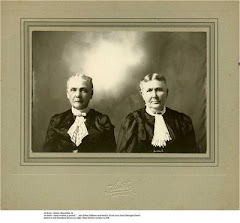
Lana, Amber and Brandon Jenkins

"Bethie and Kevin"


Redone for "Bridges of Madison County"


Madison County Courthouse

Clarks Tower, Winterset, Iowa

In honor of Caleb Clark
Winterset, Iowa

"The Bridges of Madison County"
Spencer, Iowa

Home of some of the Callery's
Brownsville, Jefferson co, New York

Main street, 1909
Forefathers

An old Quaker Cemetery
Madison county, Iowa


Musgrove and Abi Brown Evans Home
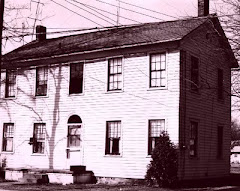
Musgrove Evans home
Musgrove Evans

The Ely Home est. 1880

919 Second St., Webster City, Iowa
Home of Jacob J. and Pamela Brown

Brownsville, Jefferson co, NY
Home of Pheobe Walton and Caleb Ball

, , PA
About Me

- NeNe
- I am a very busy grandma and mom to a passel of kids! I love crafts and enjoy sharing with others. I am involved in several groups that have shared interests. I have been involved with lots of home make-overs and enjoy decorating for myself and friends.
Sword of the Border

Book on the life of Jacob Jennings Brown